



Let’s be completely blunt for a second. Planning a normal vacation to a standard beach resort or a crowded theme park is already a massive logistical headache. But trying to piece together a journey that takes you deep into the heart of the world’s most extreme landscapes, places where nature still holds absolute power? That is a whole different level of intensity. Traveling to witness the raw, unaltered wonders of the world is booming right now, and look, I get why. People are completely desperate to escape the screen glare, break away from their daily routine, and actually feel small against something truly massive. Still, let’s be real here. When you try to plan an adventure to places defined by sheer vertical drops, intense geothermal activity, or shifting ice fields, things can get incredibly complicated very fast. It is rarely as simple as just picking a pretty photo online and hoping the journey there is seamless.
The real trick to pulling off an expedition to these heavy-hitting landscapes without wanting to hide away in a hotel room closet is finding a way to balance exploration with the right kind of operational framework. You need a setup where you can stand on the absolute edge of a roaring canyon or look directly at a moving wall of ice, but still have a reliable way to navigate the environment safely.
How do you actually do that without losing your mind? It starts with acknowledging that you cannot control the elements. And honestly, once you accept that nature dictates the schedule, a lot of the initial planning anxiety evaporates.
Why the Landscape Style Matters
When you are looking at the most spectacular corners of the Earth, the type of environment you choose dictates every single aspect of your trip. You cannot approach a frozen, glaciated fjord the same way you would plan a trip to a sun-baked desert canyon. You need a strategy that matches the specific terrain. I remember staring at a laptop at midnight years ago, sweating over a rigid, hyper-detailed spreadsheet, trying to force a standard road trip plan onto an area with no actual roads. It was an absolute disaster. It just does not work.
Allure of Frozen Frontiers and Polar Majesty
While desert canyons show the impact of slow, running water over millions of years, the polar regions demonstrate the monumental, crushing power of ice. These landscapes are quiet, intensely fragile, and beautifully hostile all at the same time. For those who want to experience the true meaning of isolation, the remote islands of the far north present an entirely different world. Massive ice caps cover rugged mountains, and deep fjords are filled with floating icebergs that break off from ancient, blue glaciers.
But what if you want to experience this level of wilderness without being a seasoned polar explorer?
For travelers who want something wilder and more remote than the standard tourist track, looking into specialized options like small ship cruises to Svalbard gives you a rare mix of real safety and bucket-list scenery. These specific trips let you take in massive polar landscapes from a stable, warm vantage point while still allowing you to jump into inflatable zodiac boats to get close to calving glaciers and unique Arctic wildlife. And that’s the point. It bridges the gap between total security and actual, raw adventure.
It simplifies everything.
Thunder of Great Waterways and Cascades
If your interests lean more toward tropical force than arctic silence, the world’s massive river systems offer a completely different vibe. Take a place like Victoria Falls on the border of Zambia and Zimbabwe. This massive curtain of falling water is easily one of the most intense sights on the planet, where the entire volume of the Zambezi River drops off a sheer precipice into a narrow basalt gorge.
The local name for the falls translates directly to “the smoke that thunders,” which is an incredibly accurate way to describe it. The spray kicks up so high that it creates a localized rainforest that stays green all year round, even during intense dry spells. Standing on the opposite cliff face means getting completely soaked by mist while hearing a roar so loud it vibrates right through the soles of your shoes. It is a stark reminder of the sheer kinetic energy constantly moving across the Earth’s surface.
Step-by-Step Exploration Framework
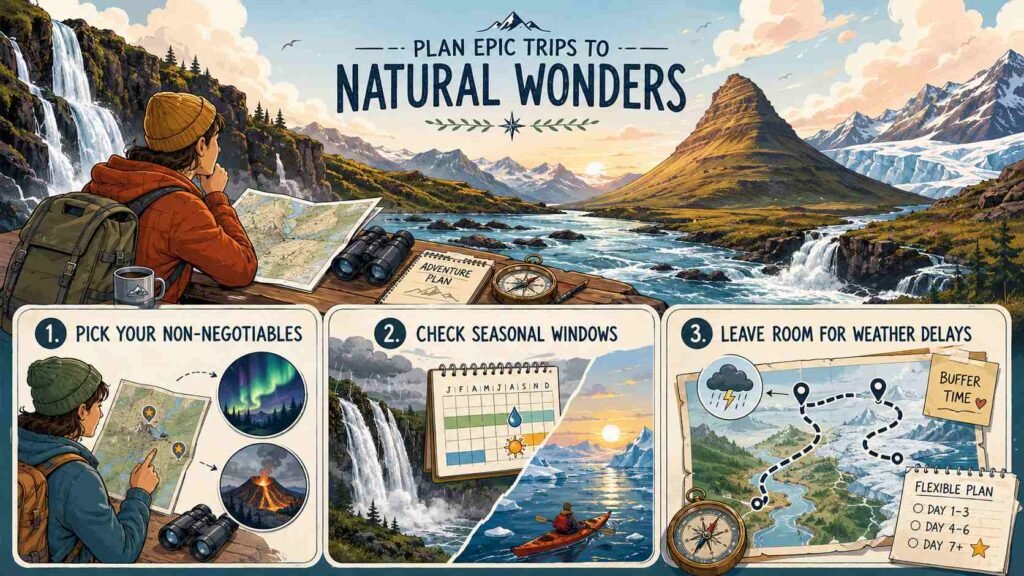
Heading out to see these types of landmark locations never happens successfully by accident. It takes real, honest research way before you start putting rugged gear into a suitcase.
First off, you need to find the non-negotiables. Ask yourself if there is one specific natural phenomenon you have your heart set on, like seeing the northern lights or standing over a specific volcanic crater. Find out what the one single thing is that makes the journey a true success for you.
Next, look at seasonal windows early and be completely honest about how weather changes the landscape. A massive waterfall looks incredible during the rainy season, but it might dwindle to a small trickle if you show up during the dry months. Similarly, the polar regions are completely locked down under total darkness during the winter, meaning your window for exploration is strictly limited to the midnight sun of the summer.
Finally, watch the pace of your itinerary. Agree on a schedule that leaves room for weather delays. If you try to run a tight, back-to-back schedule when traveling to remote wonders, a single fog bank or storm will ruin the entire trip and leave everyone frustrated.
Practical Logistics for a Smooth Journey
When you travel to the edges of the map, tiny logistical mistakes turn into massive problems very quickly. Paying attention to the boring operational details means you actually get to enjoy the view instead of just managing emergencies.
Transportation in Remote Terrain
Getting to a major natural wonder takes real coordination. Standard rental cars or public trains will not work when you are trying to access a national park with minimal infrastructure or an island surrounded by sea ice.
Booking private transport or joining a dedicated expedition team ahead of time is usually cheaper and way less stressful than trying to wing it when you arrive. And if you are renting vehicles for a desert expedition, make sure you have the proper recovery gear and multiple spare tires on hand so you can handle a blowout without needing a rescue crew.
Managing Communication Drops
The most spectacular natural wonders are often far away from cell towers and internet infrastructure. Do not assume you will have a signal to download maps or check reservations when you are standing in a deep canyon or sailing through an Arctic fjord. Download offline maps, print out hard copies of your emergency contacts, and let people back home know exactly when you will be off the grid.
Creating Lasting Legacy Memories
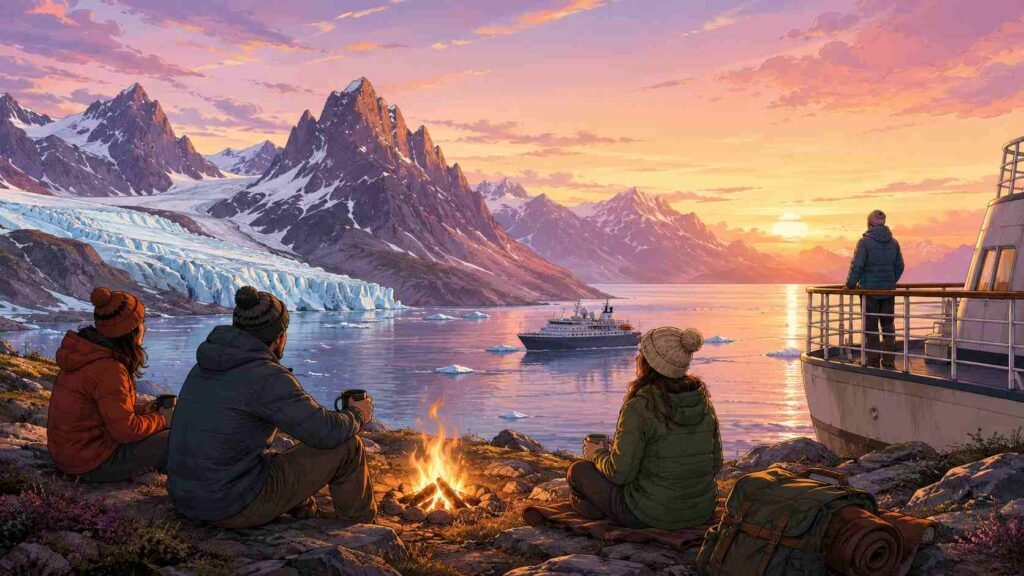
In the end, a trip to see these monumental places is an investment in your own perspective. It is a rare chance to disconnect from the distractions of normal, chaotic daily life and see exactly how the planet functions when humans aren’t altering the frame. We need those moments of quiet connection.
Think about leaving the heavy camera gear behind for at least one full afternoon during the trip. It saves you from worrying about settings or lens changes, and it means you actually look at the landscape with your own eyes instead of through a tiny digital screen.
Be patient with the whole process. A flight will probably get delayed, the weather might turn ugly, and your gear might get wet. But years from now, nobody is going to remember the minor hiccups. They are going to remember sitting by a campfire or looking out from a ship deck, the quiet awe of looking at a completely new landscape, and the simple joy of realizing how vast the world really is. It is about the shared quiet after a chaotic day.
Final Thoughts
The most beautiful natural wonders on Earth are not just places to photograph. They are places that make people slow down, pay attention, and understand how powerful the planet really is. Whether it is a frozen Arctic fjord, a roaring waterfall, a desert canyon, or a remote mountain landscape, each place needs respect, patience, and careful planning.
The best trips are not always the ones with perfect weather or flawless schedules. Sometimes the strongest memories come from the unexpected moments, a sudden change in light, a quiet view after a long day, or the feeling of standing somewhere that makes everyday worries seem much smaller.
Before visiting any major natural wonder, plan around the season, understand the risks, choose reliable transport, and give yourself extra time. Do not rush the experience to collect photos. Let the place speak for itself.
In the end, these journeys are about more than travel. They are about perspective. They remind us that the world is still full of wild, beautiful, and humbling places worth protecting.