


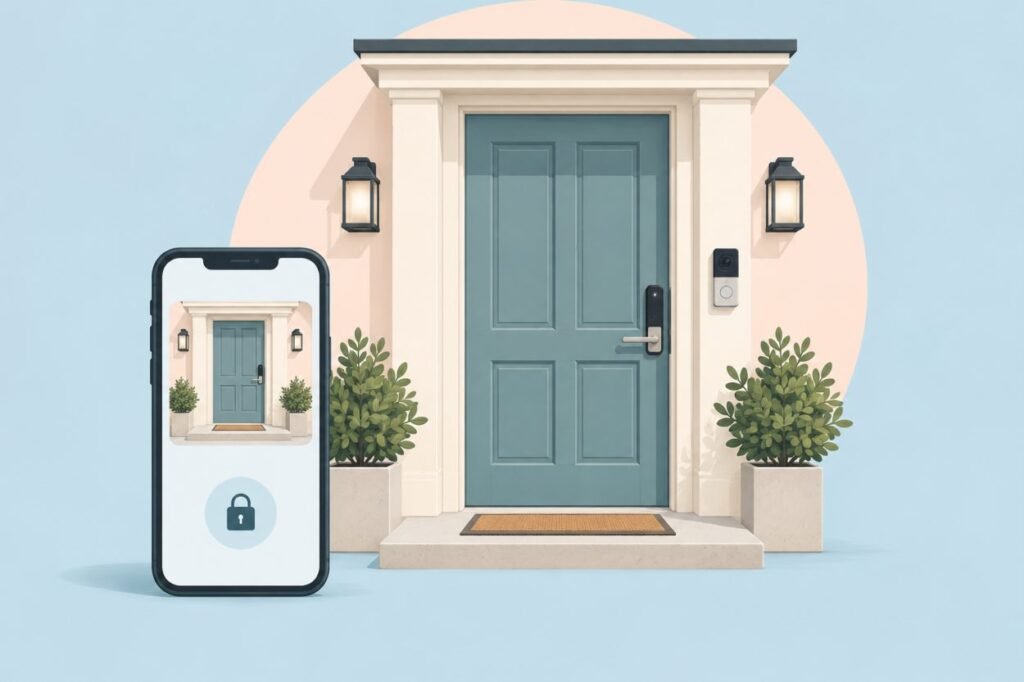
Ask most people why they bought a video doorbell, and they will tell you it was about burglary. The interesting thing is that burglary in this country is falling, and has been for years.
The Crime Survey for England and Wales, which picks up incidents that never reach a police report, estimated 327,000 domestic burglaries in the year ending December 2025, a fall of 22 per cent on the previous year. Vehicle-related theft dropped 14 per cent over the same period. Fraud, meanwhile, sat at around 4.4 million incidents with no meaningful change, and roughly 30 per cent above where it stood in 2017.
That gap tells you something useful. The old threat is receding, and the new one is not. Which means the honest case for smart home technology is not that it stops a rising tide of break-ins. It is that it changes what protection looks like: less about a box on the wall that screams after the fact, more about a connected system where the weakest point is now as likely to be an account password as a back door.
What A Layered System Actually Looks Like
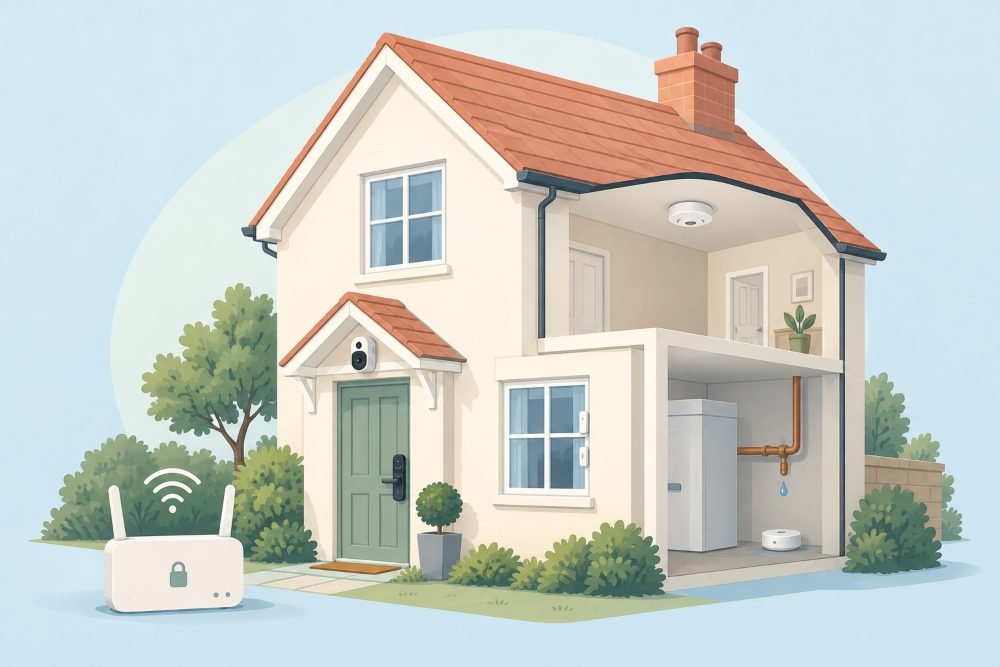
The word “system” does a lot of work here, and it is worth unpacking.
A modern setup usually combines cameras with two-way audio, motion sensors that can distinguish a cat from a person, contact sensors on doors and windows, smart locks, and environmental detectors for smoke, carbon monoxide and water leaks. That last category is quietly the most valuable for many British homes. A burst pipe under a floor in January will do more damage to the average property than an intruder ever will, and a £30 leak sensor in an airing cupboard pays for itself the first time it works.
The layer people underrate is the network. Every device you add is another thing holding credentials, another thing running firmware, another thing that can be left unpatched. A sensible approach to smart home security treats the hardware and the home network as one system rather than two, because a camera with a strong password on a router with a weak one is not secure in any meaningful sense.
The National Cyber Security Centre publishes plain guidance on using smart cameras safely at home, and the short version is unglamorous: change default credentials, turn on two-factor authentication, keep firmware updated, and switch off remote viewing if you are not using it.
A Buying Check That Only Applies Here
British buyers have a legal advantage that is barely mentioned in most coverage, largely because most coverage is written for the American market.
Since 29 April 2024, the Product Security and Telecommunications Infrastructure Act has applied to consumer connected devices sold in the UK. The NCSC’s summary of what the smart devices law requires sets out three obligations on manufacturers: no universal or easily guessable default passwords, a published point of contact for reporting vulnerabilities, and a stated minimum period during which the product will receive security updates.
That third one is the buying tip. A camera is not a kettle. If a manufacturer commits to two years of updates and you expect the device to sit on your wall for eight, you have bought a problem with a delivery date. The information is published because the law says it must be, so it is worth two minutes before you order.
Getting Devices To Talk To Each Other
Individually, these products are modestly useful. Connected, they start doing things a single device cannot: a contact sensor triggering at two in the morning that turns on the landing light, starts every camera recording and pushes an alert, all before anyone has opened an app.
Historically, this was the frustrating part, because brands did not interoperate. That has improved with Matter, the connectivity standard developed by the Connectivity Standards Alliance and backed by Apple, Amazon, Google and Samsung. It is genuinely better than what came before. However, it is worth tempering expectations: the standard rolled out for lighting, sensors and locks well before it covered cameras, and a Matter logo tells you a device can join an ecosystem, not that every feature will be exposed inside it. Manufacturers still hold back their best functionality for their own apps.
If you are researching hardware, hands-on testing beats spec sheets, and detailed reviews are a reasonable place to start planning a smart home setup, bearing in mind that availability, pricing and monitoring plans differ considerably between the UK and the US market.
Keys, Codes And Who Gets Through The Door
The most practical everyday benefit of all this is not catching intruders. It is managing legitimate access, which physical keys handle badly. A key cannot expire, cannot be revoked, and tells you nothing about when it was used.
Smart locks and video doorbells change that arithmetic. A cleaner gets a code that works on Thursdays. A visiting relative gets one that dies on Sunday night. A plumber gets a single-use code you can watch being used. And when a delivery arrives, you can look at the driver on the doorbell camera and decide whether to open the porch rather than have a parcel left behind a bin.
This corner of the market has been fragmented for years, with every manufacturer running its own digital key format. That is changing. The Connectivity Standards Alliance published version 1.0 of Aliro, an open standard for mobile access credentials, in February 2026. It allows a phone or watch to act as a key across manufacturers, using tap-to-unlock over NFC, Bluetooth Low Energy for range, or ultra-wideband for hands-free entry, with credentials held in Apple, Google or Samsung wallets. Apple’s Home Key was the template; Aliro makes the approach vendor-neutral. Expect it to take a couple of years to reach the shelves properly, as Matter did.
There is a ceiling to domestic kit, though, and it is worth knowing where it sits. Consumer smart locks are designed for one household and a handful of users. Once you are dealing with a block of flats, a shared entrance, a small business run from a converted outbuilding, or a property with multiple tenancies, you move into territory where commercial door access control systems are the appropriate tool: centralised permissions, proper audit logs, scheduled access by role, and integration with monitored CCTV. That is a different purchase with a different budget, and it is not what a consumer smart lock is trying to be.
Thing Most Buyers Get Wrong: Police Response
Here is the point that catches British homeowners out, and it comes up constantly.
A DIY smart alarm will not get you a police response. Under the National Police Chiefs’ Council policy that governs response to security systems across England, Wales and Northern Ireland, attendance depends on the property holding a Unique Reference Number. You cannot apply for one yourself. Only a company certificated by the National Security Inspectorate or the SSAIB can apply on your behalf, and the system has to be designed, installed and monitored to the relevant British Standards through an approved alarm receiving centre. Scotland operates under separate arrangements.
None of that makes self-monitored equipment pointless. An app alert and a recording are useful, and most people would rather see who is at the door than wait for anyone. But if the expectation is that a siren summons a patrol car, that expectation needs correcting before you buy, not afterwards. A run of false activations can also get response withdrawn from systems that do qualify, which is why professionally installed alarms are fussy about sensor placement in a way DIY kits are not.
Insurers are a related consideration. Many policies ask what alarm you have and whether it is maintained, and answering that question accurately matters more at claim time than at quote time.
Cameras Come With Legal Duties
This is the section most articles skip, and it is the one most likely to cost a reader money.
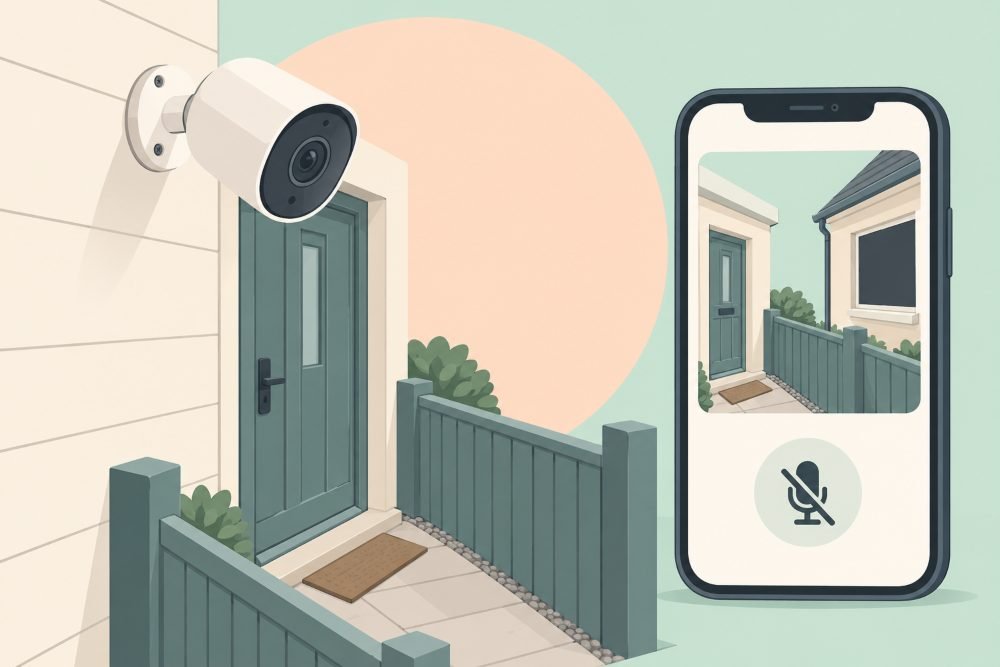
If a camera or video doorbell only records within the boundary of your own property, data protection law does not apply to you. The moment it captures a neighbour’s garden, a shared driveway, a communal stairwell or the pavement, the UK GDPR and the Data Protection Act 2018 do apply, and you become responsible for justifying why you need those images, keeping them no longer than necessary, and responding if someone asks for footage of themselves.
This is not theoretical. A county court ruling in 2021 found that one homeowner’s doorbell and floodlight cameras breached both data protection law and the Protection from Harassment Act 1997, and the case prompted the Information Commissioner’s Office to publish dedicated guidance for households.
Doing this properly is straightforward. Angle cameras down and inward. Use the privacy masking built into most apps to black out a neighbour’s windows and door. Narrow the motion detection zones so you are not recording the street. Turn audio recording off unless you genuinely need it, since audio is far more intrusive than video and much harder to justify. And if you live in a terrace or a flat, tell your neighbours what you have installed. It defuses ninety per cent of the disputes before they start.
Do Not Skip The Boring Layer
Technology has a habit of distracting from the basics, and burglary in the UK remains overwhelmingly opportunistic. A meaningful share of break-ins involve a door or window that was not locked.
The physical hardware still does most of the work, and there is a UK benchmark for it. Secured by Design, the official police security initiative, runs the Police Preferred Specification: an accreditation for locks, doors, windows and other security products that have been independently tested and certified rather than merely marketed. If you are replacing a front door or a set of window locks anyway, specifying accredited products costs little extra and does more for your risk than another camera.
Good external lighting, a well-kept front garden that does not screen the door, and gravel underfoot are all still worth more than most people assume.
Where This Is Heading
The next phase is pattern recognition rather than motion detection. Systems are beginning to learn the rhythm of a household, who normally comes and goes, and at what hours, so that they can flag the genuinely unusual instead of every passing fox.
That is a real improvement, since alert fatigue is the main reason people stop paying attention to their own security system. It also raises questions worth thinking about before you enable everything on offer. Facial recognition at a domestic front door processes biometric data about visitors, including people who never agreed to it, and the sharper these features get, the more carefully the privacy side needs handling. Useful and unaccountable are not the same thing.
The sensible position is neither breathless nor cynical. Smart technology has made home security cheaper, more informative and considerably more convenient than the alarm panel it replaced. It has not removed the need to lock the door, fit decent hardware, keep the network patched, or understand what your kit will and will not do when something actually happens.
Disclaimer: This article is provided for general information only and does not constitute legal, insurance or professional security advice. Data protection duties, police response arrangements and product security requirements differ between England, Wales, Scotland and Northern Ireland and may change over time. Anyone with specific concerns about domestic CCTV, alarm installation or access control should consult the Information Commissioner’s Office, a certificated security installer, or a qualified legal adviser.