



Falls in the bathroom remain one of the most common causes of injury among older adults. Slippery surfaces, high tub edges, and awkward maneuvering create daily risks that many families only realise after an incident occurs. Walk-in showers address these hazards by removing barriers and integrating features that support safer, more confident bathing.
A walk-in shower typically includes a low or zero-threshold entry, slip-resistant flooring, and strategically placed grab bars. Some designs incorporate built-in seating, handheld showerheads, and antimicrobial surfaces to reduce maintenance concerns. These elements work together to minimise fall risk while preserving the dignity and independence that matter most to aging individuals and their caregivers.
Choosing the right walk-in shower involves more than selecting a style. Considerations include bathroom layout, threshold height, door design, and compliance with accessibility standards. Knowing these factors helps families make informed decisions that balance safety, budget, and long-term usability. This guide outlines the key features, design options, and practical steps involved in planning a walk-in shower that serves the needs of elderly bathers.
Why Walk-In Showers Matter for Aging in Place

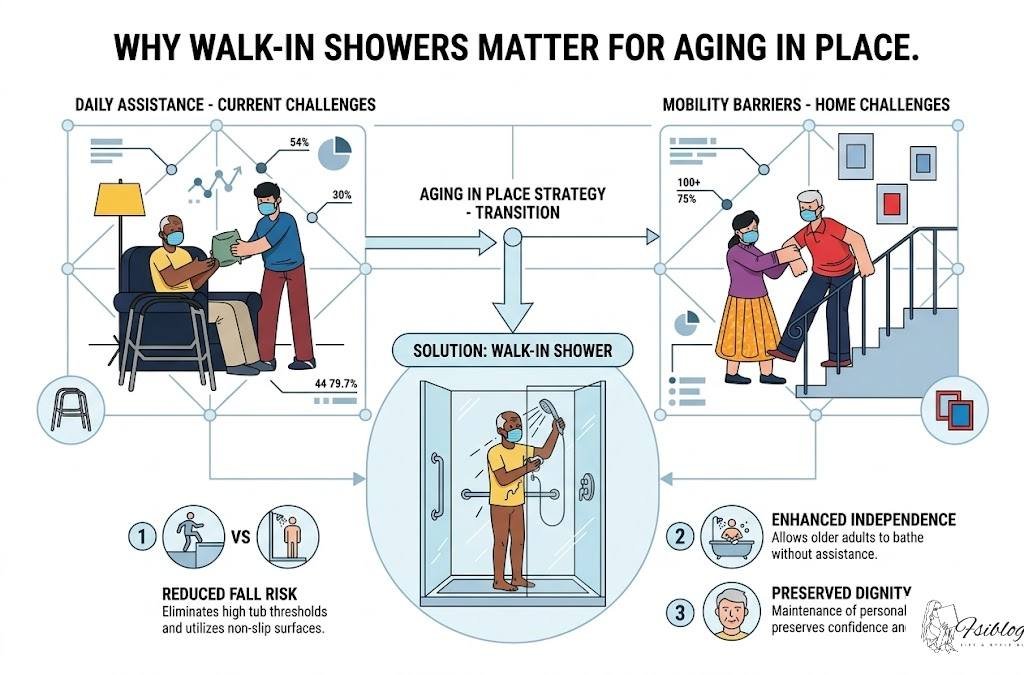
- Bathroom falls are a significant concern for older adults, often resulting in serious injuries. Many incidents occur in this space due to slippery surfaces and obstacles, making safety improvements especially important.
- Walk-in showers directly solve this risk. Removing high tub edges and reducing slippery surfaces are the most common causes of bathroom falls. Many families look for safe solutions when researching options that support aging in place.
- Interest in accessible bathroom products has grown in recent years, reflecting a shift in priorities toward safety and ease of use for all household members.
- A walk-in shower does more than provide safety. It also supports self-sufficiency. Older adults who can bathe without assistance often report greater confidence and quality of life. The ability to maintain personal hygiene independently preserves dignity during a stage of life when many other activities may require help.
Core Safety Features to Prioritise
- Every effective walk-in shower shares a handful of important features designed for safety and ease. A low-threshold or even curbless entry removes most of the trip hazards older adults face. When the entry remains at floor level or just slightly above it, users with reduced mobility or those reliant on walkers can move in or out without struggling.
- Shower models that meet accessibility guidelines often keep this threshold between one and two inches. This allows water to stay inside the enclosure without creating a difficult step. ADA-compliant designs focus on this balance between water containment and safe access.
- Grab bars play an essential role in maintaining balance. These supports should be placed at heights that are comfortable and accessible for the user. Both horizontal bars near seating and vertical ones at entry points can enhance safety and ease of use.
- Having these placed within easy reach reduces fall risk as users move in and out of the shower. Proper placement also helps during bathing activities when balance may shift. Consultation with an occupational therapist can help identify the most effective positions for individual needs.
- Another key detail is seating. Fixed benches or fold-down seats increase stability by offering a safe resting spot when standing causes fatigue. Showering while seated relieves strain on joints and supports a less stressful bathing experience. This is particularly important for anyone at increased fall risk or living with limited strength.
- The flooring underneath must offer a reliable grip, especially when wet. Textured surfaces or anti-slip coatings add important traction that helps prevent slides. This aligns with modern recommendations for accessible bathroom spaces and reduces the chance of injury during daily use.
- Combining this with a handheld showerhead improves comfort and safety. These fixtures should be set at an adjustable height and fitted with anti-scald settings. This is especially helpful for people with limited reach or temperature sensitivity. Being able to direct water without stretching reduces potential strain.
- Finally, the use of antimicrobial surfaces in these showers addresses a common maintenance concern. These protective layers help limit the growth of mold and bacteria. This is particularly important for individuals with impaired immunity or chronic health conditions. Keeping the shower area cleaner with less effort supports healthier routines for elderly bathers and their caregivers alike.
Threshold Design Options
- Curbless showers provide zero-step entry, which is ideal for wheelchair users. They require precise floor slope adjustments and careful waterproofing. Installation costs tend to run higher because of these structural requirements. Water containment depends on accurate floor grading rather than a physical barrier.
- Low-threshold designs, usually one to two inches high, balance water containment with easier access. They fit into standard bathroom layouts with minimal structural changes. They use door seals to contain water and need fewer modifications. This makes them a practical choice for families working within a tighter budget or a smaller bathroom footprint.
- The choice between these options depends on the user’s mobility level and the bathroom’s existing layout. Both options increase safety compared to a standard tub, but they fit different situations. Families comparing practical options often visit resources like safe walk-in showers for the elderly to review detailed features and installation advice.
Grab Bar Placement Standards
- It is generally recommended that grab bars be installed at a height that is comfortable and accessible for the user. Horizontal bars are often placed near seating, while vertical bars can be helpful at entry points.
- Grab bars must be tested for adequate load capacity. Many experts suggest a minimum of 250 pounds to help ensure they remain secure and stable during use. Placement should reflect the user’s height and typical movement patterns. Proper installation into wall studs or blocking helps provide long-term stability and prevent accidents.
Comparing Curbless vs Low-Threshold Designs
- Choosing between a curbless and a low-threshold walk-in shower depends on the user’s mobility level and the bathroom’s existing layout. Both options increase safety compared to a standard tub, but they fit different situations. Knowing the trade-offs helps families make the right choice for their needs.
- Curbless showers require floor slope adjustments to direct water toward the drain. This adds to installation difficulty and cost. They work best in open wet room layouts where space allows for proper drainage planning. A curbless design needs enough floor area for the correct slope without causing pooling.
- Low-threshold models are simpler to install in compact bathrooms. They can fit into a standard shower alcove with minimal modification. This makes them a practical choice for families working within a tighter budget or a smaller bathroom footprint. They also reduce the risk of water escaping the shower area.
- Space planning is an important aspect for both choices. Families should measure doorway width, plumbing access, and available floor area before making a decision. A professional bathroom assessment can identify which design works best for the specific layout and user needs.
Planning Your Walk-In Shower Installation
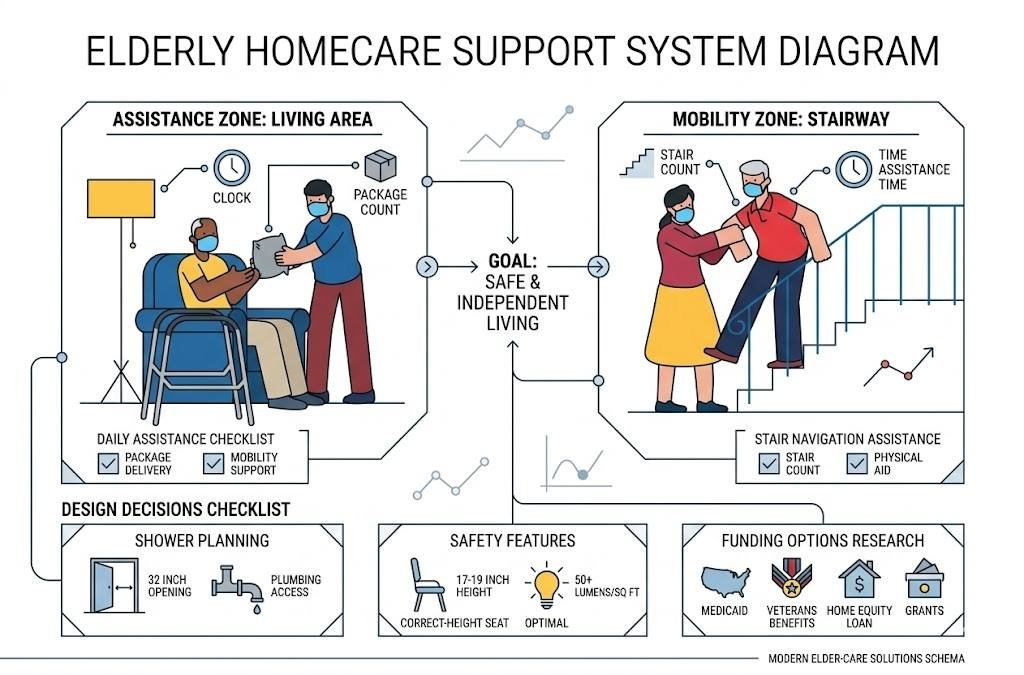
- Careful planning makes the difference between a smooth installation and a stressful one. The first step is a professional bathroom assessment. This covers doorway width, plumbing access, floor slope, and available space. Skipping this step often leads to hidden costs mid-project.
- Budget considerations should include materials, labor, and potential structural modifications. In the US, standard installations can range from several thousand to ten thousand dollars or more. This varies based on the difficulty of the design and the condition of the existing bathroom. Families should request quotes from certified installers with aging-in-place experience for accurate timelines and pricing.
- Standard installations may take anywhere from a couple of weeks to about a month. Some suppliers offer faster timelines depending on the model and bathroom conditions. Reviewing all details with the installer before anything is finalised can prevent expensive changes after construction begins. This leads to a safer, more accessible result for the user and peace of mind for their support network.
- Reviewing funding options can make the project more affordable. Medicaid waivers, veterans’ benefits, and home equity loans may help cover costs. Some local programs also offer grants for home modifications that support aging in place. Researching these options early in the planning process can reduce financial stress.
Caregiver Checklist for Design Decisions
- When making design decisions, caregivers must confirm that the shower door opens wide enough for walkers or wheelchairs. Many recommendations specify a minimum opening of about 32 inches to accommodate mobility equipment comfortably. Proper grab bar placement matters. These should suit the user’s height and movement habits rather than being fixed in standard locations.
- Selecting a seat that sits between 17 and 19 inches from the floor can allow for safer and easier transfers during bathing. Quality lighting should fill the shower space without casting harsh shadows. Aiming for at least 50 lumens per square foot helps users see clearly and avoid obstacles.
- Testing the shower layout with the user before installation can reveal potential issues. A mock-up using tape on the floor helps visualise the space and identify any adjustments needed. This step ensures the final design meets the user’s specific needs and supports long-term independence.
- When researching safe walk-in showers for the elderly, many families consider suppliers that offer adjustable threshold models and customisable safety features. These options support diverse mobility needs and help create a bathroom that works for years to come.
Final Thoughts
Walk-in showers offer a simple but powerful upgrade for elderly safety and comfort. By removing high steps, adding support features, and improving overall usability, they reduce the daily risks that often come with traditional bathrooms. More importantly, they help older adults stay independent and confident in their own homes.
The right design does not need to be complicated. Focusing on key elements like a low or zero-threshold entry, secure grab bars, non-slip flooring, and comfortable seating can make a big difference. Small details, such as proper lighting and easy-to-use fixtures, also play an important role in creating a safe and stress-free bathing space.
Every home and user is different, so planning carefully is essential. Taking time to assess the bathroom layout, understand mobility needs, and explore suitable design options will lead to better long-term results. Professional guidance can help avoid costly mistakes and ensure everything is installed correctly.
In the end, a walk-in shower is more than just a bathroom upgrade. It is an investment in safety, dignity, and peace of mind for both the user and their family.