


Horse racing remains one of the most recognisable and widely followed sports in the United Kingdom. From historic racecourses to modern race-day entertainment, the sport continues to attract passionate fans year after year. Major events regularly draw large crowds, while television broadcasts bring the excitement of the track into millions of homes.
Iconic fixtures such as the Royal Ascot, the Grand National, and the Cheltenham Festival generate national interest every season and continue to attract international attention.
While the heritage of racing plays a major role in its appeal, the sport has also evolved. Improved facilities, stronger media coverage, social experiences, and deeper fan engagement have helped racing remain an important part of Britain’s sporting identity.
Below are the key reasons horse racing continues to thrive across the UK.
Historic Race Meetings Still Draw Large Crowds

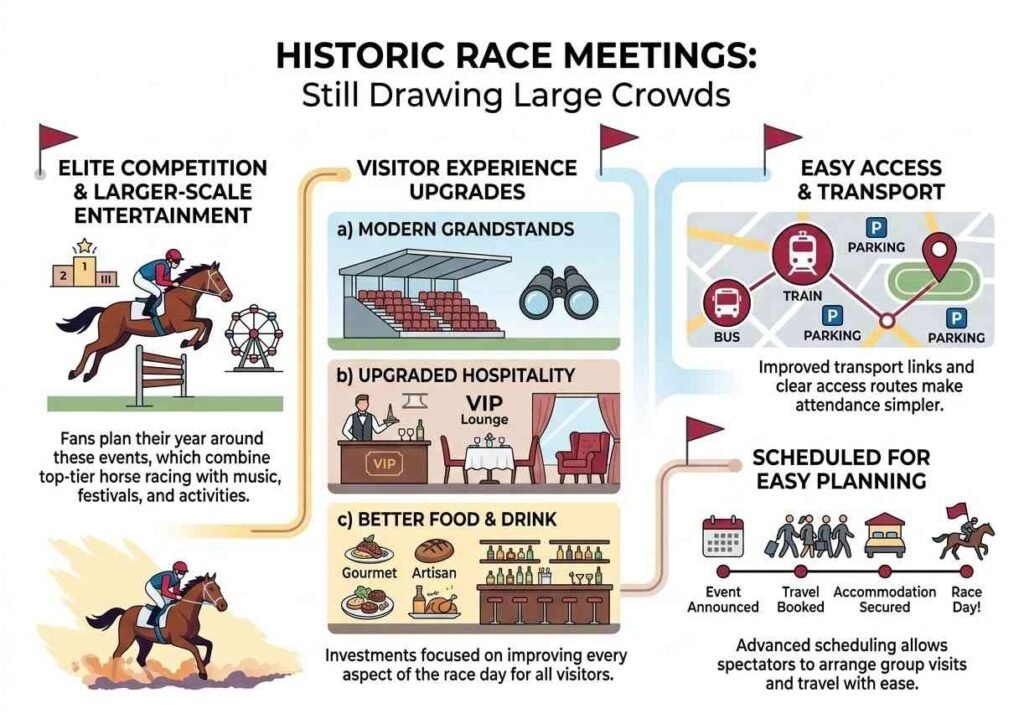
Major race meetings remain highlights of the British sporting calendar. Fans often plan their year around these events, which combine elite competition with large-scale entertainment.
Racecourses across the UK invest heavily in improving visitor experiences. Modern grandstands, upgraded hospitality areas, better food options, and improved transport access all help attract both new visitors and long-time racing fans.
Careful event scheduling also allows spectators to arrange travel, accommodation, and group visits in advance, making race days easier and more enjoyable to attend.
Iconic Events Continue to Set the Standard
Some racing festivals have become cultural institutions in Britain. Events like the Royal Ascot, the Grand National, and the Cheltenham Festival continue to attract international attention because of their prestige, traditions, and competitive racing.
These meetings showcase elite horses, respected trainers, and experienced jockeys competing at the highest level. The consistency and quality of these races help maintain public trust and excitement around the sport.
Many spectators return year after year, making attendance part of their annual social calendar.
Planning Race Day Attendance
For first-time visitors, planning can greatly improve the race-day experience.
Some helpful steps include:
- Book tickets early – Popular events sell out quickly.
- Review the racecard beforehand – This helps you understand the horses, trainers, and distances involved.
- Plan transport in advance – Many racecourses provide rail links or shuttle services.
- Arrive early – This allows time to explore the venue, place selections, and enjoy the atmosphere before the first race begins.
Proper planning helps visitors focus on enjoying the competition rather than dealing with last-minute logistics.
Social Atmosphere Around Race Days
Horse racing is as much a social occasion as it is a sporting event. Many visitors attend with friends, family, or colleagues to celebrate birthdays, corporate events, or weekend outings.
Racecourses increasingly offer a full-day entertainment experience that goes beyond the races themselves.
Examples include:
- Live music after racing
- Food festivals and themed dining areas
- Corporate hospitality lounges
- Special family-friendly enclosures
These additions broaden the appeal of racing and attract visitors who may not typically follow the sport closely.
Style and Dress Traditions
Fashion has long been associated with race meetings across Britain. The famous dress codes at Royal Ascot have helped establish race days as stylish social occasions.
Many racecourses encourage smart attire, and spectators often enjoy planning outfits as part of the experience. Hats, suits, and elegant dresses are common sights, particularly during major festivals.
Racecourses support this tradition by providing dress guides and themed hospitality areas.
Shared Experiences at the Racecourse
Few sporting experiences match the atmosphere of a racecourse when horses approach the final stretch. Thousands of spectators reacting together create a powerful sense of excitement.
Attending with friends often enhances the experience. Groups compare predictions, discuss runners, and celebrate results together.
Many racecourses also offer group ticket packages designed specifically for social gatherings, making racing an ideal group event.
Interest in Race Form and Race Markets
Another reason horse racing remains popular is the depth of knowledge involved in following the sport. Many fans enjoy analysing the performance of horses, trainers, and jockeys before races.
Studying form guides, past performances, and track conditions adds a strategic element that keeps audiences engaged.
Following the Numbers
Fans frequently review statistics, race history, and market trends before major meetings. Many followers monitor racing odds through betting and racing platforms to understand how different runners are being rated ahead of each race.
This information often reflects factors such as:
- Recent race performance
- Trainer success rates
- Track conditions
- Distance suitability
Comparing selections with friends or fellow spectators adds an extra level of excitement during race day.
Developing Knowledge Over Time
Regular followers of racing gradually develop a strong understanding of the sport.
For example, experienced fans often learn:
- How certain horses perform on different ground conditions
- Which trainers specialise in specific race types
- How jockey tactics influence race outcomes
Reading racing analysis in sports publications or watching televised coverage can help fans deepen their understanding over time.
Strong Heritage and Continued Investment
Horse racing has deep historical roots in Britain, with centuries of breeding, training, and racing traditions shaping the sport.
Famous racecourses such as Aintree Racecourse and Ascot Racecourse remain important landmarks in British sporting culture.
However, racing has also continued to modernise through ongoing investment.
Racecourses regularly upgrade:
- Grandstands and viewing areas
- Digital race information systems
- Catering and hospitality facilities
- Spectator transport infrastructure
These advances help racing appeal to both long-time fans and new visitors.
Supporting Training and Development
Behind every successful race meeting is an extensive training network across Britain.
Professional stables work year-round to prepare skilled jockeys and well-prepared horses for competition. Trainers, veterinarians, and support teams all contribute to maintaining high-performance standards.
Apprenticeship and youth training programmes also help develop the next generation of riders and stable staff, ensuring the sport remains sustainable in the future.
Racecourses Adapting to Modern Expectations
Modern audiences expect convenience and accessibility when attending live events. Racecourses have responded by introducing:
- Mobile racecard access
- Digital results and statistics
- Improved catering choices
- Clearer event scheduling
These improvements allow fans to access race information quickly and enjoy a more comfortable race-day experience.
Experience Horse Racing for Yourself
Horse racing continues to play a central role in British sporting culture because it offers a unique combination of tradition, competition, and social atmosphere.
Major events such as the Royal Ascot and the Grand National remain highlights of the UK sporting calendar and continue to attract international attention.
For new spectators, attending a race meeting can be an exciting introduction to the sport. By reviewing racecards, following racing odds, and exploring different racecourses, visitors can quickly gain confidence and enjoyment from the experience.
Whether attending a major festival or a smaller local meeting, race days often turn casual interest into a lasting appreciation for one of Britain’s most historic and engaging sports.