


Choosing hiking boots can feel confusing because many brands promise dry, comfortable feet in almost every condition. In reality, no boot is perfect for every walk. Some boots are better for wet hills, muddy woodland, boggy moorland, and winter rain. Others are better for warm weather, faster walking, dry trails, and long summer routes.
For UK walkers, the choice often comes down to one important question: should you choose waterproof hiking boots, breathable hiking boots, or something in between?
The answer depends on where you walk, how far you go, how warm your feet get, and what kind of weather you usually face. Technologies such as Gore-Tex and similar waterproof membranes are designed to help with this balance, but it is useful to understand what they can and cannot do before buying your next pair. When comparing options such as Altberg walking boots, it helps to look beyond the brand name and think about fit, sole grip, waterproofing, breathability, and long-term comfort.
What Waterproof Hiking Boots Actually Do
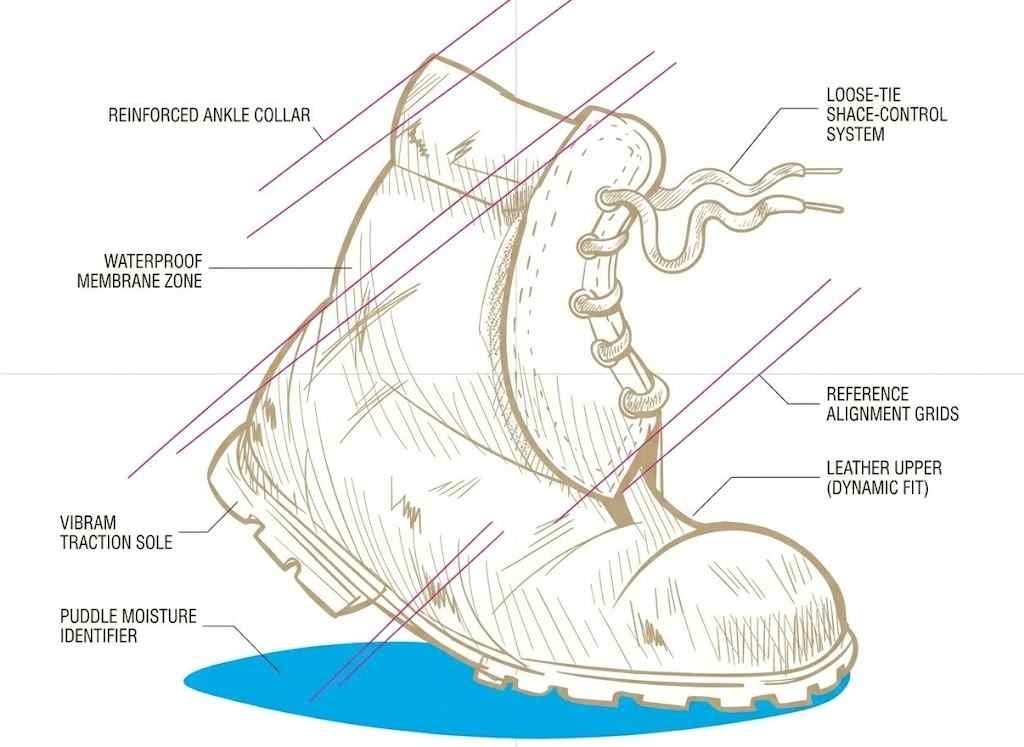
Waterproof hiking boots are designed to stop outside water from reaching your feet. This is useful in the UK because rain, wet grass, muddy paths, puddles, and boggy ground are common in many walking areas.
Waterproof boots usually achieve this through one of three methods:
| Waterproofing Method | How It Works | Best For |
|---|---|---|
| Waterproof membrane | A thin inner layer blocks liquid water while allowing some sweat vapour to escape | Wet trails, hillwalking, mixed UK weather |
| Treated leather | Leather is conditioned to resist water | Traditional walking boots, colder weather, rugged terrain |
| Water repellent outer fabric | The boot upper is treated so water beads off the surface | Light rain, casual walks, short hikes |
Most modern waterproof hiking boots use a membrane inside the boot. Gore-Tex is the best-known example, but many brands also use their own waterproof technologies.
What Breathability Means in Hiking Boots
Breathability means the boot allows heat and moisture from your feet to escape. This matters because your feet naturally sweat while walking, especially during steep climbs, long distances, or warm weather.
If moisture stays trapped inside your boots, your socks can become damp. Damp socks increase friction, which can lead to discomfort, rubbing, and blisters.
Breathable boots are useful because they help:
- Reduce sweat buildup
- Keep feet more comfortable in warmer conditions
- Lower the risk of rubbing
- Improve comfort on longer walks
- Help socks dry faster during movement
However, breathability has limits. A boot can be breathable, but it will still feel warm if it is heavily padded, made from thick leather, or worn with very warm socks.
How Gore-Tex and Similar Membranes Work
Gore-Tex and similar technologies use a thin waterproof membrane inside the boot. This membrane contains tiny pores. These pores are small enough to stop liquid water from entering, but they allow water vapour from sweat to pass out.
In simple terms:
| What the Membrane Blocks | What the Membrane Allows |
|---|---|
| Rainwater | Sweat vapour |
| Puddle water | Some internal moisture |
| Wet grass moisture | Heat movement |
| Muddy trail water | Limited ventilation |
This is why waterproof breathable boots are popular. They aim to keep rain out while reducing sweat buildup inside the boot.
The keyword is balance. These boots are not fully waterproof like rubber wellington boots, and they are not as airy as lightweight mesh trail shoes. They sit in the middle.
Waterproof Boots: Main Advantages
Waterproof hiking boots are especially useful for UK walkers because the weather can change quickly. A dry morning can turn into a wet afternoon, especially in places such as the Lake District, Snowdonia, the Peak District, the Scottish Highlands, and coastal trails.
Benefits of Waterproof Boots
| Advantage | Why It Helps |
|---|---|
| Better protection in wet weather | Keeps feet drier during rain and muddy walks |
| Useful for wet grass | Morning dew can soak non waterproof footwear quickly |
| More comfortable in colder months | Dry feet usually feel warmer |
| Good for boggy routes | Helps protect against wet ground |
| Suitable for unpredictable weather | Useful when conditions change during the walk |
Waterproof boots are a sensible choice for many UK walkers, especially in autumn, winter, and spring.
Waterproof Boots: Possible Downsides
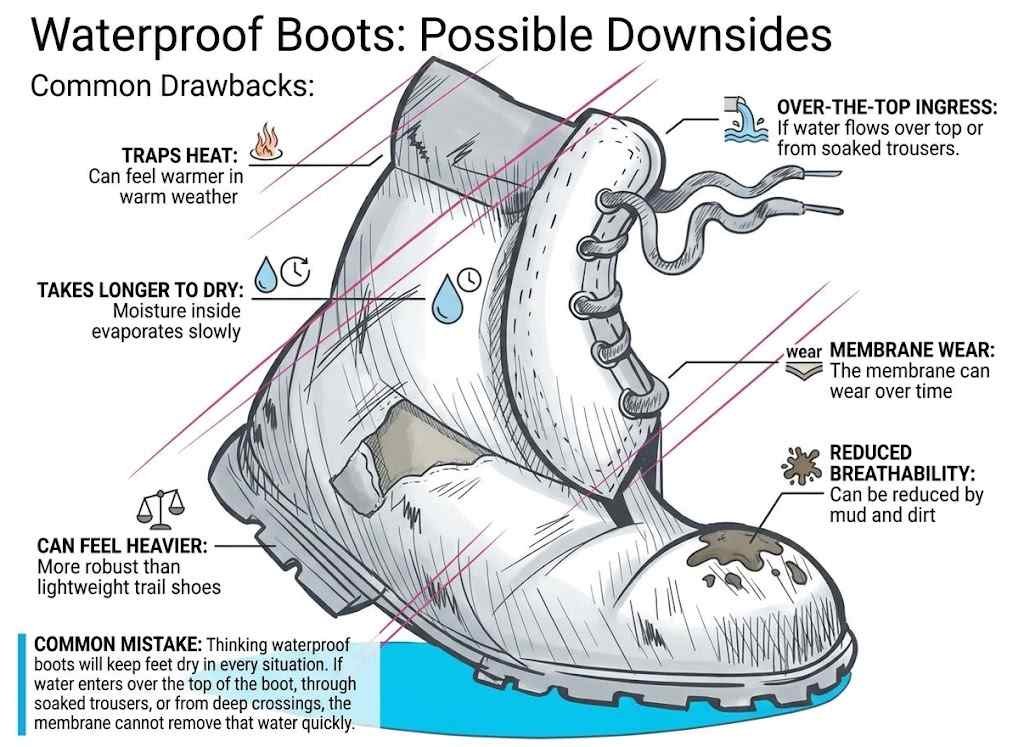
Waterproof boots are helpful, but they are not always the best choice. The main issue is that they can feel warmer and less breathable than non-waterproof footwear.
Common Drawbacks
- They can trap heat during warm weather
- They may take longer to dry once water gets inside
- They can feel heavier than lightweight trail shoes
- The membrane can wear over time
- Breathability may be reduced by mud, dirt, and poor maintenance
A common mistake is thinking waterproof boots will keep feet dry in every situation. If water enters over the top of the boot, through soaked trousers, or from deep crossings, the membrane cannot remove that water quickly.
Breathable Boots: Main Advantages
Breathable hiking boots or walking shoes are often better for dry weather, fast walking, summer routes, and people whose feet get hot quickly.
They may use mesh panels, lighter fabrics, thinner linings, and fewer waterproof layers.
Benefits of Breathable Boots
| Advantage | Why It Helps |
|---|---|
| Cooler feet | Useful in warm weather and faster walking |
| Less sweat build up | Helps reduce damp socks |
| Often lighter | Good for long distance walking |
| Faster drying | Useful if boots get wet but conditions are warm |
| More flexible feel | Comfortable for casual walking and easier trails |
For dry summer walks, breathable footwear can sometimes be more comfortable than waterproof boots.
Breathable Boots: Possible Downsides
The biggest downside is simple. Breathable boots are usually less protective in wet conditions.
If you walk through wet grass, muddy fields, or rain-soaked trails, your feet may become wet quickly.
When Breathable Boots May Not Be Enough
- Winter hillwalking
- Boggy moorland
- Heavy rain
- Wet woodland paths
- Long walks through grass and farmland
- Cold weather, where wet feet can become uncomfortable
For many UK walkers, breathable footwear works best as a summer or dry weather option rather than an all-year solution.
Waterproof vs Breathable: Which Is Better?
There is no single best choice. The right option depends on your walking style and local conditions.
| Walking Situation | Better Choice | Reason |
|---|---|---|
| Wet UK countryside walks | Waterproof boots | Better protection from mud, rain, and wet grass |
| Summer coastal walks | Breathable shoes or boots | Cooler and lighter |
| Mountain routes in changeable weather | Waterproof hiking boots | More reliable in rain and rough ground |
| Fast lowland walking | Breathable footwear | Better ventilation and flexibility |
| Winter walking | Waterproof leather or membrane boots | Warmer and more protective |
| Multi day hikes | Depends on weather and terrain | Waterproof boots suit wet routes, breathable footwear suits dry routes |
For most UK walkers, waterproof breathable boots are the safest all-round option. They are not perfect, but they offer a practical balance for mixed weather.
UK Conditions: Why the Choice Matters
The UK has a wide range of walking environments. Your boots should match the places you visit most often.
| Walking Area | Typical Terrain and Conditions | Recommended Footwear |
|---|---|---|
| Lake District and Snowdonia | Rocky paths, frequent rain, streams, boggy sections, and steep climbs | Waterproof boots with strong grip and ankle support are usually useful |
| Peak District | Muddy paths, stone tracks, grassy hills, and exposed moorland | Waterproof boots are helpful for much of the year |
| Scottish Highlands | Fast-changing weather, rough ground, peat, wet grass, and rocky trails | Supportive waterproof boots are often the better choice |
| South Downs and Coastal Paths | Dry paths in good weather, but wet and slippery sections after rain or during winter | Breathable walking shoes may be enough in dry weather, while waterproof footwear is useful in wet conditions |
| Woodland and Countryside Walks | Wet leaves, mud, puddles, damp grass, and uneven ground | Waterproof boots are a smart choic |
Key Features to Check Before Buying Hiking Boots
Waterproofing and breathability are important, but they are not the only things that matter. A boot that is waterproof but uncomfortable will still cause problems.
Fit and Comfort
Fit is the most important part of choosing hiking boots. A good boot should feel secure but not tight.
Check for:
- Enough room for your toes
- No heel slipping
- No pressure on the top of the foot
- Space for walking socks
- Comfort when walking uphill and downhill
Try boots later in the day if possible, because feet can swell slightly after walking.
Sole Grip
UK trails can be muddy, rocky, slippery, and uneven. A good outsole is essential.
Look for:
| Sole Feature | Why It Matters |
|---|---|
| Deep lugs | Better grip in mud |
| Firm rubber | More stability on rough ground |
| Heel brake | Helps on descents |
| Flexible forefoot | Supports natural walking movement |
| Strong edge grip | Useful on rocky paths |
Grip is especially important for wet stone, muddy slopes, and uneven hill paths.
Ankle Support
Higher boots can provide more ankle support, which may help on rough ground or when carrying a heavy pack. Lower walking shoes can feel lighter and more flexible.
Choose based on your route type:
| Footwear Type | Best For |
|---|---|
| Low walking shoes | Easy trails, summer walks, fast walking |
| Mid hiking boots | Mixed terrain, day hikes, moderate support |
| High walking boots | Rough ground, hills, wet conditions, heavier packs |
Weight
Heavier boots can feel supportive and durable, but they may become tiring over long distances. Lighter boots feel easier to walk in but may offer less protection.
For casual walkers, a lighter boot may be more comfortable. For mountain routes, a stronger boot may be worth the extra weight.
How to Keep Waterproof Boots Working Well
Waterproof boots need care. Mud, dirt, and worn outer fabric can reduce performance.
Basic Care Tips
- Clean mud off after each walk
- Let boots dry naturally at room temperature
- Do not place boots directly on a radiator
- Remove insoles while drying
- Reproof the outer material when water stops beading
- Use a suitable leather conditioner if the boots are leather
- Check laces, eyelets, and soles regularly
The waterproof membrane may still work, but if the outer fabric becomes soaked, the boot can feel colder, heavier, and less breathable.
Socks Matter More Than Many Walkers Think
Even the best boots can feel uncomfortable with the wrong socks. Cotton socks are usually a poor choice for hiking because they hold moisture.
Better sock materials include:
| Sock Type | Benefits |
|---|---|
| Merino wool | Warm, breathable, good moisture control |
| Synthetic walking socks | Durable and quick drying |
| Cushioned hiking socks | Extra comfort for longer walks |
| Thin liner socks | Can help reduce friction |
Good socks help manage sweat, reduce rubbing, and improve comfort inside waterproof boots.
Common Myths About Waterproof Hiking Boots
| Myth | Reality |
|---|---|
| Waterproof boots always keep feet dry | Waterproof boots help in wet conditions, but water can still enter from the top. Deep puddles, heavy rain running down trousers, and river crossings can still soak your feet. |
| Gore-Tex boots never make feet sweat | Waterproof breathable membranes allow some moisture to escape, but they do not stop sweating completely. In warm weather, your feet may still feel hot or damp. |
| Breathable boots are always better for blisters | Breathability can help with comfort, but blisters are usually caused by friction, poor fit, damp socks, or long walking distances. Proper fit and good walking socks are just as important. |
| Leather boots do not need maintenance | Leather boots need regular cleaning and conditioning. If leather dries out or cracks, water resistance, flexibility, and comfort can suffer. |
Practical Buying Advice for UK Walkers
Before buying hiking boots, think about your normal walking habits.
Ask yourself:
- Do I walk mostly in wet or dry conditions?
- Do my feet get hot easily?
- Do I walk on hills, fields, forests, or pavements?
- Do I need ankle support?
- Will I use the boots in winter?
- Do I prefer leather or fabric boots?
- Am I carrying a heavy backpack?
- Do I need boots for casual walks or serious hikes?
For regular UK hillwalking, waterproof boots with good grip are usually the safest choice. For summer paths, lighter, breathable footwear may feel better. Many regular walkers own both and choose based on the weather.
Final Thoughts
Waterproof and breathable hiking boots both have clear benefits. Waterproof boots are better for rain, mud, wet grass, and colder UK conditions. Breathable boots are better for warm weather, dry paths, faster walking, and people who dislike hot feet.
Gore-Tex and similar technologies try to provide a balance by keeping outside water out while allowing some sweat vapour to escape. They are useful, but they are not magic. The best boot still needs to fit well, grip properly, suit your walking style, and be cared for after use.
For most UK walkers, a waterproof breathable hiking boot is a practical all-round choice. However, if you walk mainly in summer or on dry trails, a lighter and more breathable option may be more comfortable. The right choice is the one that keeps your feet supported, comfortable, and ready for the walking you actually do.