


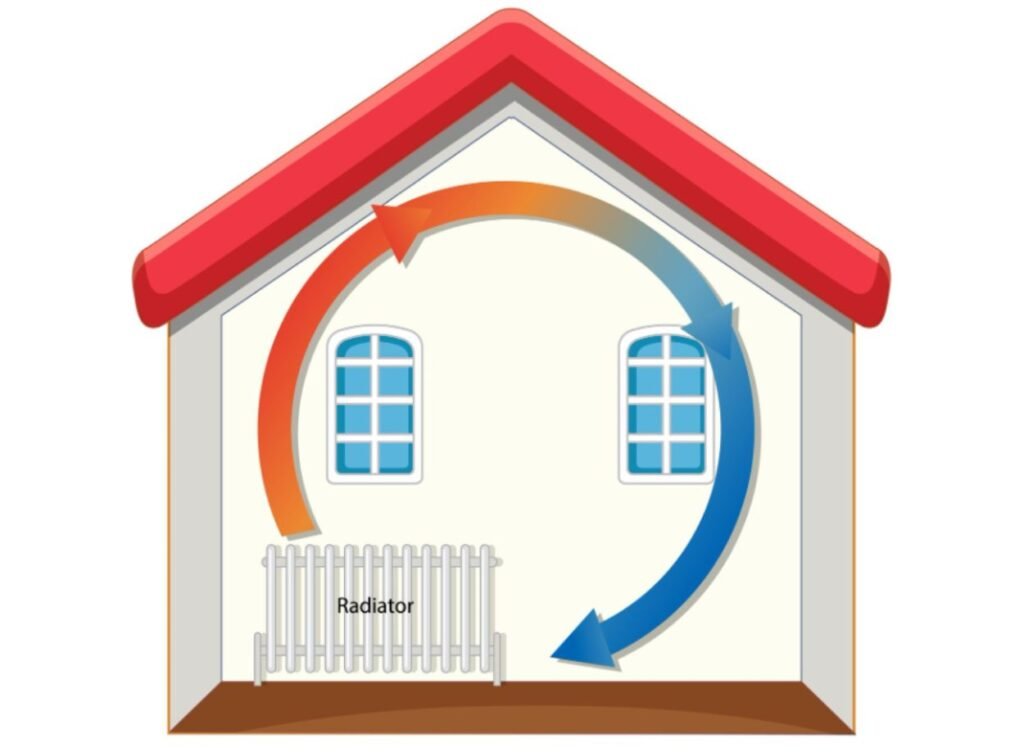
When selecting the right radiator for your home or office in the UK, one of the most important factors to consider is the BTU rating. BTU, or British Thermal Unit, measures how much heat a radiator can produce.
Choosing the correct BTU rating is not just about staying warm. It directly affects your comfort, energy efficiency, and heating costs. With rising energy prices across the UK, getting this right can make a noticeable difference to your monthly bills.
Whether you are upgrading your heating system or installing radiators in a new space, understanding BTU ratings helps you make a smarter, more cost-effective decision.
What is a BTU Rating and Why It Matters

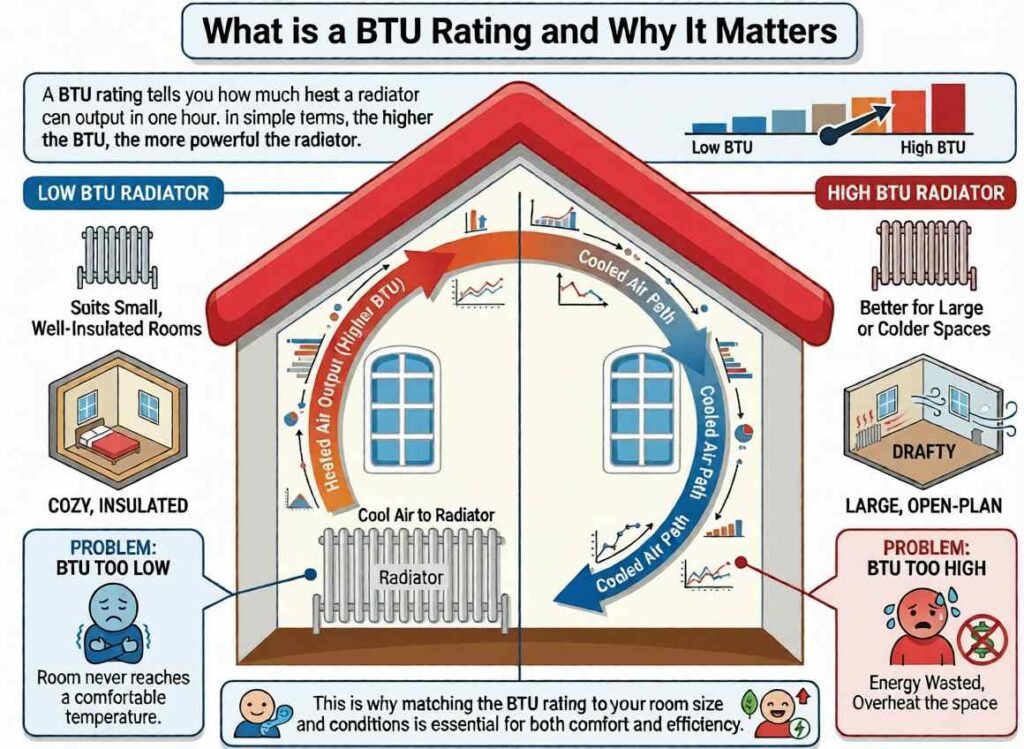
A BTU rating tells you how much heat a radiator can output in one hour. In simple terms, the higher the BTU, the more powerful the radiator.
For example:
- Low BTU radiators suit small, well-insulated rooms
- High BTU radiators are better for large or colder spaces
If the BTU is too low, your room may never reach a comfortable temperature. If it is too high, you may waste energy and overheat the space.
This is why matching the BTU rating to your room size and conditions is essential for both comfort and efficiency.
How to Calculate the Right BTU for Your Room
To choose the correct radiator, you need to estimate how many BTUs your room requires. Several factors influence this:
Room Size
Measure the length, width, and height of your room. Larger rooms naturally need more heat.
Insulation Quality
UK homes vary widely in insulation. Older properties or homes with single glazing will need higher BTU output compared to modern, well-insulated homes.
Windows and Doors
Rooms with large windows or external doors lose heat more quickly, increasing BTU requirements.
Room Usage
- Living rooms and bathrooms typically need more heat
- Bedrooms may require less
Orientation
North-facing rooms in the UK tend to be colder and may need additional heating capacity.
While online BTU calculators are useful, consulting a heating professional can give you a more accurate and tailored recommendation.
Why High-Output Radiators Are Worth Considering
High output radiators are designed to deliver more heat efficiently, making them ideal for:
- Large rooms or open-plan spaces
- Older UK homes with poor insulation
- Rooms that feel consistently cold
They heat spaces more quickly and maintain warmth more effectively, which can improve overall comfort.
Modern designs also focus on energy efficiency, meaning you get strong performance without unnecessary energy waste. However, it is still important to avoid oversizing, as excessive heat output can lead to higher energy bills.
Types of Radiators and Their BTU Performance
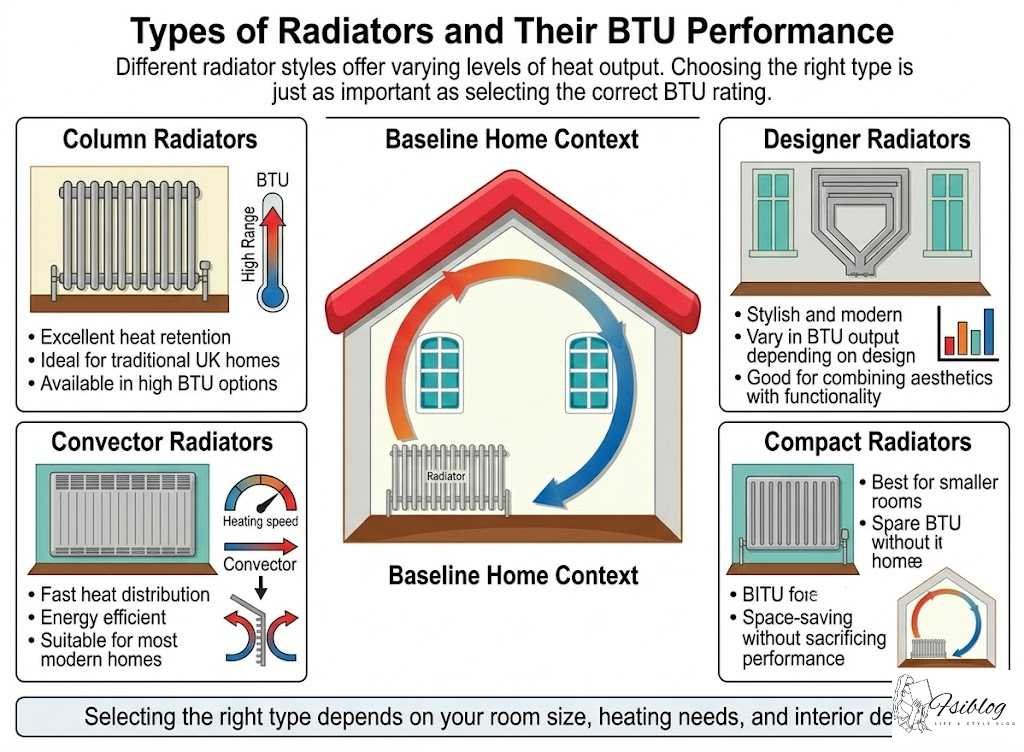
Different radiator styles offer varying levels of heat output. Choosing the right type is just as important as selecting the correct BTU rating.
Column Radiators
- Excellent heat retention
- Ideal for traditional UK homes
- Available in high BTU options
Convector Radiators
- Fast heat distribution
- Energy efficient
- Suitable for most modern homes
Designer Radiators
- Stylish and modern
- Vary in BTU output depending on design
- Good for combining aesthetics with functionality
Compact Radiators
- Best for smaller rooms
- Space-saving without sacrificing performance
Selecting the right type depends on your room size, heating needs, and interior style.
Common Mistakes to Avoid
When choosing a radiator, many UK homeowners make avoidable mistakes:
| Issue | Description |
|---|---|
| Underestimating BTU Needs | This leads to rooms that never feel properly warm, especially in winter. |
| Oversizing Radiators | Too much heat output can waste energy and increase costs unnecessarily. |
| Ignoring Insulation | Poor insulation can make even high BTU radiators less effective. |
| Choosing Style Over Function | Designer radiators may look great, but must still meet your heating needs. |
Avoiding these mistakes ensures your heating system works efficiently and reliably.
Practical Tips for UK Homes
To get the most from your radiator:
- Bleed radiators regularly to remove trapped air
- Use thermostatic radiator valves to control temperature
- Improve insulation where possible to reduce heat loss
- Position furniture away from radiators to allow proper heat circulation
These small adjustments can significantly improve heating performance and efficiency.
Final Thoughts
Understanding BTU ratings is key to choosing the right radiator for your home. It ensures you achieve the perfect balance between comfort, efficiency, and cost.
By considering room size, insulation, and radiator type, you can make an informed decision that keeps your space warm without wasting energy.
For UK homeowners looking for reliable and powerful heating solutions, high-output radiators offer a practical and effective option. Taking the time to calculate and choose correctly now can lead to long-term savings and a more comfortable living environment.