


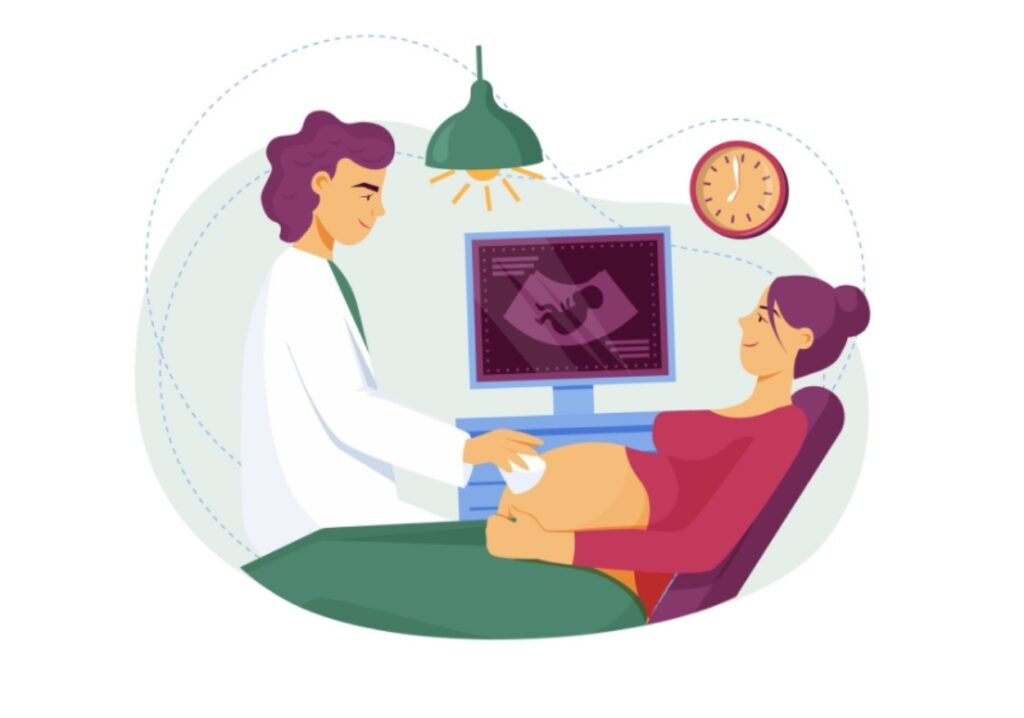
Surrogacy is often described in a very simple way. People may think it only involves intended parents, a surrogate, and a written agreement between them. In reality, the process is far more detailed and far more personal. It involves medical care, fertility treatment, counselling, legal guidance, pregnancy planning, birth arrangements, and support after the baby is born.
For many UK intended parents, surrogacy is not a quick decision. It may come after years of fertility treatment, pregnancy loss, medical advice, or the realisation that carrying a pregnancy is not possible or safe. For same-sex male couples and some single intended parents, surrogacy may also be one of the main routes to building a family. Some people begin their research by looking at international surrogacy support providers such as Mother Surrogate (https://www.mother-surrogate.com/) to understand how clinics, agencies, and legal professionals may work together across the process.
Because the decision is so emotional, it is easy to focus only on the hope of finally having a child. However, the process itself needs careful planning from the start. This is where fertility clinics play a major role. A clinic is not only the place where IVF is carried out. In a well-managed surrogacy programme, the clinic becomes one of the main centres of coordination. It helps connect medical decisions with emotional support, legal preparation, pregnancy care, and communication between everyone involved.
Why Fertility Clinics Are Central To Surrogacy
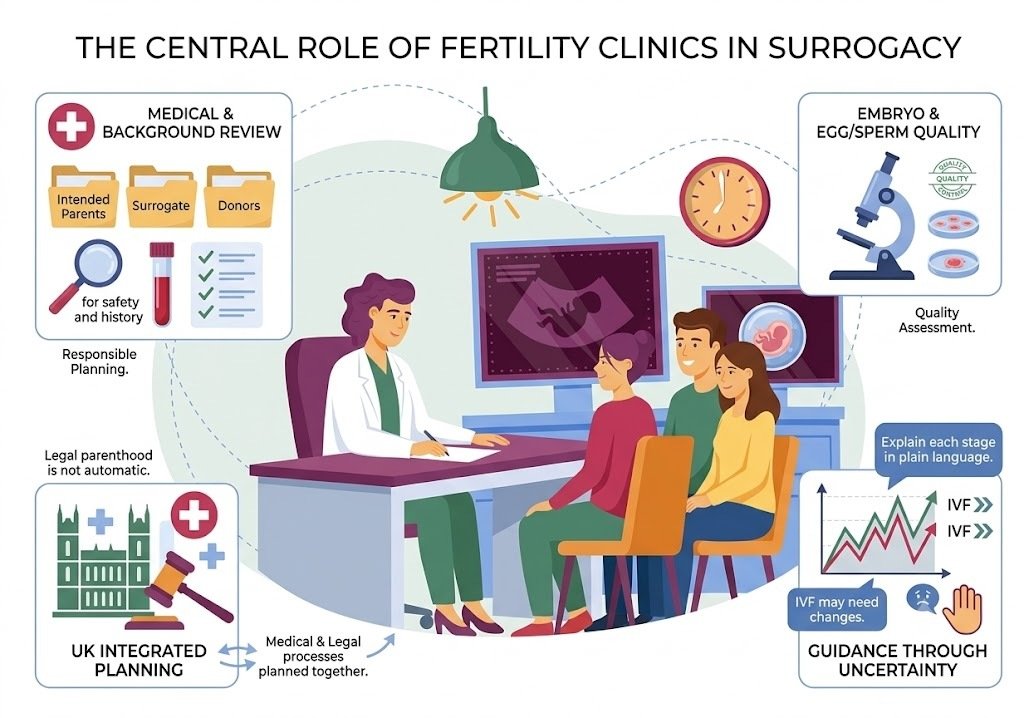
A fertility clinic is often the first professional setting where the surrogacy plan becomes real. Before embryo transfer can happen, the clinic needs to understand the medical background of the intended parents, the health of the surrogate, and whether donor eggs or donor sperm will be used.
This early stage is important because surrogacy is not simply about achieving a pregnancy. It is about creating a safe and responsible pathway to parenthood. The clinic must think about the health of the surrogate, the quality of embryos, the chance of pregnancy, the possible risks, and the welfare of the future child.
A good clinic does not rush people through the process. It explains each stage in plain language. It also helps intended parents understand that a surrogacy journey can include uncertainty. IVF may not work the first time. Embryos may not develop as expected. Medical plans may need to change. Pregnancy can bring normal worries as well as unexpected complications. Clear guidance from the clinic can make these moments easier to manage.
For UK families, the clinic’s role is even more important because legal parenthood in surrogacy is not automatic in the way many people first assume. The medical process and the legal process need to be planned together, even though different professionals handle them.
Medical Screening Before The Programme Begins
Medical screening is one of the clinic’s first responsibilities. It helps protect everyone involved, especially the surrogate and the future baby. This stage should never feel like a formality. It is one of the most important safeguards in the whole process.
The surrogate will usually need a detailed review of her general health, reproductive history, previous pregnancies, and any medical conditions that could affect pregnancy. Doctors may also check for infectious diseases, hormone levels, uterine health, and other factors depending on her medical background.
The intended parents may also need medical tests. If their own eggs or sperm are being used, the clinic needs to assess fertility health and identify anything that may affect IVF treatment. If donor eggs or donor sperm are involved, the clinic should explain how donor screening works and what information is available about the donor.
Why Screening Should Be Taken Seriously
Good screening is not about making the process difficult. It is about reducing avoidable risk. Pregnancy places physical demands on the body, and the surrogate’s health must come first. A responsible clinic should be willing to say no or delay treatment if medical concerns need further review.
This can be hard for intended parents to hear, especially if they have already waited a long time to start a family. However, careful screening protects the whole journey. It helps avoid situations where problems appear later and cause fear, cost, or emotional harm.
The best clinics explain why each test is needed. They do not simply hand people a list of examinations without context. When people understand the reason behind each step, the process feels less cold and more respectful.
IVF Treatment And Embryo Creation
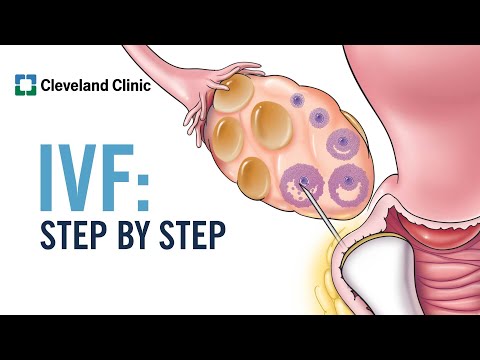
In many surrogacy arrangements, IVF is used to create embryos before they are transferred to the surrogate. This is one of the most technical stages of the process, but it still needs to be explained in simple terms.
The clinic may begin by preparing the intended mother or egg donor for egg collection. This usually involves fertility medication, monitoring scans, and blood tests. Once the eggs are collected, they are fertilised with sperm in the laboratory. Embryologists then monitor embryo development over the following days.
Not every egg becomes an embryo, and not every embryo is suitable for transfer. This can be emotionally difficult for intended parents, especially if they expected the process to be more predictable. A helpful clinic prepares people for these possibilities before treatment begins.
Role Of The Embryology Laboratory
The embryology laboratory is where some of the most important work happens. Embryologists handle eggs, sperm, and embryos with great care. Their work affects embryo development, freezing, storage, and preparation for transfer.
Some clinics may also discuss embryo testing. This can sometimes help identify embryos with the correct number of chromosomes, but it does not guarantee a baby. A good clinic should explain both the benefits and the limits of testing. Intended parents should not be left thinking that one test removes all risk.
This stage can feel very scientific, but it is deeply emotional for the people involved. Each update from the laboratory can carry hope, worry, or disappointment. Clear communication from the clinic makes a real difference.
Preparing The Surrogate For Embryo Transfer
Before embryo transfer, the clinic prepares the surrogate’s womb lining so it is ready to receive the embryo. This may involve medication, ultrasound scans, and blood tests. The timing must be carefully planned because the embryo and the womb lining need to be in the right stage together.
The embryo transfer itself is usually a short procedure, but the emotional weight around it can be significant. Intended parents may feel excited and nervous. The surrogate may also feel pressure, even when everyone has realistic expectations.
Why This Stage Needs Good Communication
After embryo transfer, there is usually a waiting period before a pregnancy test can confirm whether the transfer has worked. This can be one of the hardest parts of the process. Every small symptom may be questioned. Every day can feel long.
A supportive clinic helps people understand what is normal and what is not. It should explain when testing will happen, who will share the result, and what the next steps will be if the result is positive or negative.
When communication is weak, intended parents may start searching online for answers and become more anxious. When communication is steady and clear, the waiting period can still be difficult, but it feels less lonely.
Pregnancy Monitoring And Maternity Care
Once pregnancy is confirmed, the clinic’s role changes. The focus moves from fertility treatment to pregnancy monitoring and maternity care. Depending on the country and the structure of the programme, the fertility clinic may continue to coordinate care with an obstetrician or maternity hospital.
The surrogate will need regular medical appointments, scans, and routine pregnancy checks. Her health should remain the priority throughout. Intended parents may receive updates about the pregnancy, but the surrogate’s medical privacy and dignity must also be respected.
This balance is important. Intended parents naturally want reassurance that the pregnancy is progressing well. At the same time, the surrogate is the person experiencing the pregnancy physically. A good clinic handles this relationship with care, not pressure.
Helping Intended Parents Feel Involved
For UK intended parents, especially those working with a surrogate abroad, pregnancy can feel emotionally distant. They may not be able to attend every appointment. They may rely on clinic updates, scan reports, and scheduled calls. This can create anxiety because they are preparing to become parents while not being physically present every day.
Clinics that understand surrogacy know how important communication is during pregnancy. They should explain how updates will be shared, who the main contact person is, and what happens if there is a medical concern.
A simple, consistent communication plan can prevent many misunderstandings. Intended parents should not have to chase basic information. Surrogates should not feel overwhelmed by constant messages. The clinic should help create a respectful structure that works for everyone.
Psychological Support During Surrogacy
Surrogacy is not only a medical process. It is also an emotional one. The surrogate, intended parents, and sometimes their partners and families may all need support at different points.
A responsible fertility clinic should include counselling or psychological assessment as part of the process. This support helps make sure that everyone understands the emotional realities of surrogacy before treatment begins.
For the surrogate, counselling may explore motivation, expectations, boundaries, family support, and feelings about pregnancy and birth. For intended parents, counselling may help them prepare for uncertainty, failed transfers, pregnancy anxiety, and the legal steps after birth.
Why Emotional Preparation Matters
Surrogacy can bring joy, but it can also bring moments of stress. A pregnancy may not happen immediately. A transfer may fail. A scan may raise concerns. The birth may happen earlier than expected. After delivery, emotions can be strong for both the surrogate and the intended parents.
Psychological support helps people prepare for these moments before they happen. It gives everyone space to talk honestly and safely. It also helps identify concerns early, instead of waiting until the programme is already underway.
This support should not be treated as a tick-box requirement. It is one of the most valuable parts of a well-run surrogacy programme.
Legal Coordination And Documentation
A fertility clinic is not a law firm, and it should not replace proper legal advice. However, the clinic still plays an important role in making sure the right medical documents are available when needed.
This is especially important for UK intended parents. In the UK, the surrogate is the child’s legal parent at birth. If the surrogate is married or in a civil partnership, her spouse or civil partner may also be treated as a legal parent at birth unless the legal rules say otherwise. Intended parents usually need to apply for a parental order after the baby is born to become the child’s legal parents.
This means the legal side should be discussed before treatment begins, not after the birth. Intended parents should understand what documents may be needed, how parenthood will be transferred, and what steps apply if the child is born overseas.
Why UK Families Need Early Legal Advice
International surrogacy can be especially complex. A birth certificate issued in another country does not always settle the UK legal position. Intended parents may still need to follow UK legal steps after returning home or before arranging travel documents.
The clinic may need to provide records of IVF treatment, embryo transfer, genetic parentage, donor use, and pregnancy care. These documents may later support legal applications, birth registration, immigration steps, or parental order proceedings.
This is why intended parents should work with legal advisers who understand surrogacy. The clinic, lawyers, and surrogacy agency should not work in isolation. When everyone understands their role, the process becomes clearer and less stressful.
Birth Planning And The Hospital Stage
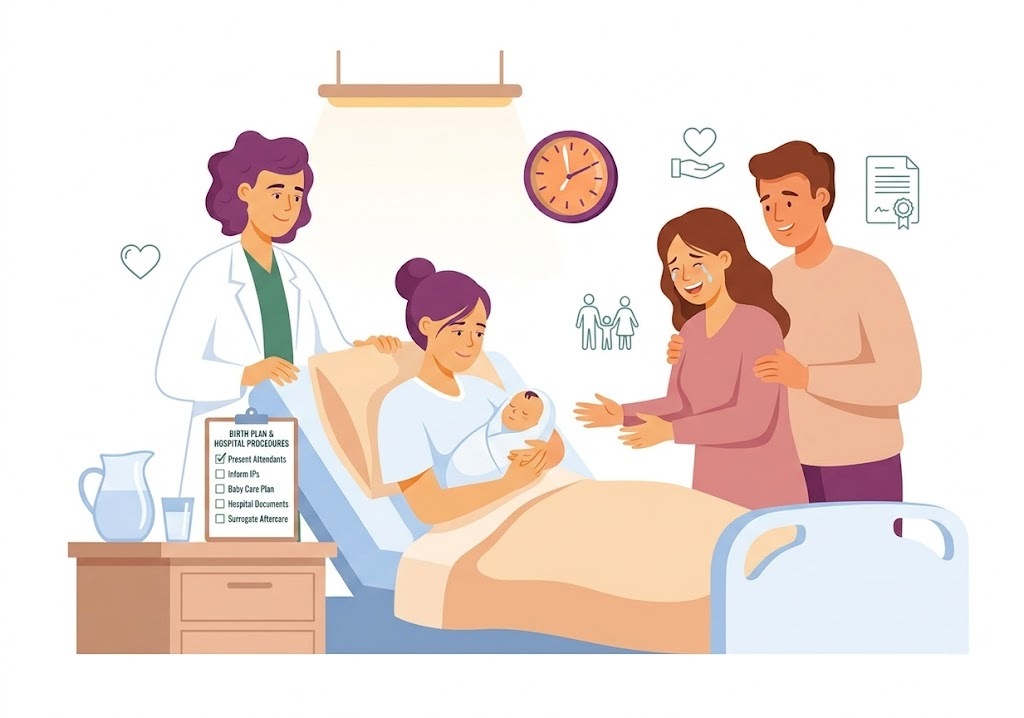
The birth is one of the most emotional moments in the surrogacy journey. It should be planned carefully and respectfully. The surrogate’s medical needs must come first, but the intended parents also need to understand what will happen when the baby is born.
A birth plan may cover who will be present, how the intended parents will be informed, how the baby will be cared for, and what documents need to be completed at the hospital. It may also cover what happens if the birth does not go as planned.
Respecting The Surrogate And The Intended Parents
A good clinic helps everyone prepare for this stage with sensitivity. The surrogate should not feel invisible once the baby is born. She has carried the pregnancy and deserves proper aftercare. The intended parents may also feel overwhelmed as they move from waiting to caring for a newborn.
The handover after birth should be handled with kindness and respect. It is not just an administrative moment. It is a deeply human part of the journey.
Clinics and hospitals that have experience with surrogacy are usually better prepared for this stage. They understand that the usual maternity process may need extra planning because the person giving birth and the people who will raise the child are not the same people.
Support After The Baby Is Born
The clinic’s role should not end immediately after delivery. There may still be medical, emotional, and practical needs after the baby is born.
The surrogate may need postpartum medical care and emotional support. Intended parents may need help understanding documents, follow-up appointments, and any medical information about the baby. If the birth took place abroad, there may also be travel and legal steps to complete.
Why Aftercare Should Be Part Of The Plan
Aftercare is sometimes overlooked because everyone is focused on the baby’s arrival. However, this period can be sensitive. The surrogate’s body is recovering from pregnancy and birth. Intended parents are adjusting to newborn care. Legal steps may still be ongoing.
A responsible clinic or programme should explain what support is available after birth. This includes medical follow-up, communication support, and access to records. No one should feel abandoned once the main treatment has finished.
Choosing The Right Fertility Clinic
Choosing a fertility clinic for surrogacy is not only about success rates. Success rates can matter, but they do not tell the full story. Intended parents should also look at how the clinic communicates, how it screens surrogates, how it handles counselling, and how clearly it explains costs and legal coordination.
A clinic should be willing to answer difficult questions. It should explain what happens if IVF does not work, if pregnancy complications arise, or if documents are delayed. It should also be clear about what is included in the programme and what may cost extra.
Questions UK Intended Parents Should Ask
Before starting, UK intended parents should ask who will manage their case, how often updates will be given, what medical screening is required, whether counselling is included, and what documents will be provided after birth.
They should also ask how the clinic works with lawyers, agencies, and maternity hospitals. If treatment is taking place abroad, they should ask whether the clinic has experience supporting UK families and whether it understands the paperwork UK parents may need later.
The answers should feel clear, calm, and professional. If a clinic avoids questions, gives vague replies, or focuses only on payment and speed, that should be a warning sign.
Why A Human Approach Matters
Surrogacy should never feel like a commodity. It is not simply a package, a transaction, or a medical booking. It involves a woman carrying a pregnancy, intended parents hoping for a child, and a baby whose welfare should remain central throughout.
A human approach means giving people time to understand decisions. It means respecting the surrogate’s health and dignity. It means supporting intended parents without making false promises. It also means being honest about risks, timelines, costs, and legal steps.
For UK people considering surrogacy, this kind of honesty is especially valuable. The process can already feel confusing because medical treatment, family law, and international arrangements may all overlap. A clinic that explains things clearly can reduce fear and help families make better decisions.
Final Thoughts
Fertility clinics play a central role in the surrogacy process. They manage medical screening, IVF treatment, embryo transfer, pregnancy coordination, documentation, and often emotional support. Their work affects not only the chance of pregnancy but also the safety and confidence of everyone involved.
For UK intended parents, the right clinic should offer more than treatment. It should offer clear communication, ethical practice, careful planning, and respect for both the surrogate and the intended parents.
Surrogacy can be a meaningful route to parenthood, but it should be approached with care. The best fertility clinics understand that they are not just helping to create a pregnancy. They are helping to guide one of the most important journeys in a family’s life.