


Motherhood is one of the most rewarding experiences in life, but it can also be one of the most physically demanding. Between school runs, meal prep, work commitments, and keeping the household together, it is easy for mums to put their own health on the back burner. One of the simplest yet most impactful things you can do for yourself and your family is to make sure you are getting the right nutrients every single day. This guide breaks down exactly what to look for, what you might be missing, and how to build lasting healthy habits for the whole family.
Why Nutrition Matters More Than Ever for Busy Mums
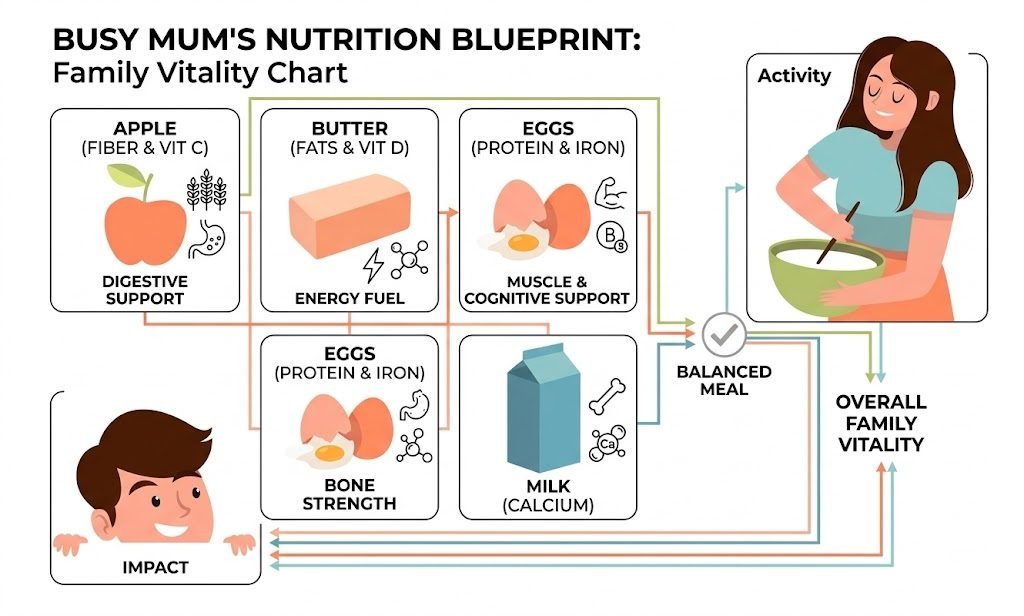
When you are juggling the needs of children, a partner, and possibly ageing parents too, your body is working overtime. The demands of modern family life mean many of us are running on caffeine and whatever the kids left on their plates. But nutrient deficiencies can sneak up quietly, and the consequences affect far more than just your energy levels:
- Persistent fatigue that no amount of sleep seems to fix is one of the most common signs that something nutritional is off.
- Poor concentration and brain fog can affect your work, your parenting, and your patience in ways that are easy to blame on stress rather than the underlying cause.
- A weakened immune system means you catch every cold your children bring home from school and take longer to recover.
- Mood changes, low motivation, and heightened anxiety can all have nutritional roots, particularly around iron, magnesium, and B vitamin deficiencies.
- Bone health, which tends to be overlooked in younger women, begins to matter in your thirties and becomes increasingly important after each pregnancy.
Understanding what your body actually needs is the first step. Whether you are pregnant, breastfeeding, navigating the postnatal period, or simply trying to keep up with a busy household, your nutritional requirements shift at every stage of life.
Key Nutrients Mums in the UK Often Miss
UK dietary surveys consistently show that women are falling short on several key nutrients. Here is a breakdown of the most commonly deficient ones, what they do, and where to find them:
| Nutrient | Why It Matters for Mums | Best Food Sources | Who Is Most at Risk |
|---|---|---|---|
| Iron | Energy production, oxygen transport, cognitive function | Red meat, lentils, spinach, fortified cereals | Women postpartum, those with heavy periods, vegetarians |
| Vitamin D | Bone health, immune function, mood regulation | Sunlight, oily fish, fortified foods, supplements | Almost everyone in the UK, especially October to March |
| Folate (B9) | Cell production, energy, critical in early pregnancy | Dark leafy greens, chickpeas, fortified bread | Pregnant women and those trying to conceive |
| Calcium | Bone density, muscle function, nerve signalling | Dairy, fortified plant milks, almonds, kale | Breastfeeding mums, those avoiding dairy |
| Magnesium | Sleep quality, stress response, muscle recovery | Nuts, seeds, whole grains, dark chocolate | Mums under chronic stress, poor sleepers |
| Omega-3 (DHA & EPA) | Brain health, inflammation, postnatal mood | Oily fish, walnuts, flaxseed, algae-based supplements | Pregnant and breastfeeding women |
| Iodine | Thyroid function, metabolism, fetal brain development | Dairy, white fish, eggs | Pregnant women, those on dairy-free diets |
| Vitamin B12 | Energy, nerve function, red blood cell production | Meat, fish, eggs, fortified foods | Vegans, vegetarians, those on certain medications |
The NHS recommends that everyone in the UK takes a vitamin D supplement between October and March at a minimum, and that pregnant women take folic acid and vitamin D throughout pregnancy. If you suspect you are deficient in any of the above, a simple blood test from your GP can confirm it.
Iron Deficiency: The Hidden Drain on UK Mums
Iron deserves its own section because it is so widely underdiagnosed among women in the UK. Symptoms like exhaustion and brain fog are so commonly attributed to the chaos of parenthood that the underlying deficiency goes unnoticed for months or even years. What makes it more complicated is that standard tiredness and iron-deficiency fatigue can feel almost identical, which is why so many women push through without ever getting tested.
Signs that low iron could be affecting you include:
- Feeling exhausted even after a full night of sleep
- Difficulty concentrating or remembering things
- Feeling cold when others around you are comfortable
- Noticing that your hair is falling out more than usual
- Pale inner eyelids or pale skin tone
- Heart palpitations during light activity
- Restless legs, particularly at night
If several of these sound familiar, speak to your GP and request a full blood count. Treatment is straightforward, either through diet changes, iron supplementation, or both, and the improvement in energy levels once levels are restored can be dramatic.
Vitamin D: Nutrient Almost Every UK Mum Is Short On
The UK climate means that between October and March, the sun is not strong enough for your skin to synthesise adequate vitamin D, regardless of how much time you spend outdoors. For mums who spend most of their day inside, this window effectively extends year-round.
Vitamin D deficiency in the UK is widespread and affects:
- Bone density increases the risk of osteoporosis later in life
- Immune function, making you more susceptible to infections
- Mood and mental health, with strong links to seasonal depression
- Muscle strength and recovery
- Infant health, since breastfed babies rely entirely on their mother’s vitamin D status
The NHS advises all adults in the UK to take a daily 10 microgram vitamin D supplement throughout autumn and winter, and year-round for those who are rarely outdoors, have darker skin, or are pregnant or breastfeeding. This is one supplementation recommendation that applies to virtually every mum in the country.
Reading Labels and Choosing Quality Supplements
Not all supplements are created equal, and with so many options lining the shelves of UK pharmacies and health food shops, it can feel overwhelming to know what is actually worth taking. Here is what to look for when choosing:
| What to Look For | What to Avoid | Why It Matters |
|---|---|---|
| Clearly listed nutrient forms | Vague ingredient names like “vitamin B complex” without breakdown | Nutrient form affects how well your body absorbs it |
| Transparent ingredient sourcing | No information on where ingredients come from | Traceability reassures you about quality and safety |
| Third-party testing certification | No quality certification mentioned | Independent testing verifies that what is on the label is actually in the bottle |
| Bioavailable forms of nutrients | Cheap forms like magnesium oxide or cyanocobalamin (B12) | Bioavailable forms are absorbed and used more effectively by the body |
| Minimal fillers and additives | Artificial colours, unnecessary binders, or added sugars | Fillers add no nutritional value and may cause reactions in sensitive individuals |
| Appropriate dosages for your life stage | One-size-fits-all formulations for all adults | Pregnancy, breastfeeding, and postnatal needs differ significantly |
Brands like Ritual have made ingredient traceability and nutrient form transparency a core part of their approach, which can be genuinely reassuring when you want to know exactly what you are putting into your body. As a general principle, a supplement that clearly tells you what it contains, where it comes from, and why each ingredient is included is almost always a better choice than one that does not.
Prenatal and Postnatal Nutrition: A Stage-by-Stage Guide
Your nutritional needs change significantly across the different stages of motherhood. Here is a practical overview of what matters most at each point:
| Stage | Priority Nutrients | Key Considerations |
|---|---|---|
| Trying to conceive | Folate, iron, vitamin D, iodine | Begin folic acid at least one month before conception |
| First trimester | Folic acid, vitamin B6, iron, zinc | Nausea may limit food variety, making supplementation more important |
| Second trimester | Iron, calcium, vitamin D, omega-3 | Energy often returns, making it a good time to focus on dietary variety |
| Third trimester | DHA, iron, vitamin K, magnesium | Baby’s brain development peaks, and iron needs increase as blood volume expands |
| Breastfeeding | Calcium, iodine, vitamin D, omega-3, B12 | Your baby’s nutrient intake depends directly on yours |
| Postnatal recovery | Iron, B vitamins, probiotics, vitamin C | Focus on rebuilding depleted nutrient stores and supporting energy and mood |
The NHS recommends 400 micrograms of folic acid daily from before conception until 12 weeks pregnant, and 10 micrograms of vitamin D throughout pregnancy and breastfeeding. If you have a multiple pregnancy, a restricted diet, or a health condition, your GP or midwife may recommend higher doses.
Building Healthy Eating Habits as a Family
Getting the right nutrients is not just about taking a supplement in the morning. It is about creating a culture of health within your household that makes good eating the default rather than the exception. Some practical strategies that work well for busy UK families:
- Meal planning on Sundays. Mapping out dinners for the week ahead reduces the number of decisions you make when you are tired and short on time, which is when convenience food tends to win. It also means your shopping list naturally includes more nutrient-rich ingredients.
- Batch cooking for the week. Cooking a large pot of lentil soup, a tray of roasted vegetables, or a batch of wholegrain rice on Sunday afternoon means healthy food is already prepared and ready to reach for on busy weeknights.
- Making the plate colourful. Teaching children that different coloured vegetables provide different nutrients is a simple rule that naturally leads to more varied, nutrient-dense meals. It also makes the plate visually appealing, which matters for fussy eaters.
- Getting children involved in cooking. Children who help prepare food are significantly more likely to eat it, including vegetables they would otherwise refuse. Even young children can wash vegetables, stir ingredients, or choose between two healthy options.
- Keeping healthy snacks visible. A bowl of fruit on the counter, a container of mixed nuts in the cupboard at eye level, and pre-cut vegetables in the fridge make the healthy choice the easy choice for the whole family.
Teaching Children About Nutrition Early On
One of the most valuable things you can do as a parent is help your children develop a positive, informed relationship with food before habits are fully formed. This does not mean strict rules or banning treats. It means building understanding:
| Age Group | How to Introduce Nutrition | Practical Activity |
|---|---|---|
| Toddlers (1–3) | Keep it simple and sensory. Talk about colours and textures | Let them touch, smell, and help wash vegetables |
| Preschool (3–5) | Introduce the idea that food gives us energy to play and grow | Grow cress or herbs on the windowsill together |
| Primary school (5–11) | Explain that different foods do different jobs in the body | Cook a simple meal together and talk about each ingredient |
| Secondary school (11–16) | Discuss food labels, portion sizes, and long-term health | Involve them in meal planning and grocery shopping |
| Teenagers (16+) | Address diet culture critically and focus on nourishment over restriction | Share responsibility for planning and cooking family meals |
The goal is not perfection. It is helping children see food as something that supports them rather than something to be anxious about.
Small Changes That Make a Big Difference
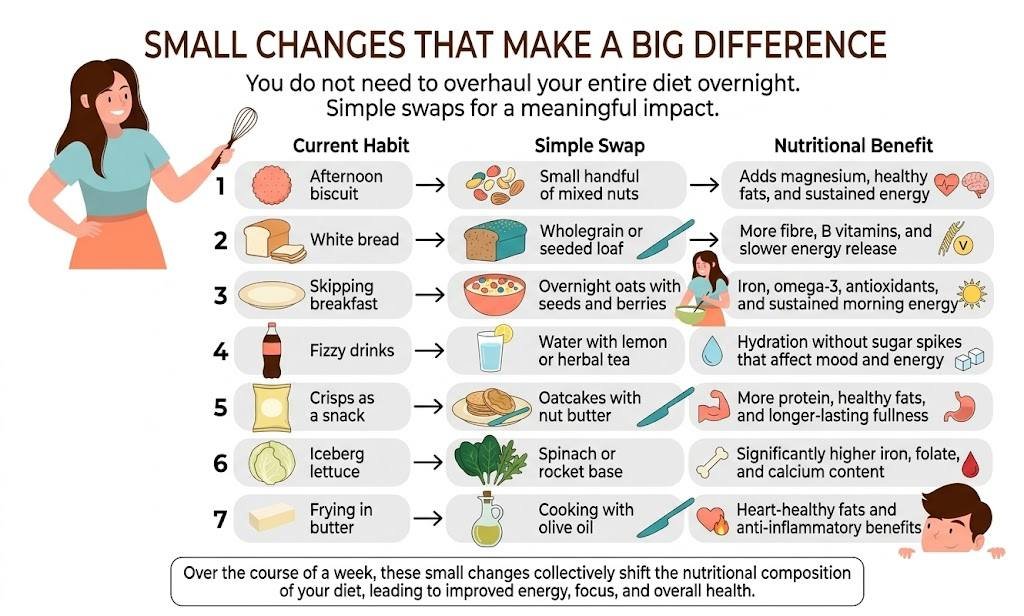
You do not need to overhaul your entire diet overnight. The following swaps are small enough to make without disrupting your routine but meaningful enough to notice over time:
| Current Habit | Simple Swap | Nutritional Benefit |
|---|---|---|
| Afternoon biscuit | Small handful of mixed nuts | Adds magnesium, healthy fats, and sustained energy |
| White bread | Wholegrain or seeded loaf | More fibre, B vitamins, and slower energy release |
| Skipping breakfast | Overnight oats with seeds and berries | Iron, omega-3, antioxidants, and sustained morning energy |
| Fizzy drinks | Water with lemon or herbal tea | Hydration without sugar spikes that affect mood and energy |
| Crisps as a snack | Oatcakes with nut butter | More protein, healthy fats, and longer-lasting fullness |
| Iceberg lettuce in salads | Spinach or rocket base | Significantly higher iron, folate, and calcium content |
| Frying in butter | Cooking with olive oil | Heart-healthy fats and anti-inflammatory benefits |
Over the course of a week, these small changes collectively shift the nutritional quality of your diet without requiring a dramatic lifestyle overhaul.
When to Speak to a Professional
While this guide covers the most common nutritional needs for mums in the UK, it is important to recognise when personalised professional advice is the right step. Consider speaking to your GP or a registered nutritionist if:
- You are experiencing persistent fatigue, hair loss, or other symptoms that are not improving despite dietary changes.
- You are pregnant, trying to conceive, or recently postpartum and unsure whether your current supplement routine is appropriate.
- You follow a vegan or vegetarian diet and have not recently reviewed your B12, iron, or omega-3 intake.
- You have a diagnosed health condition that may affect how you absorb or process certain nutrients.
- You are considering stopping or starting any supplement and want guidance on interactions with medication.
A registered nutritionist in the UK will have the letters RNutr or ANutr after their name. A dietitian will be registered with the Health and Care Professions Council. Both can offer evidence-based, personalised guidance that goes beyond general advice.
Conclusion
Looking after your own nutrition as a mum is not a luxury or an afterthought. It is the foundation that everything else depends on. When your iron levels are adequate, your vitamin D is topped up, and your diet is genuinely nourishing you, the difference shows in your energy, your mood, your patience, and your ability to show up fully for the people who need you most.
The steps do not need to be dramatic. Start with one change this week, whether that is booking a blood test, adding a leafy green to your evening meal, or taking ten minutes to read a supplement label properly. Build from there. Small, consistent actions, taken over months rather than days, are what create lasting change.
Your health is not separate from your family’s well-being. It is central to it. And you deserve to treat it that way.
Disclaimer
The information provided in this article is intended for general informational and educational purposes only. It does not constitute medical advice and should not be used as a substitute for professional medical guidance, diagnosis, or treatment. Nutritional needs vary between individuals and are affected by health conditions, medications, life stage, and other factors. Always consult your GP, midwife, or a registered healthcare professional before making significant changes to your diet or supplement routine, particularly during pregnancy, breastfeeding, or if you have an existing health condition. The mention of any specific brand or product in this article does not constitute an endorsement or guarantee of its suitability for your individual needs.