


Dental emergencies in children can feel overwhelming, especially when they happen suddenly. A fall on the playground, a sports injury, or even a simple toothache can quickly turn into a stressful situation for both the child and the parent.
The good news is that with the right knowledge and preparation, you can handle most situations calmly and effectively. Acting quickly not only reduces pain but can also prevent long-term damage to your child’s teeth and overall oral health.
Everything you need to know about pediatric dental emergencies, including common situations, step-by-step actions, prevention strategies, and practical advice for parents.
Understanding Pediatric Dental Emergencies

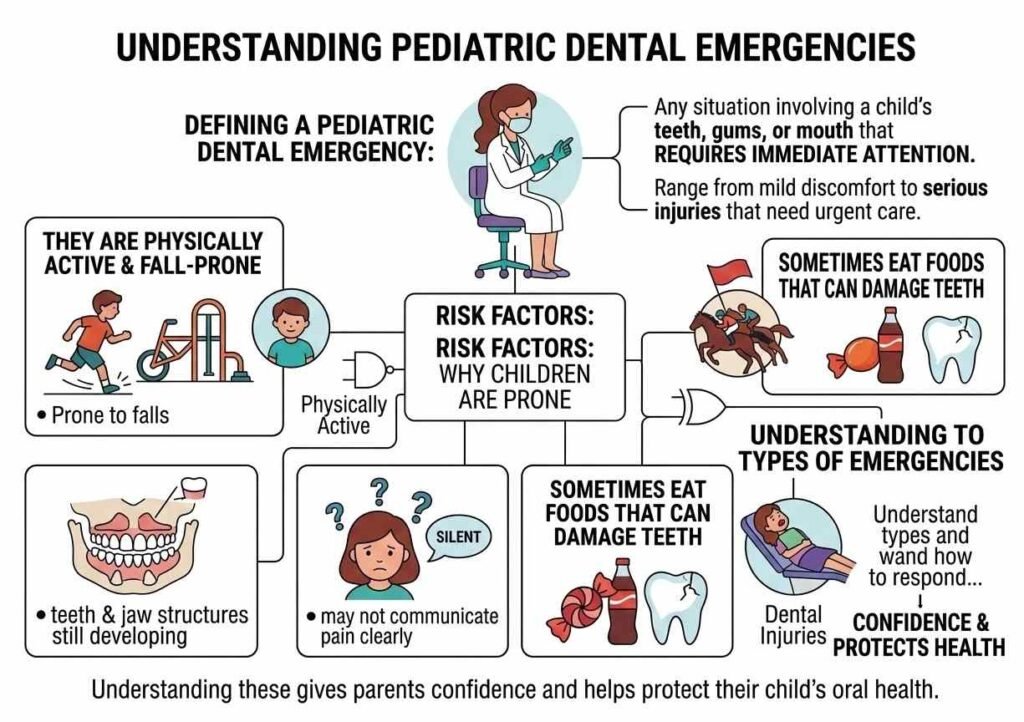
A pediatric dental emergency is any situation involving a child’s teeth, gums, or mouth that requires immediate attention. These emergencies can range from mild discomfort to serious injuries that need urgent care.
Children are more prone to dental emergencies because:
- They are physically active and prone to falls
- Their teeth and jaw structures are still developing
- They may not always communicate pain clearly
- They sometimes eat foods that can damage teeth
Understanding the types of emergencies and how to respond gives parents confidence and helps protect their child’s oral health.
Common Pediatric Dental Emergencies
Children can face several types of dental issues. Knowing what each one looks like and how to respond is essential.
Chipped or Broken Tooth
A chipped or broken tooth is one of the most common dental injuries in children. It can occur from falls, sports injuries, or biting something hard.
Signs to look for:
- Visible crack or missing part of the tooth
- Pain when chewing
- Sensitivity to hot or cold
- Bleeding from the gums
What to do immediately:
- Rinse the mouth gently with warm water
- Save any broken pieces in milk or saliva
- Apply a cold compress to reduce swelling
- Avoid giving hard foods
Even if the chip seems small, a dentist should examine it. Small cracks can lead to larger problems if untreated.
Knocked Out Tooth
A knocked-out tooth is a serious emergency, especially if it is a permanent tooth.
Immediate steps:
- Pick up the tooth by the crown only
- Rinse gently if dirty, without scrubbing
- Try to place it back in the socket
- If not possible, store it in milk
Time is critical. Seeing a dentist within 30 minutes greatly increases the chances of saving the tooth.
Severe Toothache
Toothaches can range from mild discomfort to severe pain that affects eating and sleeping.
Possible causes:
- Tooth decay
- Infection
- Food stuck between teeth
- Gum irritation
What parents should do:
- Rinse with warm water
- Use floss to remove trapped food
- Apply a cold compress
- Avoid extreme temperature foods
Persistent pain should never be ignored.
Bitten Lip, Tongue, or Cheek
Children often accidentally bite their lips or tongue, especially during play or after dental procedures.
What to do:
- Clean the area with warm water
- Apply gentle pressure to stop bleeding
- Use a cold compress
If bleeding continues or the wound is deep, seek medical care.
Dental Abscess
A dental abscess is a serious infection that requires urgent treatment.
Symptoms include:
- Severe pain
- Swelling in the face or gums
- Fever
- Bad taste in the mouth
Immediate care:
- Rinse with warm salt water
- Apply a cold compress
- Contact a dentist immediately
An untreated abscess can lead to serious health issues.
Immediate Steps to Take During Any Dental Emergency
No matter the situation, there are general steps parents can follow.
| Step | What to Do | Why It Helps |
|---|---|---|
| Stay Calm | Remain calm and reassure your child. | Helps reduce fear and anxiety during a dental emergency. |
| Rinse the Mouth | Use warm water to gently rinse the mouth. | Cleans the area and removes dirt or debris. |
| Control Bleeding | Apply gentle pressure with clean gauze or cloth. | Helps stop bleeding and protects the injured area. |
| Reduce Swelling | Place a cold compress on the outside of the cheek. | Minimizes swelling and eases discomfort. |
| Preserve Teeth or Fragments | Store a knocked-out tooth or fragments properly (milk or saliva). | Keeps the tooth viable for possible dental repair or reattachment. |
When to Seek Emergency Dental Care
Not all dental problems require immediate attention, but some do.
Seek urgent care if you notice:
- Severe or worsening pain
- Swelling in the face or jaw
- Bleeding that does not stop
- Signs of infection
- Difficulty opening the mouth
- A knocked-out permanent tooth
In such cases, contacting a dentist immediately is essential.
Special Considerations for Baby Teeth vs Permanent Teeth

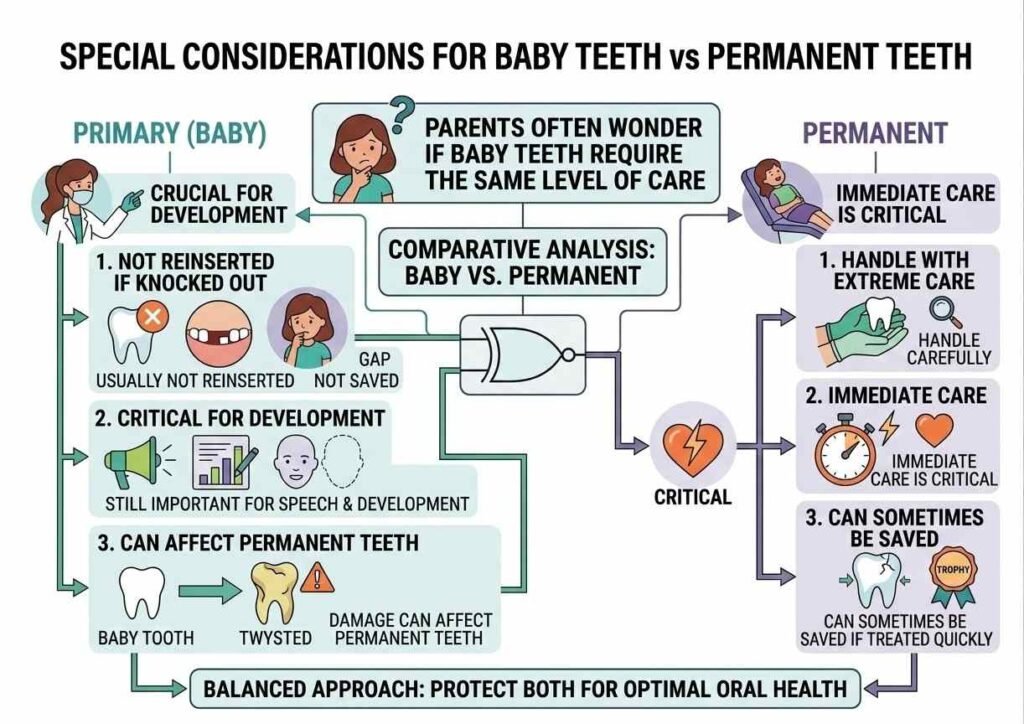
Parents often wonder if baby teeth require the same level of care.
Baby Teeth
- Usually not reinserted if knocked out
- Still important for speech and development
- Damage can affect permanent teeth
Permanent Teeth
- Must be handled carefully
- Immediate care is critical
- Can sometimes be saved if treated quickly
Creating a Dental Emergency Kit at Home
Having a small kit ready can save valuable time.
Include:
- Gauze
- Small container with lid
- Saline solution
- Cold pack
- Dentist contact details
Preventing Pediatric Dental Emergencies
Prevention is always better than treatment.
Encourage Safe Eating Habits
- Avoid hard foods like ice or hard sweets
- Teach children to chew carefully
Use Mouthguards
Mouthguards are essential for sports like football, cricket, or cycling.
Maintain Oral Hygiene
- Brush twice daily
- Floss regularly
- Use fluoride toothpaste
Regular Dental Checkups
Routine visits help identify problems early.
Emotional Support During Emergencies
Children can feel scared or anxious during dental emergencies.
Parents can help by:
- Speaking calmly
- Reassuring the child
- Explaining what is happening in simple terms
- Offering comfort and support
Long-Term Impact of Dental Injuries
Ignoring dental injuries can lead to:
- Infection
- Tooth loss
- Misalignment
- Speech issues
- Confidence problems
Early treatment prevents these complications.
Practical Advice for Busy Parents
Life can be hectic, but preparation helps.
- Keep emergency numbers saved
- Know the nearest dental clinic
- Teach children basic dental safety
- Schedule regular checkups
If you are dealing with situations like pediatric dental emergencies on Fullerton, having a clear action plan ensures faster response and better outcomes.
Common Mistakes to Avoid
Parents sometimes make mistakes during emergencies.
Avoid:
- Ignoring pain
- Using aspirin on the gums
- Delaying treatment
- Handling teeth incorrectly
- Giving very hot or cold foods
When to Visit the Hospital Instead of a Dentist
Some situations require hospital care.
Go to emergency services if:
- There is a suspected broken jaw
- The child has difficulty breathing
- There is severe facial swelling
- There is head trauma
Building Long-Term Dental Awareness in Children
Teaching children about dental care reduces future emergencies.
Encourage:
- Daily brushing habits
- Healthy eating
- Wearing protective gear
- Reporting pain early
Conclusion
Pediatric dental emergencies can happen at any time, but being prepared makes all the difference. Knowing how to respond quickly and correctly helps reduce pain, prevent complications, and protect your child’s smile.
With proper knowledge, preparation, and regular dental care, parents can handle emergencies confidently and ensure their child’s long-term oral health stays strong.