


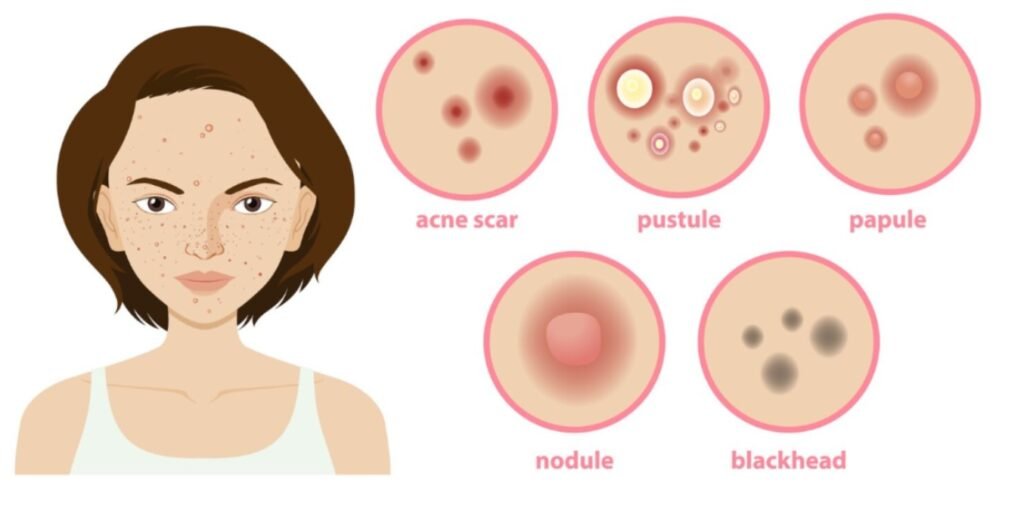
Acne scars can be treated with a combination of in-office procedures and at-home care. The next section is simple. Most people get stuck figuring out which treatments work for their type of scarring and how long it takes to work.
This is the right way to go. What are the different procedures you can get for acne scars? Results rarely come from a single source of action. There’s usually a trial-and-error component and, at the very least, some patience.
Understanding Acne Scars (Before You Try to Fix Them)
Not all acne scars are the same. This matters more than people expect.
If you’ve ever tried a product that “should work” but didn’t, there’s a good chance it wasn’t designed for your skin type.
Common Types of Acne Scars
| Scar Type | Description | Best Treatment Direction |
| Ice Pick | Deep, narrow holes | CROSS, laser |
| Boxcar | Wider, defined edges | Laser, microneedling |
| Rolling | Wavy, uneven texture | Subcision, microneedling |
| Hypertrophic | Raised scars | Steroid injections, laser |
And here’s something worth mentioning, even if it sounds obvious, you should only treat scars once active acne is under control. Otherwise, you’re basically trying to repair while new damage is still happening.
Effective Professional Treatments for Acne Scars
This is where most of the real transformation happens.
At-home products help, yes, but if you’re dealing with textured or deep scars, in-office treatments are usually necessary.
1. Microneedling (Collagen Induction Therapy)
Microneedling creates controlled micro-injuries in the skin. It sounds aggressive, but it’s actually quite controlled and widely used.
The idea is simple. Trigger collagen production, let the skin rebuild itself more evenly.
- Best for: rolling and mild boxcar scars
- Downtime: minimal
- Sessions needed: typically 3 to 6
Some clinics combine it with PRP, sometimes called the “vampire facial,” which can enhance results. Whether that’s worth it depends on opinions, which are a bit mixed.
2. Laser Resurfacing (CO2 & Non-Ablative Lasers)
Laser treatments go deeper. They remove or heat layers of skin to stimulate regeneration.
- Ablative lasers (like CO2) are more aggressive
- Non-ablative lasers are gentler, but require more sessions
Laser is often the go-to for moderate to severe scars. It can significantly improve texture, but it does come with downtime.
Honestly, this is one of those treatments where provider experience matters a lot
3. Chemical Peels (Medical Grade)
Not the over-the-counter kind. These are stronger.
Chemical peels remove damaged outer layers of skin, improving both pigmentation and mild scarring.
- Best for: discoloration and shallow scars
- Common acids: glycolic, salicylic, TCA
They’re often used as part of a broader treatment plan, not usually a standalone solution for deep scars.
4. Subcision (For Deep, Tethered Scars)
This one is less talked about, but very effective.
A needle is inserted under the skin to break fibrous bands pulling the scar downward.
- Best for: rolling scars
- Often combined with fillers or PRP
It sounds intense, and it is, but results can be dramatic when done properly.
5. CROSS Technique (For Ice Pick Scars)
CROSS stands for Chemical Reconstruction of Skin Scars.
It uses high-concentration TCA applied directly into deep scars to stimulate collagen.
- Best for: ice pick scars
- Very targeted approach
It’s not a full-face treatment. More like spot correction.
When to Consider Professional Help
If you’re unsure where to start, it’s worth consulting a clinic that specializes in acne scar treatments in Toronto, where a personalized plan can make a noticeable difference.
Sometimes just having someone assess your skin in person changes everything.
At-Home Treatments (Important, But Limited)
This is where expectations need to be realistic.
At-home care won’t erase deep scars, but it does improve overall skin quality and supports professional treatments.
Key Ingredients That Help
| Ingredient | What It Does | Use Frequency |
| Retinoids | Boost collagen, speed turnover | Night, 2 to 5x weekly |
| Vitamin C | Brightens, supports collagen | Daily morning |
| SPF 30+ | Prevents darkening of scars | Every day |
| AHAs/BHAs | Exfoliate, smooth texture | 1 to 3x weekly |
A Simple Routine That Works
Morning:
- Cleanser
- Vitamin C
- Moisturizer
- Sunscreen
Evening:
- Cleanser
- Retinoid
- Moisturizer
Consistency matters more than complexity here. People often overcomplicate routines and then stop using them.
Realistic Timeline
Let’s be honest. Acne scars don’t disappear overnight.
| Treatment Type | Initial Results | Full Results |
| Microneedling | 4 to 6 weeks | 3 to 6 months |
| Laser | 2 to 4 weeks | 3 to 6 months |
| Peels | 1 to 3 weeks | Ongoing |
| Topicals | 6 to 12 weeks | Continuous |
And even then, most results are improvements, not perfection.
That said, even a 50 to 70 percent improvement can look like a huge difference in real life.
Combining Treatments (Usually the Best Approach)
This is where things get interesting.
Most effective acne scar plans combine treatments:
- Microneedling + PRP
- Subcision + fillers
- Laser + chemical peels
- Topicals + everything above
It’s rarely just one thing.
If anything, thinking in “phases” works better. Start with deeper structural treatments, then refine with surface-level treatments.
Common Mistakes People Make
Some of these are surprisingly common.
- Starting treatment while the acne is still active
- Skipping sunscreen, this one really slows progress
- Expecting results after one session
- Using too many actives at once and damaging the skin barrier
Also, switching treatments too quickly. People try something once, don’t see immediate results, and move on. That usually backfires.
Does Skin Type or Tone Matter?
Yes, quite a bit.
Darker skin tones, for example, have a higher risk of post-inflammatory hyperpigmentation after aggressive treatments.
That doesn’t mean treatments aren’t safe; it just means they need to be customized.
This is another reason why experienced providers matter.
Final Thoughts
Getting rid of acne scars is possible, but it’s not linear.
Some treatments will work better than expected. Others, maybe not as much. And sometimes progress feels slow, until you suddenly notice your skin looks smoother, softer, less uneven.
It’s gradual.
If I had to simplify it, I’d say this:
- Identify your scar type
- Commit to a combination approach
- Be consistent, especially with skincare
- Give treatments enough time actually to work
And maybe don’t chase perfection. Most people don’t get there anyway, but they do get to a place where scars aren’t the first thing they notice anymore.
That alone is a big shift.