


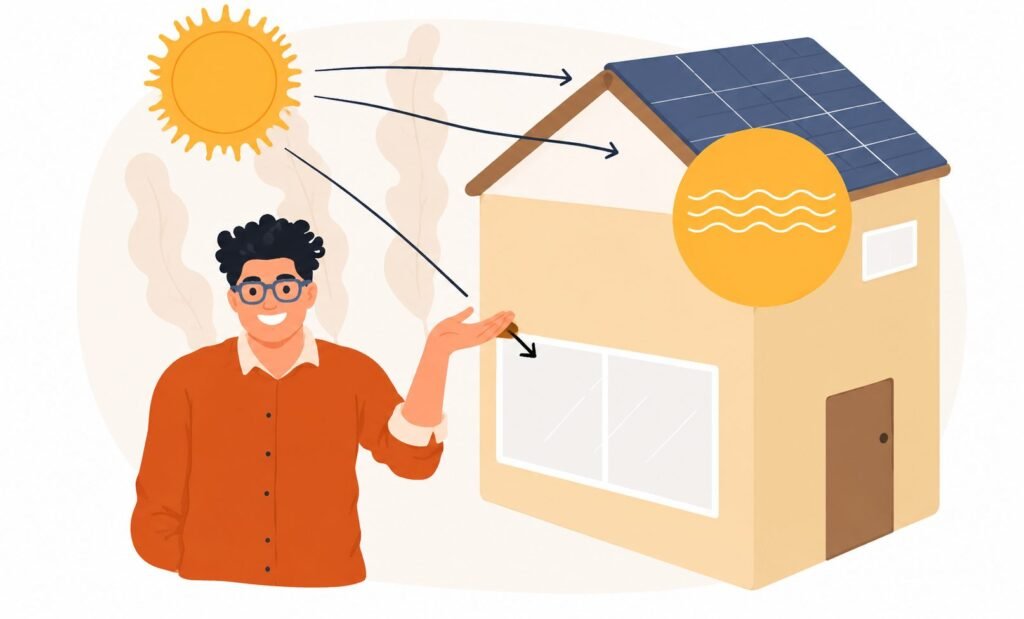
Residential solar batteries are becoming a serious option for UK homeowners who want more control over their electricity use. Instead of sending all unused solar power back to the grid during the day, a battery can store some of that energy for the evening, overnight use, or times when grid electricity is more expensive.
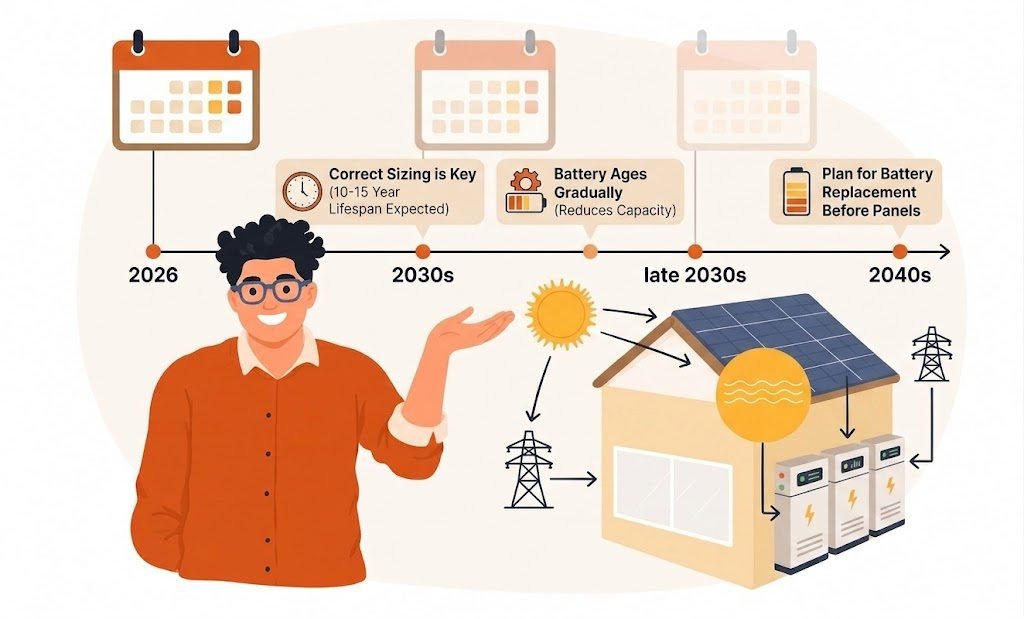
For most homes, a good solar battery should last around 10 to 15 years before replacement becomes likely. The exact answer depends on the battery type, how often it is charged and discharged, where it is installed, and whether the system has been designed properly for the household’s real energy use.
A qualified installer, such as GSM Limited (gsmlimited.com), can help UK homeowners look beyond the battery size alone and consider solar generation, inverter choice, smart tariffs, heating type, safety rules, and daily family habits.
Typical Lifespan Of A Home Solar Battery
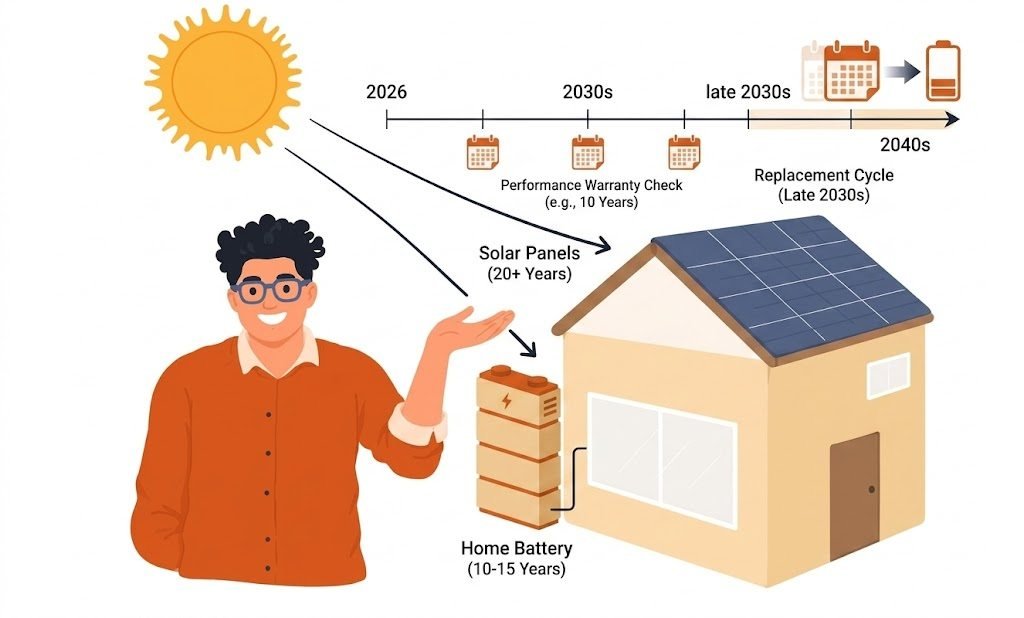
Most modern residential solar batteries are designed to give many years of service. In normal UK use, a lifespan of 10 to 15 years is a realistic planning range. Some batteries may keep working beyond that, but their usable storage capacity will slowly reduce over time.
A battery does not usually fail suddenly on a set date. It ages gradually. After years of use, it may still charge and discharge, but it may not hold as much energy as it did when new. This is why warranty terms are important. Many batteries come with a performance warranty that explains how much capacity should remain after a certain number of years or cycles.
What This Means For UK Homeowners
If you install solar panels and a battery today, you should plan for the battery to be replaced before the panels. Solar panels often last longer than batteries, so the battery is usually the part of the system that needs earlier financial planning.
For example, a homeowner may install a solar system in 2026 and still have strong panel performance in the 2040s, but the battery may need replacing sometime in the late 2030s or early 2040s. That is normal and should be included in the long-term cost calculation.
Battery Type Makes A Big Difference
The chemistry inside the battery has a direct impact on lifespan, safety, performance, and cost.
Most modern home storage systems use lithium-ion batteries because they are compact, efficient, and suitable for regular charging and discharging. Many newer systems use lithium iron phosphate, often called LFP, which is known for strong cycle life and good stability.
Older lead-acid batteries are still found in some off-grid or older systems, but they usually need more maintenance, take up more space, and have a shorter working life when compared with modern home storage batteries.
Common Battery Types Compared
| Battery type | Typical use | Main benefit | Main drawback |
|---|---|---|---|
| Lead-acid | Older or budget systems | Lower upfront cost | Shorter life and more maintenance |
| Standard lithium-based storage | Common home systems | Good efficiency and compact size | Quality varies by brand and warranty |
| Lithium iron phosphate | Newer home batteries | Long cycle life and strong safety profile | Often higher upfront cost |
The cheapest battery is not always the best value. A lower-cost battery that needs replacing sooner may cost more over the full life of the system.
Charging Cycles Are One Of The Biggest Ageing Factors
A battery cycle means the battery has been charged and discharged. The more often a battery cycles, the more wear it experiences.
A UK home that uses its battery every evening will cycle it more often than a home that only uses it during power cuts or occasional high-price periods. This does not mean daily use is bad. Batteries are built to be used. The issue is whether the battery is being worked too hard because it is too small, badly configured, or regularly drained too deeply.
Why Depth Of Discharge Matters
Depth of discharge means how much of the battery is used before it is charged again. Regularly taking a battery very low can increase stress. Many modern systems protect themselves by keeping a hidden reserve, so the battery is not truly empty even when the app shows a low figure.
A well-designed system avoids pushing the battery to its limit every day. This is one reason proper sizing matters.
UK Weather And Installation Location Affect Battery Life
Battery performance is affected by temperature. Heat can speed up ageing, while very cold conditions can reduce charging speed and short-term performance.
This matters in the UK because batteries may be installed in garages, utility rooms, outbuildings, or on suitable outside walls. A battery placed in a poor location may suffer more from cold, damp, direct sun, or poor ventilation.
Safe Placement Is Not Just About Convenience
Home battery placement must be considered carefully. UK best practice now puts much more attention on fire safety, access, ventilation, and escape routes. Batteries should not be placed somewhere just because it is easy for the installer or hidden from view.
Poor locations can include areas that are difficult to access, places with poor ventilation, or areas close to escape routes. Lofts are also often unsuitable because they can become very hot in summer, cold in winter, and difficult to access safely.
A safe installation should consider:
| Location factor | Why it matters |
|---|---|
| Ventilation | Helps manage heat and safe operation |
| Access | Allows inspection, servicing, and emergency access |
| Weather protection | Reduces exposure to damp and extreme temperatures |
| Fire safety | Helps protect people, property, and escape routes |
| Manufacturer rules | Keeps the warranty and system approval valid |
How UK Energy Habits Change Battery Wear
Not every household uses a battery in the same way. This is where the UK context matters.
A small household with gas central heating may only need a modest battery to cover evening lights, cooking, TV, routers, and small appliances. A larger home with a heat pump, electric vehicle, or high daytime and evening demand may need more storage.
Some UK households also charge batteries from the grid overnight using smart time-of-use tariffs. This can make sense when electricity is cheaper at night and more expensive during the day. However, it also means the battery may cycle more often, which should be considered when calculating long-term value.
Example Of Two Different Homes
A retired couple with solar panels, gas heating, and low evening use may cycle their battery gently. Their battery could last toward the higher end of the expected range.
A busy family with an EV, heat pump, gaming PCs, tumble dryer use, and regular evening demand may place more load on the battery. That does not make a battery unsuitable, but it makes correct sizing much more important.
Battery Size Can Affect Replacement Timing
A battery that is too small may be charged and drained heavily every day. A battery that is too large may cost more than needed and may not be used efficiently.
In the UK, many domestic solar batteries fall within a broad range from small units for light evening use to larger systems for homes with higher electricity demand. The right size depends on three things:
- How much excess solar energy your panels produce
- When your household uses the most electricity
- Whether you plan to charge from the grid on cheaper tariffs
A proper survey should look at real electricity usage, not just roof size. Smart meter data can be very useful because it shows when the home actually uses power.
Signs Your Solar Battery May Need Replacing
Solar battery ageing is usually gradual. You may notice small changes before the battery becomes a clear problem.
Common signs include:
| Sign | What it may mean |
|---|---|
| The battery drains faster than before | Storage capacity may have reduced |
| Less power is available overnight | The battery may no longer hold enough charge |
| The app shows unusual performance drops | Settings, firmware, or battery health may need checking |
| The battery charges slowly in normal weather | Temperature, inverter, or battery condition may be involved |
| More electricity is being bought from the grid | The battery may not be covering demand as it used to |
These signs do not always mean the battery needs immediate replacement. Sometimes the issue is a setting, tariff schedule, inverter fault, firmware update, or change in household energy use.
Maintenance And Monitoring Help Extend Battery Life
Modern batteries do not need much hands-on maintenance, but they should not be ignored.
Homeowners should keep the battery area clear, check the app regularly, make sure vents are not blocked, and arrange professional checks if performance changes. The system should also be installed and serviced in line with the manufacturer’s instructions.
Practical Checks For Homeowners
| Battery Safety & Maintenance Check | Recommended Action |
|---|---|
| Protect battery from environmental damage | Check that the battery is not exposed to unnecessary heat or damp conditions. |
| Keep battery area clear | Keep the area around the battery free from clutter to allow safe operation and ventilation. |
| Monitor battery performance | Review the battery app every few weeks to identify unusual changes or issues early. |
| Understand warranty details | Ask the installer to explain the warranty, cycle limit, and expected retained capacity of the battery. |
| Avoid unsafe repairs | Do not attempt DIY repairs on a home battery system; contact a qualified pro |
Warranty Terms Are Just As Important As Battery Size
A strong warranty gives a clearer idea of how long the manufacturer expects the battery to perform. Homeowners should read the warranty before buying, not after installation.
Look for:
| Warranty point | Why it matters |
|---|---|
| Years covered | Shows the basic warranty period |
| Cycle limit | Shows how much use is covered |
| Capacity guarantee | Explains expected performance after years of use |
| Labour coverage | Confirms whether replacement work is included |
| Installation conditions | Protects against voiding the warranty |
A 10-year warranty does not always mean the battery dies after 10 years. It means the manufacturer’s formal support is limited to the warranty terms.
Is A Solar Battery Worth It If It Needs Replacing Later?
A battery can still be worthwhile even though it will not last forever. The real question is whether it helps the household reduce grid use, make better use of solar energy, benefit from smart tariffs, and improve backup options where supported.
For UK homeowners, the strongest case is often when a battery is matched with:
| Key Requirement | Description |
|---|---|
| Suitable solar panel system | Choose a solar panel system that matches your energy needs, roof space, and expected generation. |
| Good understanding of electricity demand | Review your electricity usage patterns to ensure the system is correctly sized. |
| Smart meter data | Use smart meter information to understand consumption and identify the best energy-saving opportunities. |
| Sensible time-of-use tariff | Select an electricity tariff that makes sense for when you use, store, or export energy. |
| Safe and compliant installation | Ensure the system is installed by qualified professionals and meets safety standards and regulations. |
| Clear warranty | Confirm warranty terms, coverage period, and what components are included. |
| Realistic replacement plan | Have a plan for future battery or system replacement, including expected lifespan and costs. |
The weakest case is when a battery is sold only as an add-on without checking household usage, roof generation, tariff options, or installation location.
Final Verdict
Most residential solar batteries last around 10 to 15 years before replacement becomes likely. The battery may continue working after that, but with reduced storage capacity.
The best way to get longer service is to choose the right battery chemistry, avoid poor installation locations, size the system properly, protect it from temperature stress, and use smart controls sensibly.
For UK homes, the decision should not be based only on battery price. It should be based on daily electricity habits, solar generation, safety, warranty cover, smart tariff options, and the long-term cost of replacement. A well-planned battery system can make a solar setup more useful, more flexible, and better suited to the way a modern home actually uses energy.