



A smart driveway, a clean commercial yard, or a well-kept property can look simple from the outside. Most people notice the finished surface, the neat edges, the fresh paving, or the tidy site layout. They rarely think about the preparation underneath.
In construction and property maintenance, the work people do not see is often the work that matters most. A stable base, sensible drainage, and safe handling of old site infrastructure can determine whether a project lasts for years or becomes a source of repeat repairs.
Across the UK, where heavy rain, clay soils, older buildings, tight urban sites, and changing weather can all affect ground conditions, these practical details are not optional. They protect budgets, reduce disruption, and help property owners avoid problems that could have been prevented at the start.
Why Ground Preparation Matters Before Any Surface Goes Down
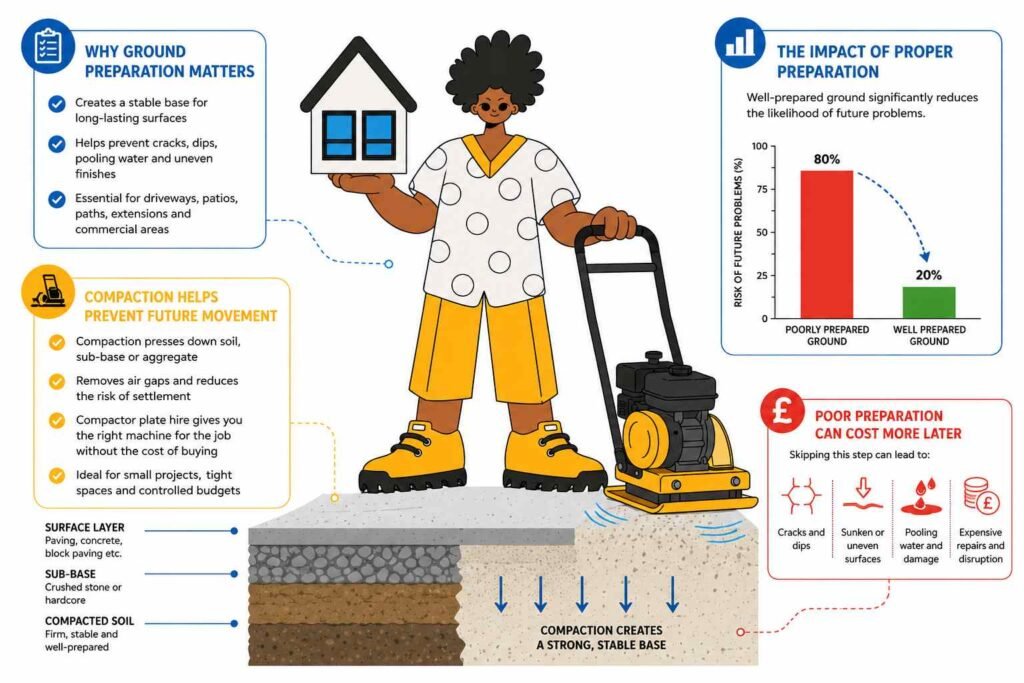
A driveway, patio, path, or small extension is only as reliable as the ground beneath it. If the base is weak, uneven, or poorly compacted, the surface above can move over time. That movement may show as cracks, dips, loose slabs, pooling water, or an uneven finish.
This is a common issue on UK domestic and commercial sites. Garden projects, block-paved driveways, temporary access roads, and small building works all need proper ground preparation before the visible work begins.
Compaction Helps Prevent Future Movement
Compaction is the process of pressing down soil, sub-base, hardcore, or aggregate so it becomes firm and stable. It removes air gaps and reduces the chance of later settlement.
For a homeowner laying a garden path, a contractor preparing a driveway, or a small builder working on a site access route, using the right equipment can make a major difference. Short-term access to compactor plate hire is often a practical option because it gives users the machinery needed for proper preparation without the cost of buying equipment that may only be used once or twice.
This can be especially useful for smaller UK projects where space is limited, and budgets need to be controlled. Hiring also allows people to choose the right size of plate for the job, rather than trying to make do with unsuitable tools.
Poor Preparation Can Cost More Later
Skipping ground preparation may save time on day one, but it can create expensive problems later. A driveway that sinks in places may need sections lifted and relaid. A patio with poor levels can collect water near the house. A commercial yard with soft spots may become unsafe for vehicles or foot traffic.
Good preparation is not just a construction step. It is a form of risk control.
Drainage Is One of the Most Important Parts of Property Maintenance
Water is one of the biggest causes of long-term damage around buildings and outdoor spaces. In the UK, this matters even more because many areas face regular rainfall, older drainage layouts, compacted urban ground, and surfaces that do not absorb water easily.
When water is not managed properly, it can cause staining, slippery surfaces, damp problems, erosion, and damage to foundations or paved areas. Small drainage issues often become larger if they are ignored.
Why Surface Water Needs a Clear Route
Every outdoor area should have a plan for where rainwater will go. This applies to driveways, car parks, loading bays, courtyards, landscaped areas, and commercial yards.
A good drainage system collects water before it becomes a problem and moves it away from key areas. For example, a channel drain near a garage entrance can help stop water from entering the building. A well-positioned drain in a yard can reduce puddling and make the space safer for staff, customers, or vehicles.
In many projects, gully drainage is used to collect surface water from paved or hardstanding areas and direct it into a suitable drainage route. When designed and installed correctly, it can help keep a site cleaner, safer, and easier to maintain.
Drainage Should Be Planned, Not Added Late
Drainage should be considered before surfaces are installed. Adding it after the work is finished can mean cutting into new paving, lifting sections of concrete, or changing levels that should have been correct from the beginning.
UK property owners should also think about local conditions. A property on a slope, a site with clay soil, or an area with frequent standing water may need more careful drainage planning than a flat, free-draining location. In some cases, professional advice may be needed to make sure water is handled legally and safely.
Safe Management of Old Site Infrastructure
Many properties contain old infrastructure that is no longer used. This can include redundant fuel tanks, service voids, old pipework, disused chambers, or underground structures left behind after a building or site has changed purpose.
These hidden features can create risk if they are ignored. Empty tanks may weaken, collapse, trap vapours, or cause problems during future building work. Site owners, landlords, facilities managers, and contractors need to deal with them responsibly.
Redundant Tanks Should Not Be Left Unmanaged
Old fuel tanks are a good example. A tank that is no longer in use may still need inspection, cleaning, safe decommissioning, and stabilisation. Leaving it empty is not always the safest option, especially if the land may later be built on, sold, resurfaced, or used by vehicles.
Specialist Foam and Concrete Filling Services can help make redundant tanks or voids safer by filling and stabilising the space. This reduces the chance of future collapse and helps site managers deal with unused infrastructure in a more controlled way.
This type of work is often relevant for petrol station sites, industrial premises, farms, commercial yards, and older properties where underground tanks were installed many years ago.
Compliance and Safety Should Come First
In the UK, site safety is closely linked to the duty of care. Property owners and employers are expected to manage risks properly, especially where workers, tenants, customers, or the public may be affected.
Before dealing with old tanks or underground structures, it is sensible to ask:
- Is there any contamination risk?
- Has the tank been cleaned or inspected?
- Could the structure collapse under the weight?
- Is specialist equipment required?
- Will future construction work be affected?
- Are records needed for insurers, buyers, or regulators?
Taking action early is usually easier than dealing with an emergency later.
How These Hidden Details Protect Long-Term Value
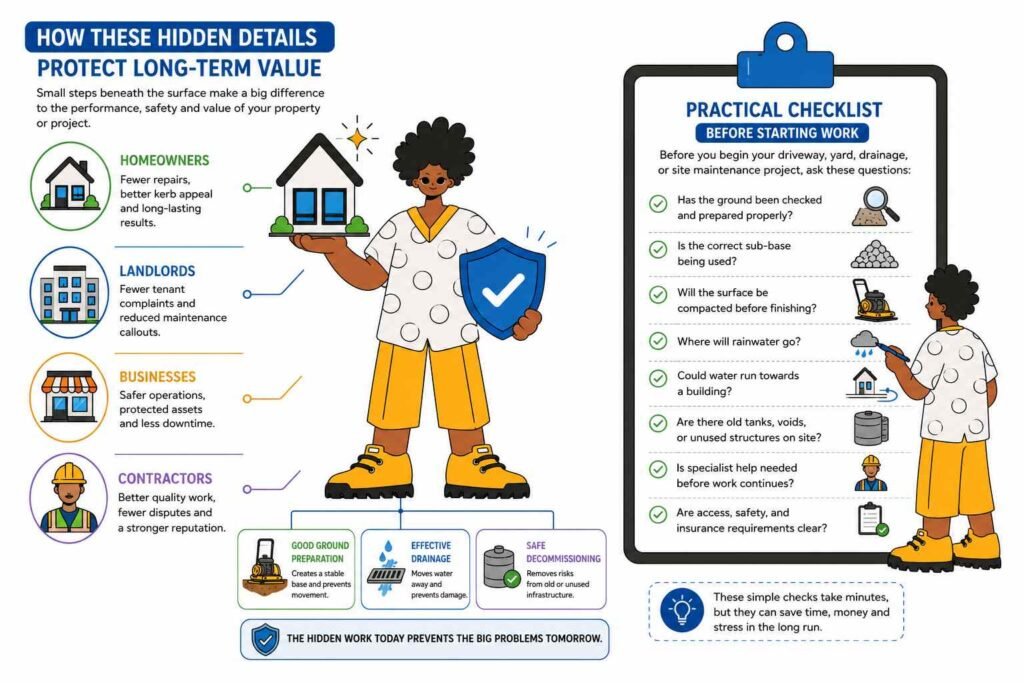
Ground preparation, drainage, and safe decommissioning may not be the most eye-catching parts of a project, but they support almost everything else. They help finished surfaces last longer, reduce maintenance costs, and make sites safer to use.
For homeowners, this can mean fewer repairs and better kerb appeal. For landlords, it can reduce tenant complaints and maintenance callouts. For businesses, it can support safer operations and protect valuable assets. For contractors, it can help avoid disputes and improve the quality of the finished job.
Practical Checklist Before Starting Work
Before starting a driveway, yard, drainage, or site maintenance project, ask these questions:
- Has the ground been checked and prepared properly?
- Is the correct sub-base being used?
- Will the surface be compacted before finishing?
- Where will rainwater go?
- Could water run towards a building?
- Are there old tanks, voids, or unused structures on site?
- Is specialist help needed before work continues?
- Are access, safety, and insurance requirements clear?
These questions are simple, but they can prevent costly mistakes.
Choosing the Right Help for the Job
Not every job needs a large contractor, but most projects benefit from proper planning. Some tasks can be handled by skilled DIY users or small tradespeople. Others need specialist input, especially where drainage design, underground infrastructure, contamination, or commercial safety is involved.
When choosing a supplier or contractor in the UK, look for clear pricing, suitable experience, good communication, and evidence that they understand the job conditions. The cheapest quote is not always the best value if it misses important preparation work.
A reliable provider should be able to explain what needs to be done, why it matters, what equipment will be used, and what risks need to be managed. Good advice at the beginning can save a property owner from expensive correction work later.
Final Thoughts
The strongest construction and maintenance projects are often supported by work that most people never notice. A firm base, well-planned drainage, and safe handling of redundant infrastructure can make the difference between a project that lasts and one that needs repeated repair.
For UK property owners, site managers, and contractors, these details should not be treated as afterthoughts. They are part of building responsibly, protecting value, and keeping spaces safe for everyday use.
Good results are not only about what people can see at the end. They are also about the careful decisions made before the final surface is ever laid.