


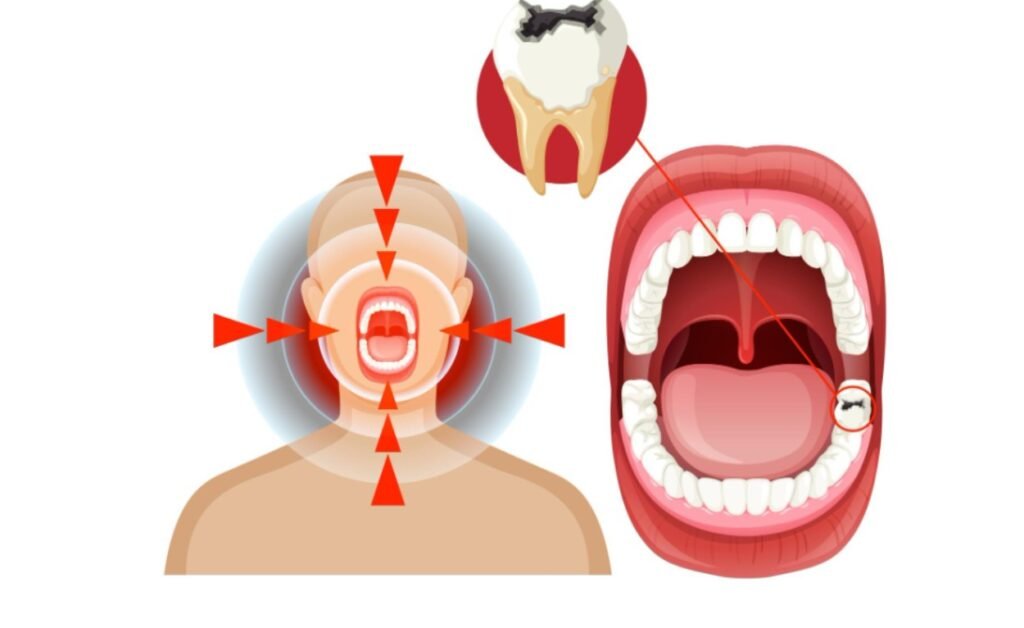
A cracked tooth often announces itself in a very ordinary moment. You bite into toast, a crisp, a seeded roll, or a piece of chewy meat and feel a sharp sting that disappears almost as quickly as it arrived. The tooth may look normal in the mirror. There may be no visible hole, no bleeding, and no obvious broken edge. That is exactly why cracked teeth are easy to ignore.
The problem is that a crack is not just a line in enamel. It can act like a moving gap in a load-bearing structure. Every meal places pressure on the tooth. If the crack opens and closes under that pressure, bacteria and saliva can move deeper towards the nerve. Early treatment is often the difference between a straightforward protective restoration, such as a dental crown, and a painful infection that needs root canal treatment.
Why a Cracked Tooth Can Be Hard to Spot
Many cracked teeth are not dramatic breaks. A fine fracture may run between cusps, under an old filling, or down the side of a molar where it is hidden from direct view. Standard X-rays can show decay, bone levels and some root problems, but a hairline crack may still be difficult to see, especially in the early stages.
This is why the history you give matters. A dentist will pay close attention if you describe pain that appears only when chewing, pain that happens as you release the bite, or a short electric feeling when cold liquid hits one specific tooth. Those details can be more useful than simply saying the tooth aches.
Common UK situations that trigger symptoms
- Biting hard crusts, pork crackling, seeded bread, nuts, boiled sweets or unpopped popcorn.
- Clenching during stress, especially during exam periods, busy work spells, long drives or nighttime grinding.
- Chewing on one side for weeks because another tooth is tender, which overloads a back molar.
- Large older fillings that leave thin natural tooth walls unsupported.
From Enamel to Nerve: What Happens Inside the Tooth
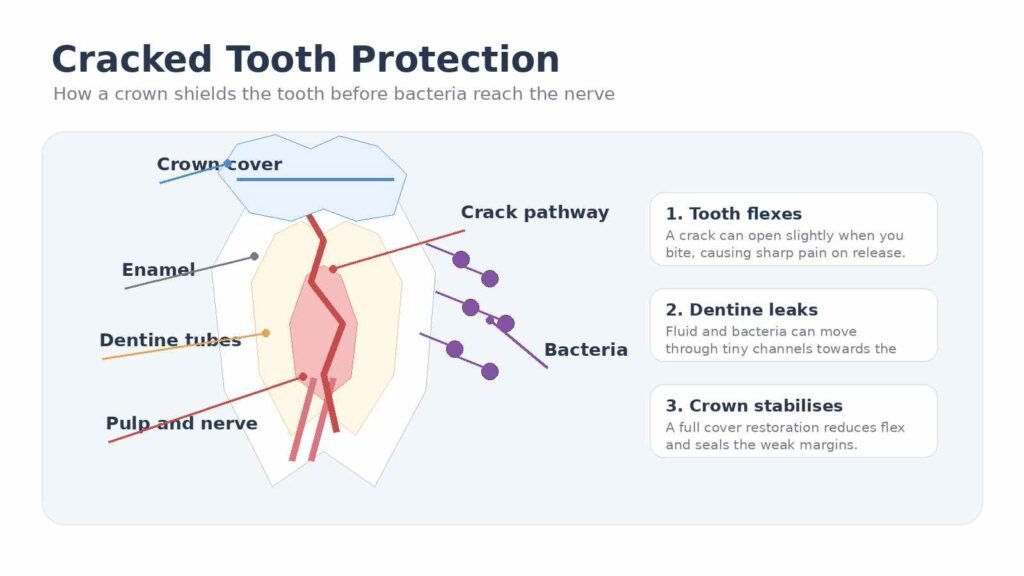
A tooth has layers. The outer enamel is very hard, but it is not alive and cannot repair itself once it cracks. Beneath it is dentine, a less hard and more porous layer containing tiny fluid-filled channels. At the centre is the pulp, which contains blood vessels, connective tissue and nerves.
When a crack is limited to the outer enamel and causes no symptoms, it may be monitored. When it reaches dentine, chewing pressure can make the cracked sections move slightly. That movement shifts fluid within the dentine channels and irritates the nerve. This is why cracked tooth pain is often sharp, brief and linked to biting rather than constant at first.
The bigger risk is leakage. A crack can allow bacteria from saliva and food debris to travel into areas that should remain sealed. Once bacteria approach the pulp, the tooth can move from irritation to inflammation, then infection.
Why the Pulp Can Become Infected So Quickly
The dental pulp does not have much room to swell. Skin or muscle can expand when inflamed. Pulp tissue is trapped inside hard dentine walls. If bacteria trigger inflammation inside that closed space, pressure rises, and blood flow can be reduced. The tooth may then become sensitive to heat, ache after cold drinks, or throb without chewing.
Dentists often talk about reversible and irreversible pulpitis. In simple terms, reversible pulpitis means the nerve is irritated but may settle if the cause is removed. Irreversible pulpitis means the inflammation is too advanced for the pulp to recover. At that point, root canal treatment or extraction may be needed to deal with the infected or dying tissue.
This is the reason timing matters. A cracked tooth that is treated while the pulp is still healthy or only mildly inflamed has a better chance of being saved without nerve treatment.
How Crown Treatment Protects a Cracked Tooth
A filling repairs a hole. A crown protects a weakened structure. That distinction is important. If a crack runs through the biting surface of a molar, a normal filling may not stop the two sides of the tooth from flexing under pressure. In some cases, removing more tooth to place a filling can leave the remaining walls even weaker.
A crown is different because it covers the visible part of the prepared tooth like a fitted cap. When it is designed and bonded well, it holds the cusps together, spreads biting forces more evenly and reduces the movement that causes bite-release pain. It also creates a new sealed margin around the tooth, helping to block bacteria from travelling through the crack.
For readers comparing restorative options, Nuffield Dental provides a patient-friendly explanation of when a dental crown may be used to protect and rebuild a damaged tooth.
What “full cover” really means
- The biting surface is covered, so the chewing force is carried by the crown rather than fragile, cracked enamel.
- The sides of the tooth are wrapped, which helps stop the cusps from opening apart under load.
- The margins are sealed with dental cement, reducing the chance of microscopic leakage.
- The shape is adjusted so the tooth meets the opposite tooth correctly, without high spots that could restart pain.
Signs You Should Not Ignore
Cracked tooth symptoms can come and go, which makes them easy to dismiss. The table below shows what different symptoms may suggest. It is not a diagnosis, but it can help you decide how quickly to contact a dentist.
| Symptom | What it may mean | What to do |
| Sharp pain when you stop biting | A cusp may be flexing around a crack. | Book a dental assessment promptly. Avoid chewing hard foods on that side. |
| Cold sensitivity that fades quickly | The dentine may be exposed or irritated. | Mention exactly which tooth reacts and how long it lasts. |
| Lingering heat sensitivity or night pain | The pulp may be more inflamed. | Ask for urgent dental advice, especially if pain is worsening. |
| Swelling, fever, bad taste or trouble opening your mouth | Possible dental abscess or spreading infection. | Seek urgent dental help. Use NHS 111 if you cannot get a dental appointment. |
Swelling, fever, bad taste or trouble opening your mouth. Possible dental abscess or spreading infection. Seek urgent dental help. Use NHS 111 if you cannot get a dental appointment.
When It Becomes Urgent in the UK
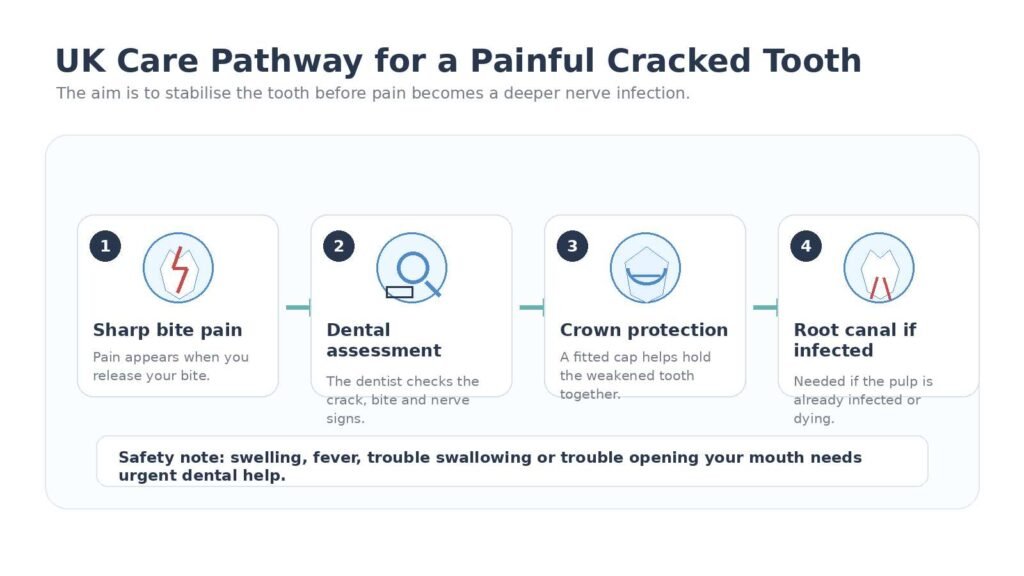
If you chip, break or crack a tooth, the NHS advises seeing a dentist rather than a GP, because a GP cannot provide dental treatment. If your own practice is closed, its answerphone may give out-of-hours instructions. If you do not have a dentist or cannot get an emergency appointment, NHS 111 can advise where to get help.
A cracked tooth with mild bite pain is not always a hospital emergency, but it should still be assessed before the crack deepens. Do not wait for swelling before calling. Swelling, fever, a bad taste, difficulty chewing, difficulty opening your mouth, or pain that spreads into the jaw or ear all raise the level of concern.
Call 999 or go to A&E if serious infection signs appear.
- You are finding it hard to breathe, speak or swallow.
- You have significant swelling in the mouth, face or around the eye.
- You suddenly cannot open your mouth properly.
- You feel very unwell with signs of spreading infection.
What Your Dentist May Check
A good assessment is not only about looking for a visible line. Your dentist may ask you to bite on a small tool one cusp at a time. Pain on release can help identify the cracked cusp. They may also use magnification, transillumination, periodontal probing and X-rays to rule out decay, abscess, root problems and gum-related pain.
The dentist will also check your bite. A crown that is placed on a tooth still hitting too heavily can remain tender. If you grind your teeth, the long-term plan may include a nightguard to protect the crown and the rest of your teeth.
UK Cost and Access: NHS and Private Treatment
In England, NHS dental treatment is charged by bands. From 1 April 2026, Band 3 is £332.10 and includes crowns, dentures and bridges when they are clinically needed. If your course of treatment includes items from different bands, you usually pay only the highest band that applies to that course, not a separate charge for each item.
NHS availability can vary by area, and not every cosmetic material or same-day digital workflow is provided under NHS care. Private treatment may offer more choice in ceramic materials, shade matching, scanning technology, appointment times and laboratory options. The important point is to ask for a written treatment plan before you agree.
Questions to ask before agreeing to a crown
- Is the crack limited to the tooth crown, or is there any sign that it extends below the gumline?
- Does the tooth show signs of irreversible pulpitis or infection?
- What material is being recommended, and why is it suitable for this tooth?
- Will I need a temporary crown while the final one is made?
- What is included in the quoted fee, and what would change if root canal treatment becomes necessary?
- How should I manage pain and chewing while waiting for the final fit?
Materials: Matching Strength to the Tooth
Back molars handle the highest chewing forces, so strength matters. Zirconia is often chosen for heavy-load areas because it is tough and resistant to fracture. Porcelain fused to metal can also be useful in some cases, although the metal edge may be less pleasing near the gumline if appearance is a priority.
For front teeth and visible premolars, the dentist may place more weight on colour, translucency and how the crown blends with neighbouring teeth. Materials such as lithium disilicate can look very natural when there is enough remaining tooth structure, and the bite is suitable. There is no single best crown for every patient. The right choice depends on the tooth, the bite, gum health, grinding habits and budget.
What to Do While Waiting for Treatment
- Chew on the other side and avoid hard, sticky or very crunchy foods.
- Keep the area clean with gentle brushing and interdental cleaning where comfortable.
- Use pain relief only as directed on the packet or by a pharmacist or clinician.
- Avoid testing the tooth repeatedly to “see if it still hurts” because this can irritate it further.
- Call the dental practice again if symptoms change, especially if pain becomes constant or swelling appears.
Looking After the Crown After It Is Fitted
The crown material itself cannot decay, but the natural tooth at the edge of the crown can. The margin where the crown meets the tooth is the weak point for future problems. Plaque left at that seam can lead to decay under the crown, gum inflammation or loosening over time.
Brush twice daily with fluoride toothpaste, clean between the teeth every day, and attend check-ups at the interval your dentist recommends. If you grind at night, a custom nightguard may be one of the most useful investments you can make for protecting the crown and preventing new cracks elsewhere.
Frequently Asked Questions
| Question | Answer |
|---|---|
| Can a cracked tooth heal on its own? | No. Enamel does not grow back after a true crack. Tiny surface craze lines may only need monitoring, but a painful crack should be assessed because chewing forces can make it worse. |
| Does every cracked tooth need a crown? | No. Treatment depends on the size, direction, and symptoms of the crack. Small chips may be repaired with bonding or a filling. A crown is usually considered when the tooth needs full structural support. |
| Will a crown always prevent a root canal? | Not always. A crown can protect a tooth when the nerve is still healthy enough. If the pulp is already irreversibly inflamed or infected, root canal treatment may be needed before or after the crown. |
| Why does the pain happen when I release my bite? | The cracked sections may separate under pressure and then spring back when you release. This movement can disturb fluid inside dentine channels and irritate the nerve. |
| Can I wait until my next routine check-up? | If the tooth hurts when chewing, do not wait months for a routine appointment. Ask for an assessment because early treatment may prevent deeper infection and more costly care. |
| How soon can I eat after a permanent crown? | Once the local anaesthetic has fully worn off, many people can eat carefully. Your dentist may recommend avoiding very hard or sticky foods for the first day while the cement settles and you adjust to the bite. |
Medical Disclaimer
This article is for general patient education only and is not a diagnosis or treatment plan. A qualified dentist or urgent dental service should assess tooth pain, swelling, infection symptoms and dental trauma.