



Sudden tooth pain can catch you off guard. One moment you feel fine, the next, there’s a sharp ache that captures your full attention. You might hope it will fade on its own, only to notice it lingers. That experience isn’t just uncomfortable; it’s frustrating, especially if you don’t know how to calm the pain before you get to your doctor.
Here’s the thing. When tooth pain happens, it rarely eases. This is because something beneath the surface is not right, perhaps decay, pressure, infection, or damage that you had not noticed. So, trying to endure it without any intervention doesn’t end well.
Seeing an emergency dentist around you is the most effective solution. But your initial actions can help ease the situation.
Don’t know where to start? This guide has everything you need to know. Read on for tips that can offer relief and buy you valuable time.
When to Call a Doctor for Sudden Tooth Pain in Maplewood
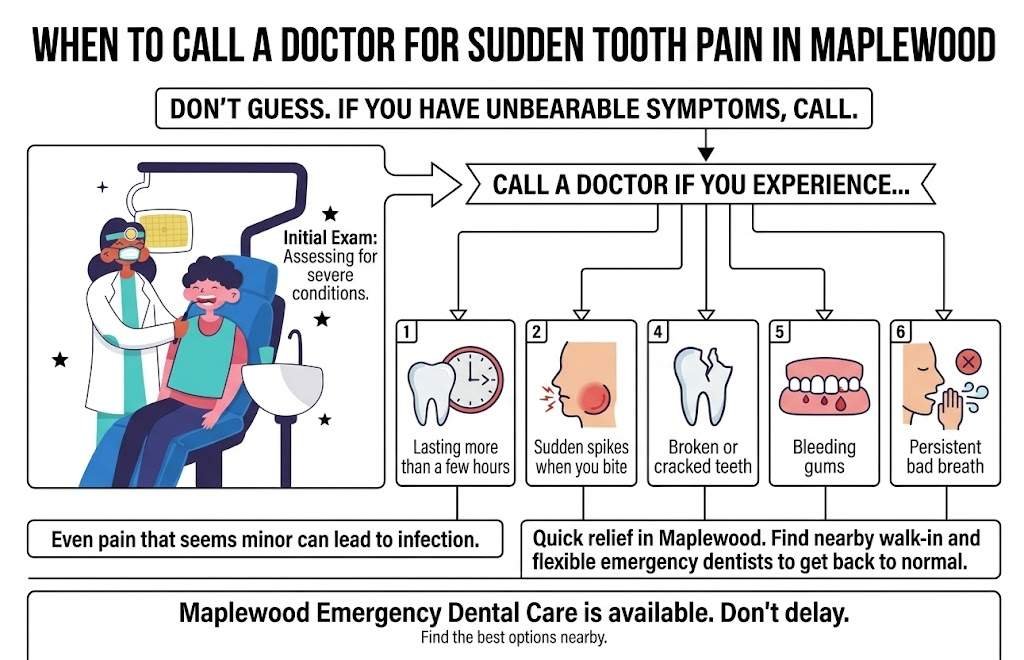
There’s no guesswork here; once your body is dealing with unbearable toothache symptoms, then it’s time to call a doctor. Here are common signs:
- Toothache sticks lasting more than a few hours
- Sudden spikes when you bite
- Swollen face or jaw
- Broken or cracked teeth
- Bleeding gums
- Persistent bad breath
Even pain that seems minor can lead to tooth infection or nerve damage. So, the longer you ignore the pain, the more complicated the condition gets. A local emergency dentist can provide the dental care you need for quick relief.
The good news is that living in places like Maplewood means you have nearby options. Just pick the best emergency dentist in Maplewood who offers walk-in appointments, flexible hours for faster service, to get back to normal without unnecessary delay.
5 Tips For Handling Sudden Tooth Pain
1. Rinse Gently to Clean and Calm the Area
Begin with the basics. When pain hits, it’s usually because the mouth is irritated by food particles, and bacteria that you don’t always see. The longer they are there, the worse the condition gets. So getting rid of them is the number one step.
All you need is a warm saltwater rinse to help rinse and soothe the area. Warm water is good because it gently cleans, reduces irritation, and eases discomfort. Just rinse slowly, swishing it to avoid making things worse.
2. Apply a Cold Compress
Pain and swelling normally appear together. It’s the pressure and pulsing sensation you feel when inflammation builds up. Cold therapy helps reduce inflammation by constricting blood vessels, slowing the process. That lessens the intensity of discomfort.
Wrap a cold parcel in a cloth and gently hold it against your cheek. Hold it there for a few minutes to allow it to work. While it is not an instant solution, it can be quite effective.
3. Use Over-the-Counter Pain Reliever
Pain relievers, such as ibuprofen or acetaminophen, can be helpful with tooth pain. They reduce inflammation, decrease pain, and make symptoms more manageable. But they’re not a fix since they don’t solve what’s causing the pain. They just lowered the volume. So, use the medications only as intended, as you seek medical attention.
4. Avoid Trigger Foods and Drinks
Tooth sensitivity often heightens when there’s pain. A sip of something cold or hot can cause sharp discomfort. Avoid hot beverages, cold drinks or even sugary snacks that may intensify the pain. This normally happens because of how certain foods or temperatures may affect the nerve directly.
To avoid provoking additional pain, opt for soft foods, neutral temperatures, and, if possible, chew on the opposite side of your mouth. Each time you trigger the pain, the cycle begins anew.
5. Try Natural Herbs
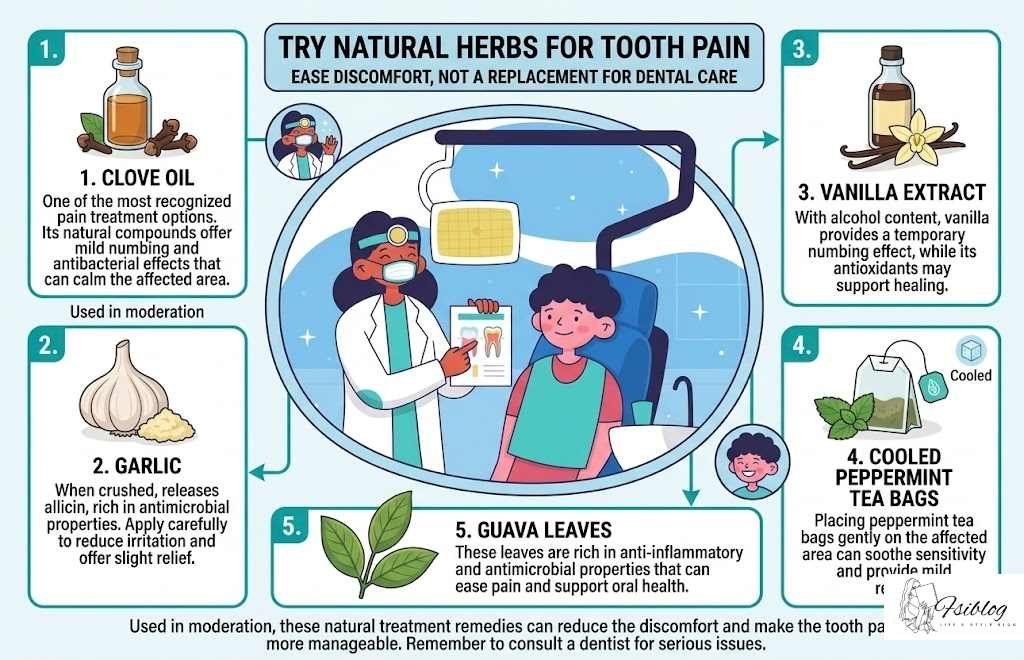
Not every form of relief needs to come from medication. Natural remedies can help ease the tooth pain and discomfort, but they shouldn’t replace proper dental care.
Here are the top remedies:
- Clove oil: This is one of the most recognized pain treatment options. Its natural compounds offer mild numbing and antibacterial effects that can calm the affected area.
- Garlic: When crushed, garlic releases allicin, rich in antimicrobial properties. Apply it carefully to reduce irritation and offer slight relief.
- Vanilla extract: With alcohol content, vanilla provides a temporary numbing effect, while its antioxidants may support healing.
- Cooled peppermint tea bags: Placing peppermint tea bags gently on the affected area can soothe sensitivity and provide mild relief.
- Guava leaves: These leaves are rich in anti-inflammatory and antimicrobial properties that can ease pain and support oral health.
Used in moderation, these natural treatment remedies can reduce the discomfort and make the tooth pain more manageable.
Conclusion
Sudden tooth pain can be disorienting and uncomfortable, which makes it hard to ignore. When in severe pain, your next steps make all the difference. These are usually quick solutions you take as you wait to see a doctor for professional assistance.
A gentle saltwater rinse, cold compress, over-the-counter medications, natural herbs, and avoiding trigger foods or drinks can help. Not every remedy is needed; use a combination that works for you.
Rinse your mouth, apply something cool, and avoid triggers to manage discomfort. These steps help prevent the situation from worsening, though they may not address the cause.
Once the pain calms, the most important step is to have your tooth checked by a professional. An experienced emergency dentist in Maplewood does more than treat your pain; they diagnose the underlying issue and address it permanently so that you get back to normal fast.
Disclaimer
This article is for informational and educational purposes only and should not be considered medical or dental advice. The tips provided may help manage temporary discomfort, but are not a substitute for professional diagnosis or treatment. Dental conditions such as infections, decay, or nerve damage require evaluation by a qualified dentist. If you experience severe pain, swelling, fever, or prolonged symptoms, seek immediate care from a licensed emergency dentist. Always consult a healthcare professional before using medications or natural remedies, especially if you have underlying health conditions or allergies.
References
- Moore, P. A., & Hersh, E. V. (2013). Combining ibuprofen and acetaminophen for acute pain management. The Journal of the American Dental Association. DOI: 10.14219/jada.archive.2013.0099
- Malamed, S. F. (2019). Emergency management of dental pain. Dental Clinics of North America. DOI: 10.1016/j.cden.2018.11.003
- Hargreaves, K. M., & Cohen, S. (2016). Pathways of the pulp. Elsevier Health Sciences. DOI: 10.1016/B978-0-323-09635-1.00001-9
- Jeske, A. H. (2011). Selecting appropriate analgesics for dental pain. Journal of the American Dental Association. DOI: 10.14219/jada.archive.2011.0340
- Prashar, A., Locke, I. C., & Evans, C. S. (2006). Cytotoxicity of clove oil. Phytotherapy Research. DOI: 10.1002/ptr.1974
- Slots, J. (2017). Periodontal disease and oral infections. Periodontology 2000. DOI: 10.1111/prd.12114
- Petersen, P. E., & Ogawa, H. (2012). The global burden of periodontal disease. Periodontology 2000. DOI: 10.1111/j.1600-0757.2011.00416.x
- Cope, A. L., Francis, N. A., Wood, F., & Chestnutt, I. G. (2014). Antibiotic prescribing in dentistry. British Dental Journal. DOI: 10.1038/sj.bdj.2014.324