


Quick answer: A few minutes of daily facial massage shifts settled fluid towards the lymph nodes in your neck, lifts blood flow in the skin you have just worked over, and releases the jaw and brow muscles that quietly hold tension all day. The face looks less swollen, a little more defined and considerably more awake. What the routine will not do is change your bone structure, remove fat or detoxify anything.
Most Of What Reads As Tired Is Mechanical
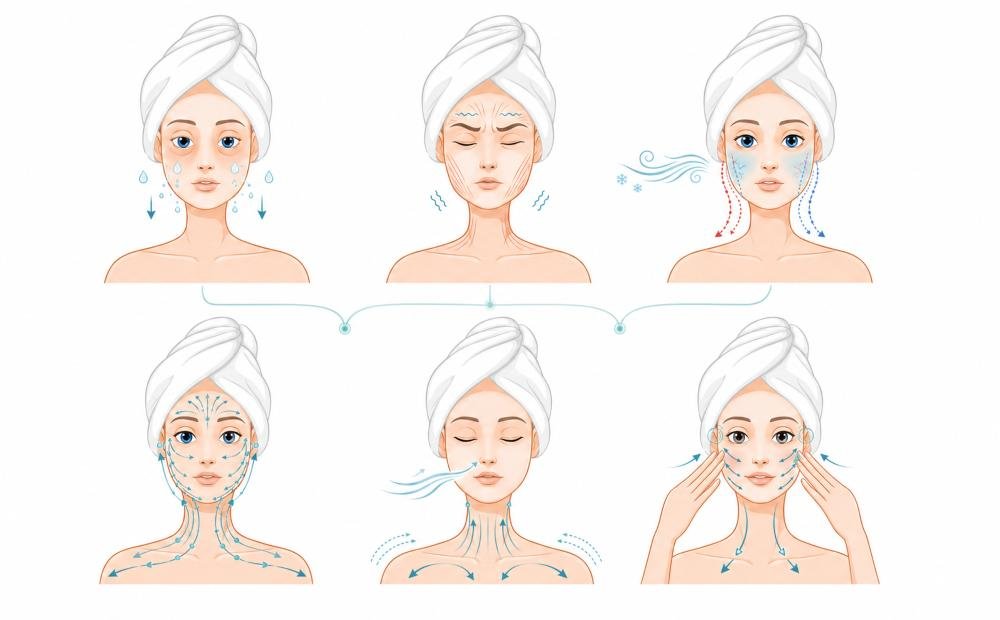
Skincare is usually sold as a shopping problem. Buy the right serum, the argument goes, and everything else follows. Yet a good deal of what we register in the mirror as tired has nothing to do with what is in the bottle. It is fluid that settled in the wrong place overnight, a brow that has been holding a squint since the 07:40 train, and circulation that slows to a crawl when you spend February walking to the office into a headwind.
The lymphatic system is the part of the story most people skip. The NHS describes it as a network of channels and glands that helps fight infection and drains excess fluid from the body’s tissues. Unlike your circulation, it has no pump of its own. It moves when you move: muscle contraction, breathing, and gentle pressure applied from outside.
That last one is the useful bit. Massage is the only part of the system you can operate deliberately, on demand, at the bathroom sink, for nothing.
1. Puffiness Settles Within Minutes
You lie flat for seven or eight hours and fluid pools quietly in the softest, thinnest tissue you own, which is the skin under your eyes and across your cheeks. Light strokes moving upwards and outwards, finished with a sweep down the neck, give that fluid somewhere to go. It is the fastest visible result in all of skincare, and it takes roughly as long as boiling the kettle twice.
Direction and pressure matter far more than effort. Open the drain first with gentle pumping above the collarbones, then work from the centre of the face outwards towards the ears and down the neck. The pressure should be light enough to move the skin without dragging the muscle underneath. If you want the sequence written out properly, this step-by-step lymphatic drainage face massage guide covers the order and the pressure in detail.
One honest caveat. The change is fluid-based, so it is temporary. You are buying a better-looking face for the day, not for the month.
2. Blood Flow Rises In The Skin You Have Just Worked
Massage brings colour back to a dull face, and researchers in Japan measured exactly that. They found a five-minute session with a facial roller increased blood flow in the massaged cheek, with the effect still measurable more than ten minutes afterwards. Five weeks of daily use also improved how well the vessels in that cheek responded to warmth, which hints at something slightly more durable than an instant flush.
It was a small study, and it used a tool rather than fingers, so treat it as a sensible explanation for something you can see rather than proof of anything grand. If your skin looks grey by the third week of January, a few minutes of stimulation is a perfectly reasonable response.
3. The Face Softens Where You Habitually Hold It
Screens encourage squinting. Cold wind encourages frowning. Deadlines encourage both at once. Across a working week, those small repeated contractions settle into a resting position, and the skin lying over them creases along the same lines every single day.
Working slowly across the forehead, between the brows and out towards the temples releases some of that holding, and lines that are held rather than etched look shallower afterwards. Nobody should expect creases that have been developing for a decade to disappear. Muscle relaxation is genuine, and it is also short-lived, which is precisely why this works better as a daily habit than an occasional treat.
4. Your Serum Goes On Better
You need slip. Dragging dry skin around is the quickest route to irritation, so a few drops of facial oil or a slightly richer serum are not optional extras. Doing the massage during that step rather than after it turns two minutes of product application into two minutes of technique, at no extra cost to your morning.
There is some evidence for the pairing. In an eight-week trial, women who combined a massaging device with an anti-ageing cream scored better on blinded assessments of wrinkles and texture than women using the same cream alone. The work was funded by a cosmetics company and relied on a specific device, so read it as promising rather than settled.
5. The Jawline Looks Cleaner
The area under the jaw and chin is a genuine collection point for fluid, which is why it responds so visibly to sweeping strokes that travel from the chin out along the bone and then down the neck. Give it a fortnight of consistency and most people notice a jaw that starts the day looking defined rather than soft and heavy.
Be honest about the mechanism, though. You are moving water. Fat and bone are not taking part, and any routine sold on the promise of permanent contouring is selling you a story with a stone in it.
6. The Eye Area Looks Less Shadowed
The skin around the eyes is the thinnest on the body. It holds fluid readily, so gentle sweeps along the orbital bone with your ring finger, working from the inner corner outwards, reliably calm morning swelling.
Dark circles are a more complicated business. Some are shadows cast by puffiness, which massage genuinely helps. Others come from pigmentation or from natural hollowing under the eye, and no amount of stroking will shift those. During hay fever season, which in the UK runs from late March into September, swelling around the eyes is often allergic rather than postural, and your local pharmacist will do considerably more for it than your fingertips.
7. The Jaw Lets Go, And Sometimes The Headache With It
The masseter is a small muscle with an alarming amount of force behind it, and plenty of people clench without ever noticing, particularly overnight. The NHS notes that teeth grinding is most commonly linked to stress and anxiety and can leave you with a painful jaw, headaches and worn teeth.
Slow circles over that muscle, which you can find by clenching once and then releasing, tend to feel disproportionately good. This is symptom relief rather than treatment. Persistent jaw pain, clicking or morning headaches belong with your dentist or GP, who may suggest a mouth guard.
8. Skin Looks Fresher, Even Though Renewal Is Oversold
Facial massage does not speed up cell turnover, and nothing you do with your hands flushes toxins out of your face. Lymph does not leave through the skin. It travels to the collarbone, rejoins the bloodstream and is filtered by the kidneys. That is the entire mechanism, and it is quietly impressive without any embellishment.
What you actually get is better colour, less retained fluid and softer muscle tone, which the eye reads as freshness. For a bigger skin refresh, that is what a professional facial is for, layering massage with exfoliation and device work in a way that five minutes at a bathroom sink cannot match. The two complement each other rather than compete.
9. Over Time, Skin Feels Firmer Under Your Hands
Consistency is where the small effects gather. Regular massage distributes the oils you have already applied, keeps facial muscles supple and, according to clinically reviewed guidance on facial massage, may improve visible fullness and tension, which is part of why steady practice can make skin feel more firm to the touch.
Set your expectations at the right level. Much of the research here is small, short and partly subjective, and the honest summary is that the effect is modest, cumulative and pleasant rather than transformative. It also costs nothing, which is a rare combination in this category.
What A Daily Routine Cannot Do?
- Reshape bone or shift facial fat.
- Detoxify anything, since your liver and kidneys have that job in hand.
- Replace sleep, hydration or a sensible diet, all of which show on your face faster than any technique.
- Undo sun damage. Even in Britain this matters, and the NHS advises protecting your skin whenever the UV index reaches 3 or above, which here usually means March through to October.
When To Keep Your Hands Off Your Face
Skip the routine, or get advice first, if you have:
- an active rosacea flare, since friction and warmth can aggravate flushing and stinging
- inflamed acne, broken skin, cold sores, or any hot and painful patch
- swollen glands, a temperature or a sore throat
- recent facial surgery or injectables, unless your practitioner has cleared it
- persistent swelling on one side of the face, which is a GP conversation rather than a skincare one
The British Association of Dermatologists’ patient information leaflets are a good, plainly written first stop for anything that looks more medical than cosmetic.
Making It Stick In A British Week
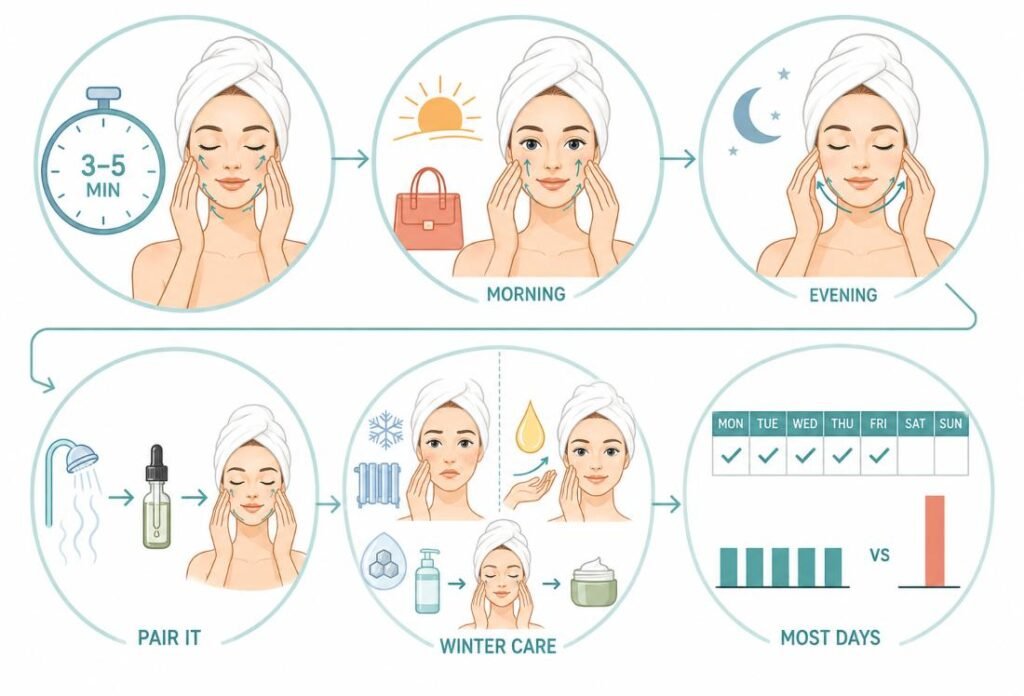
Three to five minutes is plenty. Mornings give you the visible payoff before work; evenings give you the wind-down and the jaw release. Attach it to something you already do, ideally the serum step, while the shower warms up.
Adjust for the weather, because British skin has to cope with two very different climates a year. In winter, when central heating leaves skin tight and flaky by Wednesday, switch to a heavier oil so your fingers glide instead of tugging and in the hard water areas that cover much of London, the South East and the Midlands, massaging after cleansing and before moisturiser gives dry, tight skin its best chance of the day.
The routine that survives is the boring one. Five minutes on most days will comfortably beat a heroic twenty-minute session every third Sunday.
Bottom Line
Daily facial massage is a small, cheap, low-risk habit that does one job well. It moves fluid, lifts blood flow briefly, and releases muscles you had not noticed you were clenching. Handled with a light touch and realistic expectations, it earns its three minutes in the morning. Treated as a substitute for sleep, sun protection or proper medical advice, it will only disappoint you.
Disclaimer: This article is for general information only and does not constitute medical advice. It is not a substitute for assessment by a GP, dermatologist or other qualified clinician. Speak to a healthcare professional before starting a new routine if you have a diagnosed skin condition, a recent facial procedure, or persistent or one-sided facial swelling.