


Strength training has become a normal part of fitness for many people across the UK. More adults are using gyms, joining strength classes, following structured programs, or adding resistance training to support general health. This is a positive shift, but it also means more people are buying training accessories without always knowing what they actually need.
Wrist wraps are a good example. They look simple, cost less than many other pieces of gym kit, and are widely used for pressing movements. Still, the wrong pair can feel uncomfortable, restrict movement, or give a false sense of security. A wrap should support the wrist during heavier work, not hide poor technique or replace proper progression.
For anyone comparing wrist wraps for lifting, the best choice depends on training style, lift selection, comfort, and experience level. The aim is not to buy the stiffest or most expensive option. The aim is to choose support that aligns with your training.
Why Wrist Support Matters in Strength Training
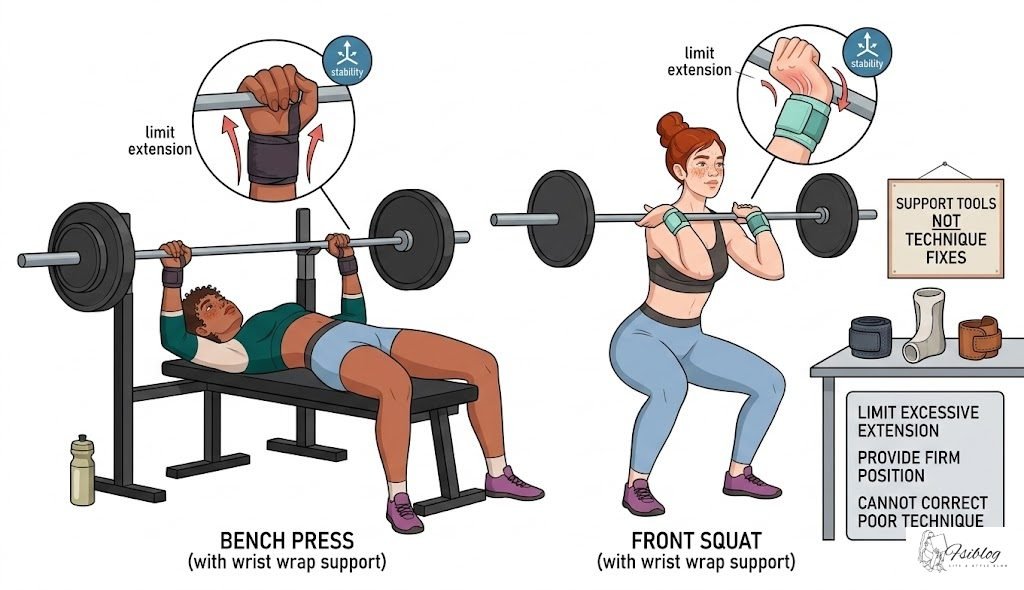
The wrist is involved in many common gym movements, including the bench press, overhead press, front squat, push press, dips, and some dumbbell exercises. When the wrist bends too far back under load, the joint can feel strained, and the bar path can become less stable.
A wrist wrap helps limit excessive wrist extension and provides the lifter with a firmer position during heavier sets. This can be useful during pressing work, especially when the load becomes challenging. However, wraps are only a support tool. They do not correct weak technique, poor bar position, or loads that are too heavy for the lifter’s current level.
UK lifters should also remember that NHS guidance recommends incorporating strengthening activities into a balanced weekly routine. That does not mean every session needs to be heavy. Good training includes warm-ups, controlled technique, recovery, and sensible progression.
1. Choosing Wraps Based Only on Price
Why Cheap Is Not Always Better
Many lifters buy the cheapest wraps they can find, especially when they are new to training. That can work for light use, but very low-cost wraps may stretch quickly, lose tension, or have weak stitching around the thumb loop and fastening area.
A wrap that loses its shape after a few sessions will not give reliable support. It may also shift during a set, which can distract the lifter and undermine confidence under the bar.
What to Look For Instead
A good pair should feel firm, secure, and comfortable. Check the stitching, fastening quality, fabric thickness, and whether the wrap returns to shape after being stretched. Breathable material also matters, especially in busy commercial gyms where wraps may be used several times a week.
For most everyday UK gym users, a mid-range pair with solid construction is often enough. Competitive lifters may need something more specialized, but beginners usually do not need the stiffest option straight away.
2. Picking the Wrong Length
Common Wrist Wrap Lengths
Wrist wraps often come in shorter, medium, and longer lengths. Common options include around 12 inches, 18 inches, and 24 inches. The right length depends on the level of support needed and the type of exercise being performed.
Shorter wraps are usually easier to manage and may suit general gym training. Medium wraps are a useful middle ground for many lifters. Longer wraps can provide more coverage and support, but they may feel restrictive during every movement.
Matching Length to Training Style
A lifter doing moderate dumbbell presses and general fitness work may not need a long, rigid wrap. Someone training for the heavier bench press or strict overhead press may prefer more length and support.
The mistake is buying one pair and expecting it to suit every session. A wrap that feels useful during a heavy press may feel too restrictive during lighter accessory work. The best choice should align with the main lifts in your program.
3. Wrapping Too Tight
Tight Does Not Always Mean Safer
Many lifters think a wrap works better when it is pulled as tight as possible. This is not always true. If the wrap is too tight, it can cause discomfort, tingling, numbness, or reduced grip feedback. That can become a safety issue because the lifter needs to feel the bar clearly.
A wrap should feel secure but not cut off circulation or make the hand feel strange. If the fingers change color, feel numb, or lose sensation, the wrap is too tight.
A Better Fit Test
The wrist should feel supported when the bar is loaded, but the lifter should still feel in control of the hand and grip. The wrap should sit across the wrist joint, not only around the forearm or the palm.
A good rule is to tighten the wrap enough to reduce unwanted wrist movement, but not so much that it creates pain or pressure. If the wrap needs extreme tightness to feel useful, it may be the wrong stiffness, length, or position.
4. Using Wraps for Every Set
Why Constant Use Can Be a Problem
Some lifters put wraps on during warm-ups and keep them on for the whole workout. This can become a habit, but it is not always helpful. The smaller muscles and connective tissues around the wrist still need to work during lighter training.
Using wraps for every set can lead lifters to rely on support even when the load does not require it. Over time, this may reduce confidence when lifting without them.
When to Use Them
Wrist wraps are usually best saved for heavier working sets, high-effort pressing, or exercises where wrist position is clearly under strain. Warm-up sets and lighter accessories can often be done without wraps, as long as the lifter has no pain or specific medical advice.
This approach helps the lifter develop natural control while still using support when genuinely useful.
5. Ignoring Stiffness
Flexible Wraps
Flexible wraps allow more movement. They may suit lifters who need a bit of support without locking the wrist. They can work well for general gym training, CrossFit-style sessions, dumbbell work, and movements that require wrist freedom.
Rigid Wraps
Rigid wraps are designed to limit movement more strongly. These are often used for heavier pressing, especially by powerlifters or advanced lifters who want a more fixed wrist position under high loads.
The mistake is choosing stiffness based on what looks serious rather than what the training requires. A very stiff wrap may feel supportive during a heavy bench press, but uncomfortable during varied training.
Choosing the Right Level
If your training includes many different movements, a more flexible wrap may be more practical. If your main goal is heavy pressing, a stiffer pair may make sense. Some experienced lifters keep two pairs, one flexible and one firm, but most beginners can start with a balanced option.
6. Placing the Thumb Loop and Wrap Incorrectly
Why Position Matters
The thumb loop helps anchor the wrap while it is being applied. If the wrap starts too high on the forearm, it may not support the wrist joint properly. If it sits too low into the palm, it can interfere with grip and bar position.
Correct placement helps spread pressure evenly and keeps the support where it is needed.
Simple Placement Guide
Start with the wrap sitting across the wrist joint, not only above it. The material should cover the area where the wrist bends back during pressing. After wrapping, the fastening should feel secure and flat, without sharp folds or bunching.
Some lifters remove the thumb loop after fastening the wrap, while others leave it in place depending on comfort and gym rules. The key point is that the wrap should not disturb grip or create awkward pressure.
7. Forgetting to Clean and Maintain Them
Gym Kit Needs Care
Wrist wraps absorb sweat, chalk, skin oils, and general gym dirt. If they are never cleaned, they can smell, lose elasticity, and become unpleasant to use. Poor maintenance also shortens their lifespan.
This matters in UK gyms, where many people train indoors year-round, and equipment may spend long periods in a gym bag.
How to Keep Wraps in Good Condition
Hand-wash them with mild soap after a few sessions, especially if they have become sweaty. Let them air dry fully before putting them back in a bag. Avoid high heat from tumble dryers or radiators, as it can damage elastic fibers.
Good maintenance keeps the wraps fresher, firmer, and more reliable.
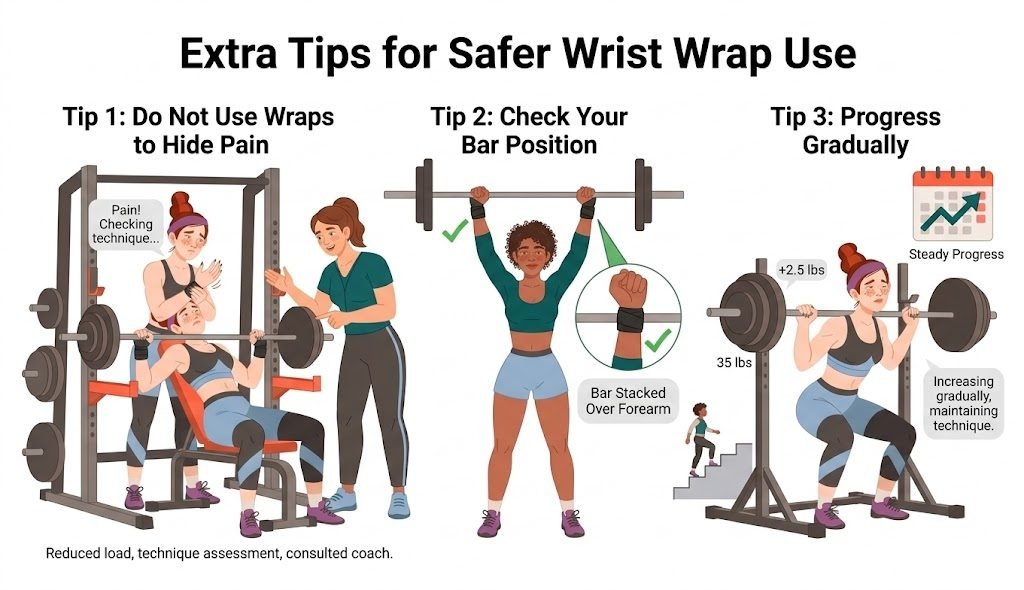
Extra Tips for Safer Wrist Wrap Use
| Tip | Why It Matters | Recommended Action |
|---|---|---|
| Do Not Use Wraps to Hide Pain | Wrist wraps can provide support, but they should not be used to push through sharp or persistent pain. Ongoing discomfort may indicate a technique issue, overload, or an underlying injury. | Reduce the load, assess your lifting technique, review wrist and bar positioning, and consult a qualified coach or healthcare professional if pain continues. |
| Check Your Bar Position | Poor bar alignment is a common cause of wrist discomfort during pressing exercises. Excessive wrist extension places unnecessary stress on the joint. | Keep the bar stacked over the forearm whenever possible. Use wraps as additional support rather than relying on them to compensate for poor positioning. |
| Progress Gradually | Wrist wraps may make heavier weights feel more manageable, but they do not increase overall strength or readiness for large weight jumps. | Increase training loads progressively, maintain proper technique, and focus on long-term strength development rather than rapid increases in weight. |
Quick Comparison Table
| Mistake | Why It Causes Problems | Better Choice |
|---|---|---|
| Buying Only on Price | Cheap wraps may stretch, fray, or lose tension quickly, reducing support and durability. | Choose wraps with strong stitching, reliable fastening, and comfortable, durable fabric. |
| Choosing the Wrong Length | Wraps that are too short may not provide enough support, while overly long wraps can restrict movement. | Match the wrap length to your training intensity, experience level, and exercise type. |
| Wrapping Too Tightly | Excessive tightness can cause numbness, tingling, discomfort, and reduced grip feedback. | Keep the wrap secure enough to support the wrist while remaining comfortable. |
| Wearing Wraps for Every Set | Constant use can create unnecessary dependence on wrist support during lighter exercises. | Reserve wraps for heavier working sets and high-intensity pressing movements. |
| Ignoring Stiffness | A wrap that is too rigid or too flexible may not provide the right level of support for your training. | Select flexible or rigid wraps based on your lifting style and support needs. |
| Poor Thumb Loop Placement | Incorrect positioning can reduce support effectiveness or interfere with grip and bar control. | Position the wrap across the wrist joint and ensure it sits comfortably without affecting grip. |
| Skipping Maintenance | Sweat, chalk, and heat can degrade fabric quality, elasticity, and hygiene over time. | Hand wash wraps regularly and allow them to air dry completely before storage. |

Conclusion
Wrist wraps can be a useful part of a strength-training kit, but only when chosen and used properly. The right pair should support the wrist during heavier lifts without causing discomfort, blocking normal grip feedback, or replacing good technique.
For UK lifters, the main lesson is simple. Choose wraps based on training needs, not just price or appearance. Think about material, length, stiffness, fit, placement, and maintenance. Use them when support is needed, but keep lighter training controlled and natural where possible.
A well-chosen wrist wrap should work quietly in the background. It should help the wrist stay stable while the lifter focuses on safe movement, steady progress, and long-term training consistency.