


Finding Xxxxxxxxl Size Cxx Clothing size shouldn’t feel like searching for a needle in a haystack. Whether you’re shopping for yourself or helping someone else, this comprehensive guide will walk you through everything you need to know about finding quality clothing that fits well, looks good, and lasts.
Understanding XXXXL Sizing: What You Need to Know

What Does XXXXL Actually Mean?
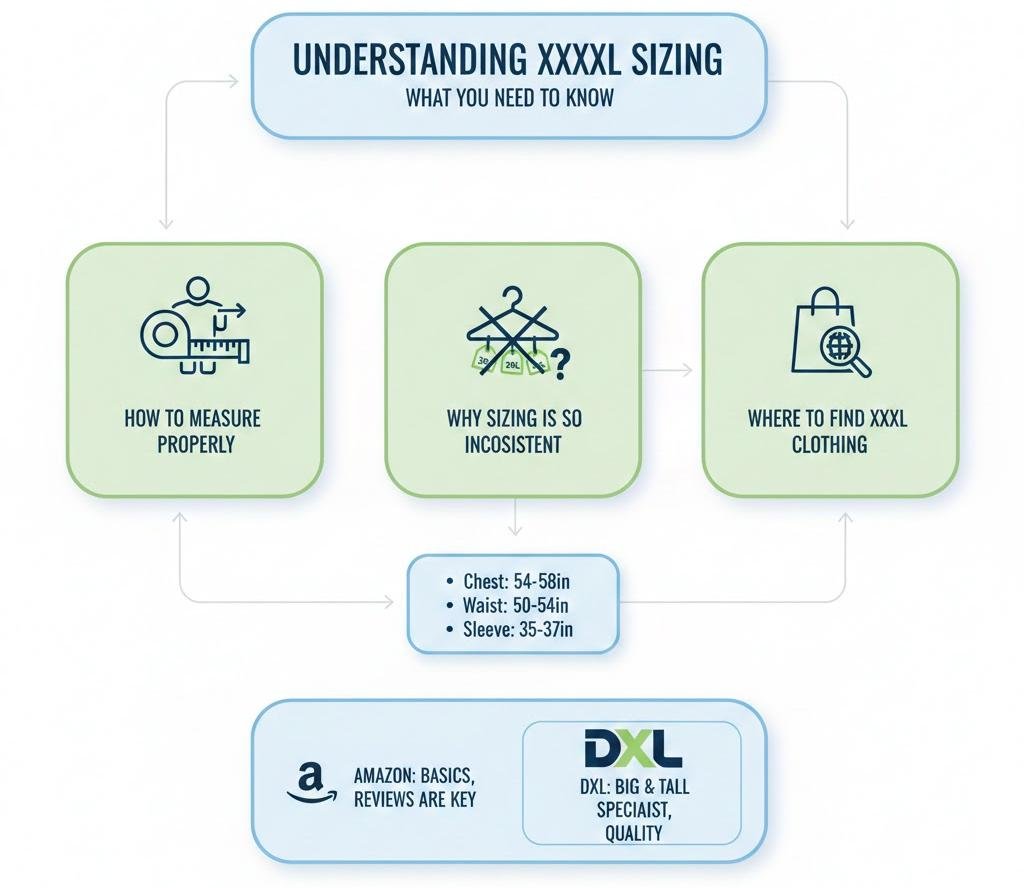
XXXXL typically fits chest sizes around 54-58 inches (137-147 cm), but here’s the frustrating truth: there’s no universal standard across brands. A 4XL shirt from one company might fit like a 3XL from another, or even a 5XL from a third brand. This inconsistency makes shopping, especially online, incredibly challenging.
General size reference for XXXXL:
- Chest: 54-58 inches (137-147 cm)
- Waist: 50-54 inches (127-137 cm)
- Neck: 19-20 inches (48-51 cm)
- Sleeve length: 35-37 inches (89-94 cm)
- Weight range: Usually 280-320+ lbs, but this varies significantly based on height and body composition
Why Sizing Is So Inconsistent
Different brands use different fit models. Some scale up proportionally from smaller sizes, which creates poorly fitting clothes. Others are designed specifically for larger body types, recognising that weight distributes differently across people. This is why two XXXXL shirts can fit completely differently.
The three main fit types you’ll encounter:
- Regular/Standard Fit – Proportionally scaled up from more petite sizes. Often too short in the torso or sleeves.
- Relaxed/Classic Fit – Extra room in the midsection and chest. Better for most body types.
- Athletic/Tapered Fit – Wider in shoulders and chest, narrower at waist. Harder to find in 4XL, but available from some brands.
How to Measure Yourself Properly
Before buying anything, take accurate measurements. You’ll need a fabric measuring tape and preferably someone to help you.
- Chest: Measure around the fullest part of your chest, keeping the tape parallel to the floor. Don’t pull tight—keep it comfortably snug.
- Waist: Measure around your natural waistline (usually around your belly button, not where your pants sit). Again, comfortably snug, not tight.
- Neck: Measure around the base of your neck where a shirt collar would sit. Add half an inch for comfort.
- Sleeve length: Start at the centre back of your neck, measure across your shoulder to your elbow, then down to your wrist. Or measure from the shoulder seam to the wrist with the arm slightly bent.
- Inseam: For pants, measure from your crotch to where you want the pants to end (usually the top of your shoe).
- Write these measurements down and keep them in your phone. You’ll reference them constantly when shopping online.
Where to Find XXXXL Clothing That Actually Fits
Best Online Retailers for XXXXL Sizes
Amazon has the largest selection, but quality varies dramatically. The key is reading reviews carefully—specifically from buyers who mention their actual measurements and body type.
What works: Amazon Essentials (their house brand), Hanes, Fruit of the Loom for basics. Look for items with hundreds of reviews.
What to watch out for: Cheap international sellers with inconsistent sizing. Check where the item ships from.
DXL (Destination XL): This store specialises exclusively in big and tall sizes. Everything starts at XL and goes up from there. Pricier than general retailers, but the clothes are actually designed for larger bodies from scratch, not just scaled-up versions of smaller sizes.
Best for: Dress clothes, jeans, outerwear. Their house brands (Harbour Bay and Oak Hill) offer good value.
Average prices: T-shirts $20-30, jeans $60-80, dress shirts $40-60.
ASOS Their ASOS Plus line goes up to 5XL and actually includes trendy, fashionable options. If you’re tired of basic tees and want something with style, ASOS is worth checking out.
Best for: Younger styles, streetwear, fashion-forward basics.
Shipping: International shipping can be slow, but they offer free returns.
Old Navy has Affordable basics with decent quality. Their sizing tends to run generous, so sometimes their 3XL fits like other brands’ 4XL. Always check their specific size chart.
Best for: Casual everyday clothes, basics, seasonal items.
Price range: Very budget-friendly, $10-40 for most items.
KingSize Direct focuses entirely on big and tall men’s clothing. A wide range from casual to workwear, from underwear to outerwear.
Best for: If you need everything in one place. Suitable for building a complete wardrobe.
Selection: One of the most comprehensive catalogues for larger sizes.
Casual Male XL / DXL Physical stores and online. They’ve merged with DXL, but some locations still operate under the Casual Male name.
Best for: trying things on in person and getting measured by staff who understand larger sizes.
Target is getting better with extended sizes. Their All in Motion activewear and Goodfellow & Co. basics now go up to 5XL in many styles.
Best for: Affordable basics, athletic wear, casual clothes.
In-store availability: Limited, but improving. Online has a better selection.
Walmart is Similar to Target—limited in-store, better selection online. Very budget-friendly.
Best for: George brand basics, athletic wear, work clothes.
Quality: Hit or miss. Read reviews carefully.
Johnny Bigg is an Australian brand that’s expanded internationally. Modern fits are explicitly designed for bigger guys.
Best for: Contemporary styles, well-fitting jeans, casual shirts.
Fit: Generally true to size with good proportions.
MVP Collections Focuses on fashion-forward plus-size menswear. Higher price point but unique styles.
Best for: Statement pieces, trendy items you won’t find elsewhere.
Physical Stores Worth Visiting
Finding 4XL sizes on the rack in regular stores is tough. Most chain stores stop at XL or 2XL in-store, with extended sizes only available online.
Your best physical store options:
- DXL/Casual Male XL stores – The only major chain exclusively for big and tall. Staff are trained in fitting larger sizes. You can try everything on and get help finding what works for your body type.
- Walmart and Target – Limited floor selection, but some basics are available. Their fitting rooms let you try before ordering more online.
- Speciality big and tall shops – Independent stores in some cities. Google “big and tall men’s clothing near me.” These shops often have knowledgeable staff and carry quality brands.
- Department store big-and-tall sections: Macy’s, Nordstrom, and Dillard’s have sections, but selection varies by location. Call ahead to see what they stock in 4XL.
- Outlet malls: Check for DXL, Nike (athletic wear), and Columbia (outerwear). Often have better 4XL inventory than regular stores.
Types of Clothing: What Works and What to Avoid
T-Shirts and Casual Tops
T-shirts seem simple, but finding good ones in 4XL requires knowing what to look for.
- Length is critical. Regular t-shirts, when scaled up, often end up too wide but too short. You need shirts designed with a longer torso. Look for descriptions that mention “longer cut” or “extended length.”
- Fabric weight matters. Cheap, thin t-shirts (less than 5 oz fabric weight) cling in unflattering ways and show every bump. Look for 5.5-6 oz or higher. It drapes better and lasts longer.
- Sleeve length. If sleeves are too short and tight, they make your arms look bigger than they are. Look for shirts with sleeves that hit mid-bicep comfortably.
- Neckline. Crew necks should sit comfortably at the base of your neck, not choking you. V-necks can be more flattering, but go too deep on some 4XL shirts. Henley style gives you options.
Best fabric blends:
- 60% cotton / 40% polyester – Durable, holds shape, doesn’t shrink much
- 90% cotton / 10% polyester – Soft, breathable, minimal shrinkage
- Tri-blend (cotton/polyester/rayon) – Super soft, drapes well, pricier
Avoid:
- 100% cotton unless you size up (it will shrink)
- Super thin polyester that doesn’t breathe
- Anything described as “slim fit” in XXXXL (it won’t be)
Brands that do 4XL t-shirts well:
- Carhartt (workwear style, very durable)
- Dickies (similar to Carhartt, slightly cheaper)
- Hanes Beefy-T (classic, affordable, thick cotton)
- Gildan (budget-friendly, consistent sizing)
- Amazon Essentials (surprisingly good for the price)
Polo Shirts
Polos give you a step up from t-shirts without the formality of button-ups.
Collar fit. The collar shouldn’t choke you or gap open too much. Look for polos with a bit of stretch in the collar.
Button placket. Should lie flat, not pull open. If buttons gap, size up or try a different brand.
Sleeve fit. Sleeves should fit comfortably around your bicep, neither too tight or too loose.
Length. It should cover your belt and waistband when you lift your arms.
Best fabrics: Performance polyester blends that wick moisture. Cotton pique is classic but can shrink.
Good brands for 4XL polos:
- Lands’ End (classic fit, good quality)
- Eddie Bauer (outdoor brand, generous cuts)
- Izod (traditional, reliable sizing)
- George (Walmart brand, very affordable)
Button-Up Shirts and Dress Shirts
This is where sizing gets really tricky. Dress shirts need to fit in multiple places: neck, chest, shoulders, sleeves, and length.
The button-pulling problem. If buttons pull across your chest or stomach, creating gaps, the shirt is too small. This is the most common fit issue with 4XL dress shirts.
Solutions:
- Look for “relaxed fit” or “classic fit” dress shirts specifically
- Try “untucked” style dress shirts that are designed to be worn out
- Consider stretch fabric dress shirts (with 2-5% spandex)
- Some brands make 4XL with extra room in the midsection without looking baggy overall
Collar size. If you know your neck size, buy by neck size and sleeve length instead of just XXXXL. For example: 18.5/34-35 (neck/sleeve). This gets you a better fit.
Can’t find your neck size? Measure around your neck and add half an inch for comfort. That’s your collar size.
Sleeve length. When you bend your arm 90 degrees, the cuff should hit your wrist bone. Too short looks sloppy; too long bunches up.
Shoulder seams. It should sit at the edge of your shoulder, not drooping down your arm or pulling tight.
Pro tip for dress shirts: If you need them regularly for work, buy 2-3 that fit decently and take them to a tailor. For $10-15 per shirt, a tailor can adjust sleeves, take in the sides, or fix the length. This makes a $30 shirt fit like a $100 custom shirt.
Best brands for 4XL dress shirts:
- Van Heusen (wrinkle-free options, consistent sizing)
- Geoffrey Beene (stretch fabric options)
- Amazon Essentials (surprisingly good, very affordable)
- DXL house brands (designed for bigger bodies)
- Brooks Brothers (if you want to invest in quality)
Casual Button-Ups (Flannel, Chambray, Oxford)
These are more forgiving than dress shirts and work for lots of occasions.
Flannel shirts. Great for fall and winter. Look for ones with a bit of stretch for comfort. It should fit roomy enough to layer over a t-shirt.
Chambray/denim shirts. Similar to flannel—should be comfortable over an undershirt. Avoid skin-tight fits.
Oxford cloth shirts. More structured than flannel, less formal than dress shirts. Good middle ground.
What to look for:
- Button-down collars (more casual, the collar won’t flap around)
- Chest pocket (functional and breaks up visual space)
- Shirttail hem if wearing untucked, straight hem if tucking in
- Enough length to stay tucked if that’s your preference
Good options:
- Carhartt and Dickies (durable, affordable, work-style)
- Columbia and Eddie Bauer (outdoor brands, roomy fits)
- Wrangler and Lee (Western-style, generous cuts)
- Old Navy (budget-friendly, trendy colours)
Pants and Jeans
Waist size and inseam are measured separately, but if you wear XXXXL tops, you probably need a waist size between 46 and 54 or larger.
Jeans shopping tips:
Rise. This is the distance from the crotch to the waistband. A higher rise provides more coverage and comfort, especially when sitting. A lower rise can dig in and create a muffin top.
Fit styles:
- Relaxed fit – Extra room in the seat and thigh, comfortable
- Regular/straight – Classic cut, not tight or baggy
- Loose fit – Roomiest option, good if you need more space
- Bootcut – Slight flare at bottom, balances proportions
- Slim fit – Avoid in larger sizes unless you specifically want this look
Stretch denim is your friend. Jeans with 1-2% elastane/spandex move with you, don’t bind when you sit, and last longer because they’re not constantly stressed. They’re more comfortable without looking like “stretch pants.”
Inseam length. Common inseams are 30, 32, 34, and 36 inches. Measure your current pants or measure from the crotch to where you want the pants to end.
Hemming. Most jeans come unhemmed or in standard lengths. If they’re too long, any tailor or even a dry cleaner can hem them for $10-15. Some stores offer free hemming.
Best jean brands for larger sizes:
- Levi’s (505, 550, 560 models work well; available up to 60+ waist)
- Wrangler (affordable, durable, classic American fit)
- Lee (similar to Wrangler, slightly different cuts)
- Dickies (workwear style, very tough)
- DXL house brands (designed for proportion)
Dress pants and khakis:
Look for pants with:
- Elastic waistband inserts or full elastic waist (more forgiving, very comfortable)
- Pleated front (gives more room in the seat and thigh)
- Adjustable sides or back (helps with fit)
- Wrinkle-resistant fabric (easier care)
Good brands:
- Haggar (known for comfortable dress pants)
- Dockers (classic khakis, many fit options)
- Amazon Essentials (affordable basics)
- Savane (comfortable, often has stretch)
Shorts
Finding shorts that fit well and look good can be challenging.
Length matters. Too short looks awkward; too long looks sloppy. Generally, shorts should end 1-2 inches above or right at your knee.
Avoid: Super baggy cargo shorts (dated look) or very tight athletic shorts.
What works:
- Flat-front casual shorts in neutral colours
- Cargo shorts with a modern fit (not overly baggy)
- Performance/athletic shorts with a liner for workouts
- Swim trunks with elastic waist and mesh liner
Good brands:
- Amazon Essentials (affordable, decent quality)
- Columbia (outdoor brand, good fits)
- Champion (athletic shorts)
- Old Navy (budget-friendly, trendy)
Outerwear: Jackets and Coats
This is where many brands really fail people who wear 4XL. A jacket needs to fit over other layers, so it should have extra room in the shoulders and chest while still looking proportional.
Light jackets and windbreakers:
Should fit over a t-shirt or hoodie comfortably without pulling tight.
What to look for:
- Adjustable cuffs and hem
- Full front zipper (easier than pullovers)
- Pockets that actually hold stuff
- Weather resistance if you’ll wear it outside often
Good options:
- Dickies Eisenhower jacket (classic workwear style, affordable)
- Columbia windbreakers (lightweight, packable)
- Nike/Adidas track jackets (athletic style)
- Carhartt chore coats (durable, timeless)
Heavy coats and winter jackets:
A good winter coat is an investment, but lasts for years if you choose quality.
Features to prioritise:
- Insulation rated for your climate
- Hood (preferably adjustable)
- Multiple pockets
- Longer length for more coverage
- Storm flap over zipper
- Quality zipper (YKK brand is reliable)
Best brands for quality 4XL outerwear:
- Columbia – Great value, good warranties, sizes fit true
- Carhartt – Workwear tough, designed for durability, lasts forever
- The North Face – Pricier but excellent quality and fit
- Eddie Bauer – Good mid-range option, frequent sales
- Lands’ End – Classic styles, good construction
- Dickies – Affordable workwear, very functional
Don’t cheap out on winter coats. A $150 coat that lasts 10 years is cheaper than a $50 coat you replace every year.
Hoodies and Sweatshirts:
Comfortable, versatile, essential for casual wardrobes.
Pullover vs. zip-up. Both work, but zip-ups are easier to get on and off if you’re concerned about pulling shirts over your head.
Fleece-lined. Warmer and softer inside, great for cold weather.
Length. Should cover your waistband and butt, not ride up when you sit or lift arms.
Good brands:
- Champion (the classic, Reverse Weave is premium)
- Hanes (affordable, reliable)
- Carhartt (heavy-duty, warm)
- Nike/Adidas (athletic style, performance fabrics)
- Amazon Essentials (budget option)
Athletic and Activewear
Finding workout clothes in 4XL used to be nearly impossible. Now it’s just tricky, but getting better.
What makes good activewear:
- Moisture-wicking fabric (polyester blends, not cotton)
- Four-way stretch for movement
- Flat seams that don’t chafe
- Breathable mesh panels
- Reinforced stitching in stress areas
Athletic shorts:
Look for shorts with:
- Built-in liner or compression shorts underneath
- Elastic waistband with drawstring
- Length that hits mid-thigh or just above the knee
- Side pockets for phone/keys
- Moisture-wicking fabric
Brands:
- Champion (affordable, available at Target)
- Russell Athletic (basic but reliable)
- Nike (pricier, good quality, some styles in 4XL)
- Adidas (similar to Nike)
- Amazon Essentials (budget-friendly)
Athletic shirts:
Avoid cotton—it soaks up sweat and stays wet. Performance polyester keeps you dry.
Features:
- Raglan sleeves (more range of motion)
- Longer back hem (stays in place)
- Reflective elements if you work out outside
- Odour-resistant treatment (silver ion or similar)
Athletic pants/joggers:
Great for the gym, running errands, or lounging.
What to look for:
- Tapered leg (not skin-tight, just narrower at ankle)
- Elastic or drawstring waist
- Zippered pockets so stuff doesn’t fall out
- Stretch fabric with some cotton for comfort
Compression gear:
If you want compression shirts or shorts underneath regular clothes:
- Reduces chafing
- Provides support
- Wicks moisture
- Can help with posture
Look for brands like Under Armour, 2XU, or Champion that make larger sizes.
Underwear and Undershirts
Nobody talks about this enough, but proper underwear and undershirts make everything else more comfortable.
Underwear problems in larger sizes:
- Elastic that rolls, digs in, or loses stretch quickly
- Fabric that bunches up
- Leg holes that are too tight
- Rise that’s too low (uncomfortable when sitting)
What works better:
- Boxer briefs with longer legs (prevent thigh chafing)
- No-roll waistband specifically
- Moisture-wicking fabric for all-day comfort
- Flat seams reduce irritation
Brands worth trying:
- Duluth Trading Company – Buck Naked or Armachillo lines, expensive but last years
- ExOfficio – Travel-focused, antimicrobial, pricey but worth it
- Hanes ComfortFlex – Affordable, decent quality
- Fruit of the Loom Everlight – Budget option with stretch
- David Archy – Amazon brand, surprisingly good reviews
Undershirts:
Wearing an undershirt protects your outer shirt from sweat and extends its life between washes.
Types:
- Crew neck – Shows under open-collar shirts
- V-neck – Invisible under button-ups
- Deep V-neck – For very open collars
What to look for:
- Long enough to stay tucked
- Moisture-wicking if you sweat
- Fitted sufficient not to bunch, loose enough not to cling
- Tagless (tags are annoying)
Good options:
- Hanes (classic, affordable)
- Gildan (very budget-friendly)
- Uniqlo Airism (if you can find your size)
- Amazon Essentials (surprisingly decent)
Socks
Often overlooked, but essential for comfort.
Problems with cheap socks:
- Elastic gives out quickly
- Slide down throughout the day
- Holes in the toe or heel after a few wears
- Too tight around calves
What makes good socks:
- Reinforced heel and toe
- Good elastic that doesn’t cut off circulation
- Moisture-wicking fabric
- Right height (no-show, ankle, crew, or boot)
Brands:
- Darn Tough (lifetime guarantee, expensive but truly lasts)
- Dickies (workwear socks, durable)
- Gold Toe (classic, comfortable)
- Bombas (cushioned, don’t slip)
- Hanes or Fruit of the Loom (budget options)
For larger calves, look for “big and tall” or “wide calf” socks. Regular socks can be tight and uncomfortable.
Common Problems and Real Solutions

Problem: Shirts Are Wide Enough But Too Short
This is the most common complaint with XXXXL sizing. When brands proportionally scale up from smaller sizes, you get shirts that are wide but not long enough.
Solutions:
Buy tall sizes. Look for XXXXLT or 4XLT instead of just XXXXL. The “T” means “tall” and adds 2-3 inches to the body length and sometimes sleeve length.
Check the length measurement. When shopping online, look for the actual length measurement in inches, not just the size label. A good length for 4XL is 32-34 inches from shoulder to hem.
Try big and tall specialists. DXL, KingSize, and similar stores are designed with proper proportions from the start.
Layer strategically. If a shirt is slightly short, wearing it untucked over a somewhat longer undershirt can work.
Brand-specific notes: Carhartt, Dickies, and Eddie Bauer tend to cut longer. Old Navy and Target tend to run shorter.
Problem: Sleeves Are Always Wrong (Too Short or Too Baggy)
Sleeve fit varies wildly across brands.
If sleeves are too short:
- Buy tall sizes (XXXXLT), which usually include longer sleeves
- Look for actual sleeve length measurements when shopping
- Consider three-quarter length sleeves as an intentional style choice
- Roll up sleeves 3/4 length—it can actually look stylish and purposeful
If sleeves are too baggy:
- Some brands cut sleeves very wide in larger sizes
- Try athletic or slim-fit sleeves specifically
- A tailor can take in sleeves for $10-15 per shirt
- Roll or cuff sleeves to make them look more intentional
Problem: Everything Costs More in Larger Sizes
It’s frustrating, but larger sizes often cost $5-15 more than standard sizes. Here’s how to save money:
Shop end-of-season sales. Buy winter clothes in March/April and summer clothes in September/October. Discounts of 40-60% are typical.
Check outlet stores. Online outlets often have better 4XL inventory than regular stores. Columbia, Eddie Bauer, Nike, and others have outlet websites.
Sign up for email lists. Most brands regularly send coupons for 20-30% off. Create a separate email for shopping newsletters.
Use cashback apps. Rakuten, TopCashback, and similar apps give you money back on purchases.
Buy quality over quantity. One $60 shirt that lasts 3 years is cheaper than three $20 shirts that last 6 months each.
Try Amazon warehouse deals. Returned or slightly damaged items at significant discounts. Check descriptions carefully.
Shop Black Friday and Cyber Monday. Best sales of the year, plan for what you need.
Join loyalty programs. Points add up, and you often get birthday discounts and early access to sales.
Problem: Limited Style Options and Colours
Most 4XL clothing comes in black, grey, navy, or white. Finding patterns, prints, or interesting colours is hard.
Where to find more variety:
ASOS – Trendy patterns, bright colours, fashion-forward designs
Johnny Bigg – Contemporary styles, not just basics
MVP Collections – Fashion-focused plus-size menswear
Hawaiian shirt brands – Seriously, brands like Tommy Bahama and Reyn Spooner make larger sizes with fun patterns
Streetwear brands – Some streetwear companies cater to bigger guys with bold graphics and colours
Custom printing – Sites like CustomInk let you create custom designs in any size
Etsy – Independent sellers sometimes offer larger sizes in unique designs
Try different patterns:
- Vertical stripes (can be flattering)
- Small geometric prints
- Subtle textures
- Color-blocking
- Heathered fabrics (mixed colours)
Problem: Pants Are Either Too Tight or Fall Down
Getting the waist right is tricky. Too tight is uncomfortable; too loose means constant pulling up.
Solutions:
Get measured properly. Measure around where you actually wear your pants, not where you think your waist should be.
Try pants with adjustable features:
- Side adjusters
- Elastic inserts in the waistband
- Drawstring waists
- Belt loops are wide enough for substantial belts
Invest in a good belt. A quality leather or fabric belt that actually holds weight makes a difference. Ratchet-style belts with no holes work well.
Consider suspenders. Not just for older men—they keep pants up without tightening your waist uncomfortably. Clip-on or button styles available.
Tailoring option. A tailor can take in the waist, add elastic panels, or adjust the rise for $15-30.
Try different rise heights. A higher rise might sit more comfortably at your natural waist.
Problem: Dress Clothes for Formal Events
Finding a suit, sport coat, or formal wear in 4XL is legitimately difficult.
Suit shopping:
Options:
- DXL or similar big and tall stores – Staff can measure you properly and find suits that fit
- Department stores – Macy’s, Nordstrom have some options, call ahead
- Online made-to-measure – Companies like Indochino and Proper Cloth make custom suits based on your measurements
- Men’s Wearhouse – Hit or miss, but some locations stock larger sizes
- Rent formal wear – For one-time events, rental services now go up to 4XL
What you’ll likely need:
- Suit jacket altered (sleeves, length, sometimes waist suppression)
- Pants hemmed
- A dress shirt that fits the neck and sleeves
- Proper dress shoes (don’t neglect these)
Budget for tailoring. Even expensive suits need alterations. Factor in $50-150 for alterations when buying a suit.
Sport coats/blazers:
Easier to fit than full suits since you’re not matching pants.
Tips:
- Navy or charcoal grey are the most versatile
- Unstructured jackets are more forgiving and comfortable
- Two-button is more modern than three-button
- Consider stretch fabrics for movement
Formal shoes in larger sizes:
If you wear larger sizes, you might also need wide or extra-wide shoes.
Good brands for wider fits:
- Rockport (comfort-focused dress shoes)
- ECCO (expensive but very comfortable)
- New Balance (makes dress shoes in wide sizes)
- Dunham (owned by New Balance, specialises in wide)
Problem: Clothes Wear Out Too Fast
Quality issues plague some larger-sized clothing.
Common wear points:
- Seams pulling apart
- Thighs rubbing through (jeans especially)
- Pilling on fabrics
- Elastic giving out
- Buttons pulling off
How to make clothes last longer:
Wash less frequently. Unless clothes are visibly dirty or smelly, you can wear them multiple times. This is especially true for jeans and outerwear.
Wash in cold water. Hot water breaks down fabrics more quickly and can cause shrinkage.
Turn clothes inside out. Protects the outer surface and colours from fading.
Use a gentle cycle. Less agitation means less wear.
Air dry when possible. Dryers are hard on clothes. Hang dry or lay flat.
For jeans specifically:
- Freeze them instead of washing (kills odour-causing bacteria)
- Spot clean instead of full washes
- Turn inside out when washing
- Hang dry to prevent shrinking
Fix minor problems immediately. Loose button? Sew it before it falls off. Small hole? Patch it before it gets bigger.
Rotate your wardrobe. Don’t wear the same items all the time. Let clothes rest between wears.
Problem: Online Shopping Disasters
Ordering online without trying on is risky.
How to improve the success rate:
Read measurements, not just sizes. Compare the item’s measurements to clothes you already own that fit well.
Read reviews obsessively. Filter for your size and look for people who mention their measurements or body type.
Check return policies before buying. Free returns are essential. Know the window (usually 30-90 days).
Order multiple sizes if unsure. Keep what fits, return the rest. Many retailers offer free returns.
Take photos in your current clothes. Measure your favourite items and record the measurements for reference.
Use try-before-you-buy programs. Amazon has Prime Wardrobe; other retailers have similar programs.
Start with one item. Don’t buy a whole wardrobe from an unfamiliar brand. Test one item first.
Screenshot size charts. They sometimes disappear or change, and you’ll need them for returns.
Save good sellers. When you find a brand or seller with consistent sizing, stick with them.
Building a Complete Wardrobe from Scratch

If you’re starting over or building a wardrobe for the first time, here’s a practical plan.
The Bare Minimum Essentials (Emergency Wardrobe)
If you need clothes immediately and have a limited budget:
Week 1 priorities:
- 5 basic t-shirts (2 white, 2 grey, one black or navy)
- 2 pairs of jeans (1 dark wash, one medium wash)
- 1 pair of casual pants or khakis
- 7 pairs of underwear
- 7 pairs of socks
- 1 hoodie or sweatshirt
- 1 pair of comfortable shoes
Estimated cost: $200-300 if shopping budget brands (Walmart, Target, Amazon Essentials)
The Functional Wardrobe (Covers Most Situations)
For everyday life, work, and casual social situations:
Shirts:
- 7-10 t-shirts in various colours
- 2-3 polo shirts
- 2-3 button-up casual shirts (flannel, chambray, oxford)
- 2-3 dress shirts if you need them for work
- 2 hoodies or sweatshirts
- 1 cardigan or sweater
Bottoms:
- 3-4 pairs of jeans (different washes)
- 2 pairs of khakis or chinos
- 2 pairs of dress pants if needed for work
- 2-3 pairs of shorts for warm weather
- 1 pair of athletic/lounge pants
Outerwear:
- 1 light jacket or windbreaker
- 1 heavy coat for winter
- 1 rain jacket if you live somewhere wet
Undergarments and basics:
- 10-14 pairs of underwear
- 10-14 pairs of socks
- 5-7 undershirts
Shoes:
- 1 pair of everyday casual shoes (sneakers or casual)
- 1 pair of dress shoes if needed
- 1 pair of athletic shoes
- 1 pair of sandals or slides for summer
Estimated cost: $800-1,500, depending on brands and quality level
The Complete Wardrobe (Maximum Versatility)
Everything above, plus:
Additional clothing:
- More variety in shirts (different styles, colours, patterns)
- Sport coat or blazer
- 1-2 suits if needed
- More outerwear options (bomber jacket, denim jacket, vest)
- Speciality items (swimwear, hiking clothes, gym clothes)
- Seasonal items
Accessories:
- Belts (casual and dress)
- Hat or cap
- Scarf for winter
- Gloves for winter
- Watch
- Sunglasses
Estimated cost: $2,000-4,000+ depending on quality
How to Build Gradually
Don’t buy everything at once unless you absolutely have to.
Month-by-month approach:
Month 1: Get the bare essentials. Focus on the basics that work with everything.
Month 2: Add variety to what you wear most. If you wear t-shirts daily, get more t-shirts in different colours.
Month 3: Fill gaps in your wardrobe. Need dress clothes? Add those now.
Month 4: Upgrade quality. Replace the cheapest items with better versions.
Month 5: Add seasonal items. Buy a winter coat in the fall, shorts in the spring.
Month 6: Add personal style. Now that you have the basics covered, buy things you actually like.
Ongoing: Replace worn items, try new brands, experiment with style.
Quality vs. Quantity Strategy
Buy cheap for:
- Basic t-shirts you’ll wear around the house
- Trendy items you might not wear long-term
- Things you’re unsure about
- Items you’ll beat up (work clothes, gym clothes)
Invest in quality for:
- Jeans (you wear them constantly)
- Winter coat (lasts 5-10 years)
- Dress shoes (cheap ones hurt and fall apart)
- Work clothes you wear daily
- Belts (good leather lasts forever)
- Underwear (comfort matters)
Fabric Guide: What You’re Actually Buying
Understanding fabrics helps you make better choices.
Cotton
Pros: Soft, breathable, natural, comfortable
Cons: Shrinks, wrinkles, fades, wears out faster than synthetics
Best for: T-shirts, casual shirts, comfortable everyday wear
Care tips: Wash cold, tumble dry low or air dry to minimise shrinking
Polyester
Pros: Durable, wrinkle-resistant, colour-fast, affordable, dries quickly
Cons: Can feel less breathable, may trap odours, and can pill
Best for: Athletic wear, dress shirts, outer layers, anything you want, low-maintenance
Care tips: Wash warm, tumble dry low, easy to care for
Cotton-Polyester Blends
Pros: Combines the best of both—soft like cotton, durable like polyester, minimal shrinking
Cons: Not as breathable as pure cotton
Best for: T-shirts, casual shirts, everyday wear
Common blends: 60/40, 50/50, 80/20 (cotton/polyester percentages)
Rayon/Viscose
Pros: Soft, drapes well, breathable
Cons: Delicate, shrinks easily, wrinkles
Best for: Dress shirts, lighter-weight shirts
Care tips: Often dry-clean only or hand-wash cold
Spandex/Elastane/Lycra (Stretch)
Pros: Adds stretch to any fabric, improves comfort and fit
Cons: Can wear out over time
Best for: Jeans, dress pants, athletic wear, anything that benefits from stretch
Usually: 1-5% in blends, not used alone.
Denim
Pros: Durable, classic, versatile
Cons: Heavy, can be stiff initially, takes time to break in
Best for: Jeans, jackets
Types:
- Raw/dry denim (stiff, no prewash)
- Washed denim (softer, broken in)
- Stretch denim (with spandex, more comfortable)
Flannel
Pros: Warm, soft, comfortable
Cons: Pills over time can shrink
Best for: Casual shirts, cold weather
Care tips: Wash cold, gentle cycle, air dry if possible
Performance Fabrics (Nike Dri-FIT, Under Armour HeatGear, etc.)
Pros: Moisture-wicking, quick-drying, odour-resistant, breathable
Cons: More expensive, can feel synthetic
Best for: Athletic wear, hot weather, active use
Wool
Pros: Warm, naturally odour-resistant, moisture-wicking
Cons: Expensive, requires special care, can itch
Best for: Sweaters, winter coats, dress pants
Types: Merino (soft), regular wool (itchier), wool blends
Fleece
Pros: Warm, lightweight, soft, affordable
Cons: Pills easily, not windproof
Best for: Hoodies, jackets, loungewear
Usually: Polyester-based
Style Tips for Larger Guys
You don’t have to sacrifice style just because you wear 4XL.
General Style Principles
Fit is everything. Clothes that fit properly always look better than ill-fitting, expensive clothes.
Avoid extremes. Super baggy looks sloppy; super tight looks uncomfortable. Aim for comfortable, well-fitted.
Vertical lines are flattering. Vertical stripes, open jackets/cardigans, and V-necks create length.
Avoid horizontal stripes. They can make you look wider.
Darker colours are slimming. Navy, black, charcoal, and dark grey are versatile and flattering.
Monochromatic looks elongate. Wearing similar tones top to bottom creates a longer line.
Layer strategically. Layering adds visual interest and can be flattering. Try: T-shirt + unbuttoned shirt, or T-shirt + cardigan.
Proportion matters—balance fitted with loose. If your shirt is loose, wear more fitted pants; if your shirt is fitted, wear looser pants.
Avoid graphics on the chest. Large logos or graphics draw attention to the midsection.
Please keep it simple. Clean, simple looks are most flattering.
Specific Style Suggestions
Casual look:
- Well-fitted jeans (not baggy, not tight)
- Solid colour t-shirt or Henley
- Casual button-up worn open as a layer
- Clean sneakers or casual shoes
- Simple accessories (watch, simple belt)
Smart casual:
- Chinos or dark jeans
- Polo or casual button-up
- Optional cardigan or blazer
- Leather shoes or clean sneakers
- Leather belt
Business casual:
- Dress pants
- Button-up dress shirt
- Optional sport coat or sweater
- Dress shoes
- Matching belt
Weekend comfortable:
- Athletic pants or comfortable jeans
- Hoodie or sweatshirt
- Comfortable shoes
- Please keep it clean and presentable
Accessories That Work
Watches: Don’t be afraid of larger watch faces—they often look proportional on bigger guys.
Belts: Leather belts in brown and black cover most needs. Width should be 1.25-1.5 inches.
Hats: Baseball caps work well. Make sure the fit is adjustable.
Bags: Messenger bags or backpacks should be proportional to your body size.
Colours That Work Well
Safe, versatile colours:
- Navy blue
- Charcoal gray
- Black
- White
- Light blue
- Olive/military green
- Burgundy/maroon
Colours to approach carefully:
- Very bright colours (can draw attention)
- All white (shows everything)
- Ashen colours (can wash you out)
Pattern suggestions:
- Small checks (gingham)
- Subtle textures
- Heathered fabrics
- Color-blocking
- Vertical elements
Special Considerations
Shopping for Different Body Types
Not everyone who wears 4XL has the same body shape.
Apple shape (weight around midsection):
- Avoid tight shirts that cling
- Look for relaxed or classic fit
- Untucked shirts often look better
- Dark, solid colours work well
- V-necks can be flattering
Pear shape (wider hips and thighs):
- Relaxed or loose-fit pants
- Straight-leg or bootcut jeans (not skinny)
- Shirts can be more fitted on top
- Layer with jackets or cardigans
Broad shoulders/chest:
- Make sure shoulder seams sit at the shoulder edge
- Athletic cuts when available
- Button-ups may need extra room
Shorter height:
- Avoid baggy clothes (overwhelming)
- Proper hemming is essential
- Vertical elements help
- Avoid very long jackets
Taller height:
- Always buy “tall” sizes
- Check length measurements
- Big and tall stores are designed for you
- Sleeve length is critical
Shopping for Different Ages
Style needs differ by age and lifestyle.
Younger (18-30):
- ASOS, streetwear brands
- Trendier cuts and colours
- Graphic tees acceptable
- Athleisure popular
- Sneaker culture
Mid-career (30-50):
- Balance professional and casual
- Investment pieces for work
- Classic styles that last
- Quality over trends
- Versatile basics
Mature (50+):
- Comfort becomes more important
- Classic, timeless styles
- Quality fabrics
- Easy-care clothing
- Appropriate formality
Climate Considerations
Hot climates:
- Moisture-wicking fabrics essential
- Light colours reflect heat
- Breathable materials (cotton, linen blends)
- Shorts year-round
- Performance underwear
Cold climates:
- Layering is key
- Invest in quality outerwear
- Thermal underwear in larger sizes
- Fleece-lined everything
- Waterproof when necessary
Variable climates:
- Layering pieces
- Light jackets
- Both shorts and pants
- Versatile pieces you can layer
Taking Care of Your Clothes
Making clothes last saves money and reduces hassle.
Washing Best Practices
Sort properly:
- Darks separate from lights
- Heavy items (jeans) separate from delicates
- New colored items are available for the first time
Use appropriate water temperature:
- Cold for most items (prevents shrinking and fading)
- Warm for whites and heavily soiled items
- Hot is rarely necessary (sets stains, shrinks clothes)
Don’t overload the machine. Clothes need room to move and get clean.
Use the right amount of detergent. More isn’t better—it leaves residue and breaks down fabrics.
Turn clothes inside out. Protects colours and surfaces.
Close zippers and buttons. Prevents snagging other garments.
Use mesh bags. For delicates or items with strings/straps.
Drying Best Practices
Air drying is best for longevity. Hang or lay flat when possible.
If using a dryer:
- Low heat for most items
- Medium for towels and heavy items
- Remove promptly to reduce wrinkles
- Don’t over-dry (causes shrinking and fabric damage)
Hang dry:
- Jeans (prevents shrinking)
- Button-up shirts (prevent excessive wrinkling)
- Delicate items
- Anything you’re worried about shrinking
Lay flat to dry:
- Sweaters
- Knits
- Heavy items that might stretch on hangers
Storage Tips
Hanging:
- Use proper hangers (plastic or wood, not wire)
- Don’t overcrowd the closet
- Button top button to maintain shape
- Suits and dress clothes on wooden hangers
Folding:
- T-shirts, sweaters, jeans, casual clothes
- Use drawer dividers to stay organised
- Don’t stack too high (wrinkles the bottom items)
Seasonal storage:
- Clean before storing
- Use plastic bins or garment bags
- Add cedar blocks or sachets
- Store in a cool, dry place
Don’t store clothes:
- In plastic dry-cleaning bags (traps moisture)
- In damp areas (basements without dehumidifiers)
- In direct sunlight (fades colours)
When to Replace Clothes
Replace when:
- Holes that can’t be repaired
- Permanent stains
- Elastic completely shot
- Excessive pilling that can’t be removed
- Fading that makes them look worn
- Seams are coming apart repeatedly
- Fabric wearing thin
Can be fixed:
- Loose buttons (sew back on)
- Small holes (patch or darn)
- Broken zippers (replace zipper)
- Hems coming down (re-hem)
- Minor stains (speciality cleaning)
Finding a Good Tailor
A tailor can transform how your clothes fit.
What Tailors Can Do
Common alterations:
- Hem pants ($10-15)
- Take in or let out waist ($15-25)
- Shorten or lengthen sleeves ($15-20)
- Take in sides of shirts ($15-20 per side)
- Adjust jacket shoulders (expensive, $50+)
- Replace zippers ($20-30)
- Repair seams ($10-15)
What’s not worth tailoring:
- Very cheap clothes (tailoring costs more than replacement)
- Items that need major reconstruction
- Anything more than two sizes off
Finding a Tailor
Where to look:
- Dry cleaners often offer alterations
- Independent tailors (search “tailor near me”)
- Department stores sometimes have in-house tailors
- Ask well-dressed people for recommendations
Questions to ask:
- Do you regularly work with larger sizes?
- What’s your turnaround time?
- Can I see examples of your work?
- What’s your pricing for common alterations?
Red flags:
- Can’t give transparent pricing
- Dismissive or rude
- Very long wait times without explanation
- Unwilling to show previous work
Working With Your Tailor
Bring well-fitting clothes. Show them what works, so they understand your preferences.
Be specific about what you want. “Take in the sides” is better than “make it fit better.”
Ask for their opinion. Good tailors have expertise—listen to their suggestions.
Wear appropriate shoes. For pants hemming, wear the shoes you’ll wear with those pants.
Don’t expect miracles. Tailoring improves fit; it doesn’t completely transform a bad fit.
Money-Saving Strategies
Buy off-season. Winter coats in spring, shorts in fall.
Use browser extensions. Honey, Capital One Shopping automatically finds coupon codes.
Follow brands on social media. They announce sales there first.
Check ThredUp and Poshmark. Second-hand shopping for quality brands at lower prices.
Buy multi-packs. Underwear, socks, and basics cost less in packs.
Take care of what you have. Proper care extends life significantly.
Repair instead of replace. Minor fixes are cheaper than new clothes.
Build relationships with sellers. Return customers sometimes get discounts.
Use student/military/senior discounts. Many retailers offer these.
Wait for major sale events. Black Friday, Cyber Monday, Memorial Day, and Labour Day.
Final Thoughts and Your Action Plan
Finding good clothing in XXXXL requires more effort than it should, but the situation is improving. More brands are recognising that people in larger sizes want the same quality, style, and variety as everyone else.
Your step-by-step action plan:
Step 1: Measure yourself accurately. Get your chest, waist, neck, sleeve, and inseam measurements. Write them down and keep them accessible.
Step 2: Assess what you actually need. Make a list of your wardrobe gaps. Don’t buy randomly—be strategic.
Step 3: Research 2-3 brands from this guide. Pick brands that match your budget and style needs.
Step 4: Start small. Order a few items to test fit and quality. Don’t commit to a whole wardrobe from an unfamiliar brand.
Step 5: Keep what works, return what doesn’t. Be honest about fit. If it doesn’t fit well now, it won’t magically fit better later.
Step 6: Build gradually. Add to your wardrobe month by month. Focus on versatile pieces first.
Step 7: Find a tailor. Even minor alterations make a massive difference in how clothes look.
Step 8: Take care of your clothes. Proper washing and storage significantly extend the life of the item.
Step 9: Stay patient. Finding the right brands and fits takes time, but it’s worth the effort.
Step 10: Share what you learn. When you find brands that work, share that info with others. The 4XL community helps each other.
Remember: Fit is more important than brand names. A $20 shirt that fits perfectly looks better than a $100 shirt that doesn’t. Focus on finding clothes that fit your body, match your lifestyle, and make you feel comfortable and confident.
You deserve clothes that fit well and look good. Don’t settle for poorly fitting basics just because finding better options takes effort. Keep searching, keep trying new brands, and build a wardrobe that actually works for you.