


For anyone trying to build an audience online in the UK, video is no longer something to “get around to later”. It has become one of the main ways people find, judge, trust and remember creators, brands and small businesses.
That does not mean every creator has to become a full-time filmmaker. It does mean that relying only on written posts, still images or occasional updates is becoming harder. Whether you run a blog, a local business, a personal brand, an online shop, a consultancy or a passion project, the platforms where people spend time are increasingly built around short, watchable, easy-to-share video.
For creators who started with writing, photography or simple social posts, that shift can feel uncomfortable. The good news is that video is now much easier to produce than it used to be. The challenge is not simply learning another format. It is learning how to use video with purpose, so it supports your message rather than turning into empty content for the sake of it.
Platforms Have Already Moved Towards Video
The rise of video is not only about audience preference. It is also about how social platforms are designed.
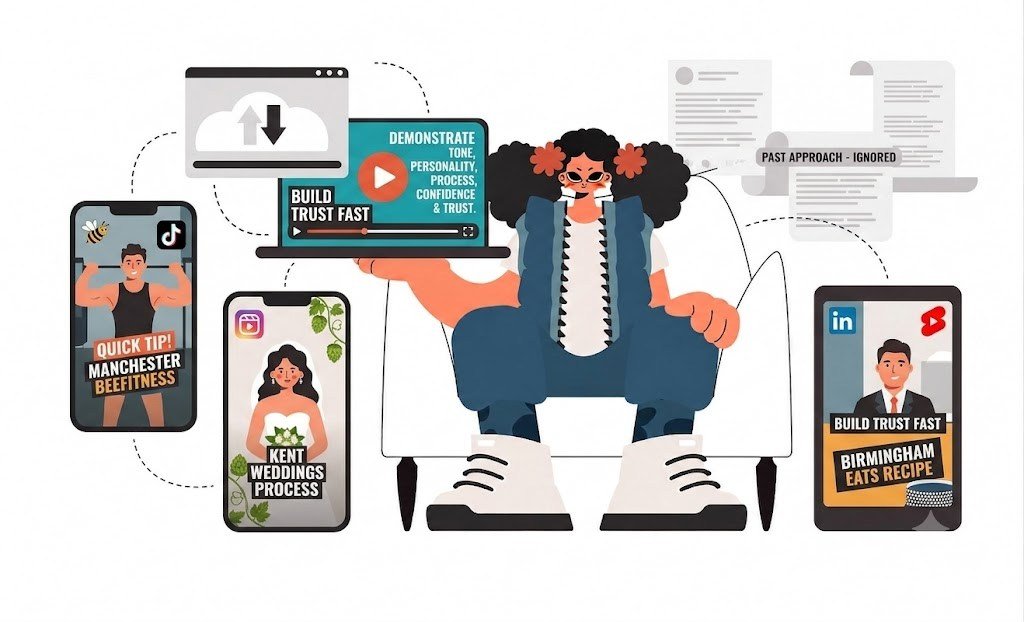
TikTok, Instagram Reels, YouTube Shorts, Facebook, LinkedIn and even Google search results all give videos more visibility than they once did. For UK creators and businesses, this matters because people are often discovering services, advice, products and personalities before they ever visit a website.
A local fitness coach in Manchester, a wedding photographer in Kent, a food blogger in Birmingham or a tradesperson in Leeds can all use video to show what they do in a way that feels immediate and human. A written post can explain expertise. A video can show tone, confidence, process, personality and trust in seconds.
That is why creators who avoid video completely are now working against the direction of the internet. It is still possible to grow through writing, newsletters, podcasts and images, but video often gives those formats more reach when used alongside them.
Visibility Is No Longer Just About Posting More
Many creators assume the answer is to post more often. In reality, posting more weak content rarely helps.
What matters is creating material that people stop for, understand quickly and find useful enough to save, share or act on. Video is powerful because it can do that quickly. A short clip can explain a tip, demonstrate a process, answer a common question or show a result without asking the viewer to commit much time.
For UK audiences, this is especially useful when the subject needs a practical explanation. Think of a solicitor explaining a common leasehold issue, a small bakery showing how it prepares seasonal orders, a beauty clinic explaining aftercare, or a finance creator breaking down a household budgeting mistake. Video makes the subject easier to grasp.
Old Barrier to Video Was Real
For years, video felt out of reach for many independent creators.
Making a polished clip meant filming, lighting, sound, editing, subtitles, music, formatting and exporting. That was a lot to ask from someone already running a business, writing blog posts, managing clients or building an audience in their spare time.
A blog post could be drafted in an evening. A decent video could take hours, sometimes days, especially if the creator were trying to make it look professional. This is why many capable people stayed away from video. It was not because they lacked ideas. It was because production felt too technical, too expensive or too time-consuming.
That barrier particularly affected smaller UK creators who did not have a marketing team. A sole trader, freelance consultant, independent publisher or small online shop cannot always afford regular video production. Even when they understand the value of video, the practical workload can stop them from starting.
Production Should Not Be the Thing That Blocks Good Ideas
The frustrating part is that many creators already have useful things to say.
They know the questions customers ask. They know the mistakes beginners make. They know what people misunderstand about their subject. They know which advice is genuinely useful and which advice is only repeated because everyone else says it.
The problem has often been turning that knowledge into a format that works on modern platforms. This is where newer tools have changed the situation.
AI Tools Have Lowered the Practical Barrier
The technical side of video creation has become far more manageable. An AI video Generator can help turn ideas, scripts, images, product material or existing content into usable clips without requiring the same editing skills that were once needed.
That does not remove the need for judgement, but it does reduce the friction. A creator can now repurpose a blog post into a short explainer, turn a customer question into a social clip, or create a simple video summary of a longer guide without starting from a blank timeline.
For small UK businesses, this can be especially valuable. A local estate agent can make short videos explaining what first-time buyers should check before viewing a property. A restaurant can create clips around seasonal menus. A tuition provider can explain exam preparation tips for GCSE or A-level students. A home improvement company can show before-and-after project stages without needing a full production crew.
AI Helps With Assembly, Not Strategy
The mistake is thinking that easier production means the content will automatically be good.
It will not.
AI tools can help with editing, structure, captions, pacing and formatting. They can save time and make video creation less intimidating. But they cannot replace a clear point of view, useful knowledge or a real understanding of the audience.
A weak idea still feels weak in video form. A thin sales message still feels thin, even with smooth transitions and background music. The best use of AI is to remove technical obstacles so the creator can spend more energy on the message.
Substance Still Matters More Than Polish
Video works when it gives the viewer a reason to care.
That reason might be practical value, entertainment, reassurance, humour, expertise or a fresh way of seeing something. It does not have to be glossy. In fact, UK audiences often respond well to content that feels direct and believable rather than overproduced.
A simple video recorded in a small office, kitchen, workshop or studio can perform well if it answers a real question clearly. A polished video with no useful point can disappear quickly.
Research and guidance from Think with Google has often emphasised the importance of relevance, audience intent and meaningful creative choices. That principle applies strongly to creators: people do not watch because a video looks expensive. They watch because it feels relevant to them.
Useful Beats Flashy
A creator should ask a few simple questions before making a video:
- What will the viewer understand after watching?
- What problem does this solve?
- Does this show something better than text alone?
- Are the first few seconds clear enough to earn attention?
- Would someone save or share this because it helps them?
These questions keep the video grounded. They stop creators from chasing trends that have nothing to do with their audience.
Finding the Right Video Format
There is no single correct way to do video.
Some creators are strongest on camera. Others are better using voiceover, screen recordings, product demonstrations, customer questions, animations or behind-the-scenes clips. The format should suit both the creator and the audience.
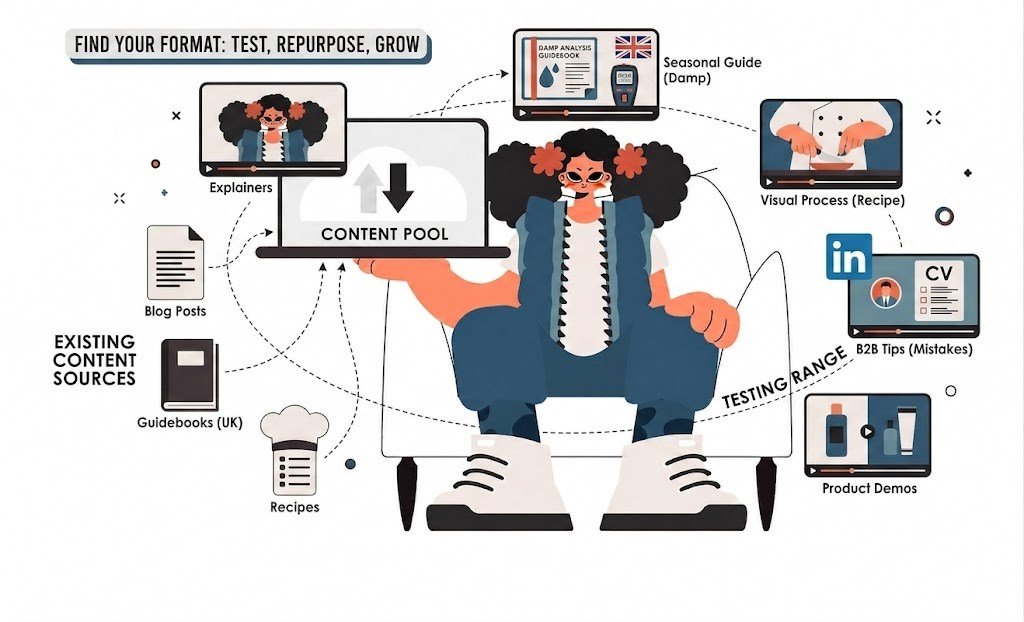
A personal finance creator may do well with direct explainers. A craft business may benefit from process videos. A B2B consultant may use short LinkedIn clips to explain common mistakes. A blogger may turn article sections into quick summaries. A retailer may show product comparisons, sizing advice or care instructions.
The best format is usually found through testing, not guessing.
Start With What You Already Have
Many creators think they need brand-new ideas for video. Usually, they already have enough material.
Good starting points include:
- Existing blog posts that can become short explainers
- Frequently asked customer questions
- Common mistakes in your niche
- Step-by-step demonstrations
- Short opinions on industry changes
- Behind-the-scenes processes
- Product or service comparisons
- Client education topics
For example, a UK home services business could turn a written guide about damp prevention into a short seasonal video before winter. A food creator could turn a recipe article into a quick visual method. A careers coach could turn a long blog post about CV mistakes into a series of short clips.
Repurposing is not lazy. It is efficient. Different people prefer different formats, and video gives strong ideas another route to reach them.
UK Creators Need to Think About Trust
Video can build trust quickly, but it can also damage it quickly.
For UK audiences, trust is especially important in areas such as health, finance, legal advice, property, education and home services. Creators should avoid making exaggerated claims, copying trends without context or presenting opinions as facts.
If a subject involves professional advice, safety or money decisions, the video should be careful and clear. A short clip should not oversimplify something that needs proper explanation. It can introduce the topic, highlight risks and point viewers towards a fuller guide, consultation or trusted source.
Safety, Accuracy and Accessibility Matter
A good video is not only about reach. It should also be responsible.
Creators should check claims before publishing, especially when discussing prices, regulations, tax, health, legal rights or financial products. They should avoid misleading before-and-after content, hidden advertising and unclear sponsorships.
Accessibility also matters. Many people watch videos without sound, so captions are important. Clear contrast, readable text and simple pacing help more viewers follow the message. For UK businesses, this is not just good practice. It also makes content more usable for people in everyday situations, such as commuting, working in shared spaces or browsing with sound off.
Video Should Support Your Wider Content Strategy
Video should not replace everything else. It should connect with the rest of your content.
A strong short video can lead people to a longer article, a product page, a newsletter, a booking form or a detailed guide. A blog post can become several short clips. A customer question can become a video, a written FAQ and a social post.
This joined-up approach works better than treating video as a separate task. It also saves time because one good idea can be used in several ways.
A Practical Workflow for Small Creators
A simple workflow might look like this:
Choose one useful topic from your existing content or customer questions.
- Write a short outline with one clear message.
- Record or generate a simple video version.
- Add captions and make the opening clear.
- Publish it on the platform where your audience already spends time.
- Watch what people respond to and improve the next one.
The first few attempts may feel awkward. That is normal. Most creators improve quickly once they stop treating every video as a major production and start treating it as a communication habit.
Creators Who Adapt Will Have the Advantage
Video is not a passing trend that creators can wait out. It has become part of how people search, compare, learn and decide who to trust.
That does not mean every video has to be perfect. It means creators need to become comfortable communicating in the format their audience already uses. The tools are now accessible enough that technical difficulty is no longer the same excuse it once was.
For UK creators, the real opportunity is not just getting more views. It is easier to understand, easier to trust and easier to remember. Video can show the person behind the advice, the process behind the product and the thinking behind the business.
The format has changed. The tools have caught up. The creators who start now, learn steadily and keep substance at the centre will be in a much stronger position than those who keep waiting for the internet to move backwards.