


Going to rehab can be a daunting experience because uncertainty makes each course of action appear bigger than it is. For example, you might be afraid of withdrawals, new habits, new routines, and discussions you have been avoiding for years.
Meanwhile, the fear of judgment or failure may cause hesitation even when you know change is needed. Consequently, these issues build the pressure and make the first week look intimidating before it has even started.
Nevertheless, organized treatment at drug and alcohol rehab such as Carrara luxury rehab replaces uncertainty with clear guidance and regular medical attention. The moment you enter the rehab, trained specialists pay attention to the stabilization of your health, plan your program, and build a unique way for progress.
Therefore, every day is well-purposed and helps to restore physical health and clarity of mind. This article explains what happens in the first week at drug and alcohol rehab and how each of them supports steady progress.
1. Arrival and Medical Evaluation Process

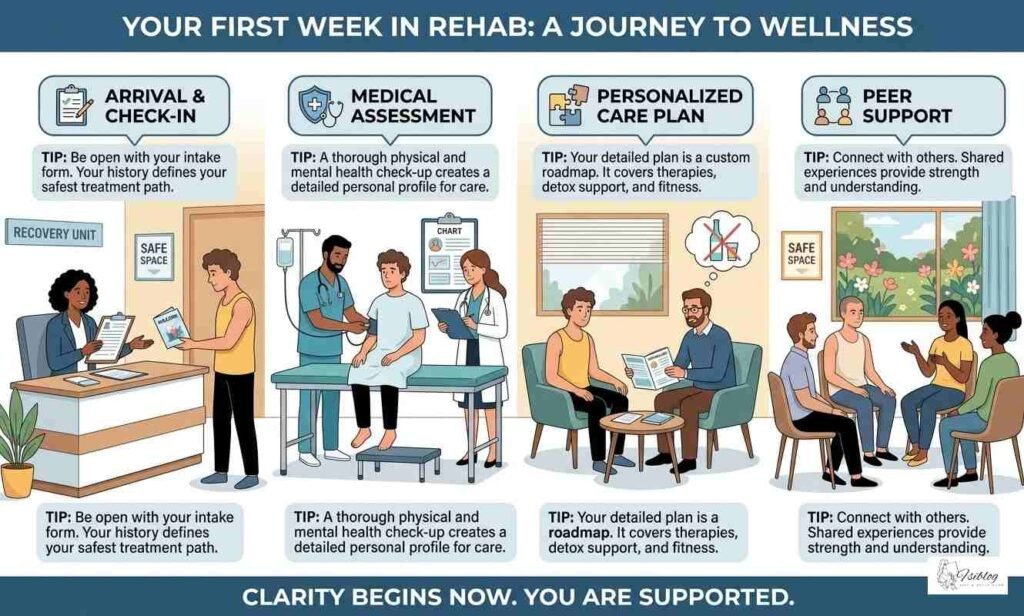
When you arrive at drug and alcohol rehab, the first step involves a thorough admission assessment and a medical evaluation. This involves examining your medical history, substance use, mental issues, and present physical status.
Consequently, medical personnel get a clear idea of what you need and the safest starting point for treatment. Moreover, vital signs and withdrawal risk factors are determined to achieve stability.
This assessment is extremely detailed and thoughtful, and it serves as the basis for the personalized care plan. Once assessed, you are provided with a summary of daily organization, program expectations, and available support services.
As a result, clarity begins to replace uncertainty. Even though the emotions remain intense, medical supervision provides immediate reassurance and guidance.
2. Detox and Stabilization Support
Detox usually becomes the next priority after the evaluation. Since the body is dependent on the substances, withdrawal symptoms may include minor pain or even severe health issues. Thus, medical supervision is constant at this phase.
In addition, staff monitor the symptoms, administer medications when necessary, and react promptly to any complications. Meanwhile, hydration, food, and rest are closely considered to enhance physical recovery. Therefore, this structured treatment minimizes risk and alleviates pain.
As the body stabilizes, mental clarity gradually increases. Along with that, detox is not the solution in itself; it is just the way to prepare you for deeper therapeutic work. When the physical stability is attained, the focus shifts to emotional healing.
3. Therapy Sessions and Emotional Assessment
Once physical stabilization occurs, therapeutic engagement becomes a priority. Week one involves individual counseling sessions that are aimed at exploring personal history, triggers, and behavior patterns. Additionally, these discussions help determine the factors underlying substance use.
Besides that, group therapy also brings in peer interaction in a more formalized environment. Accountability and reflection are promoted by sharing experiences in a supervised environment.
At first, it can be awkward to talk freely, but guided discussions generate a sense of psychological safety. In the long run, the awareness of common difficulties decreases loneliness and boosts motivation.
Additionally, therapists also start assessing mental health issues that are co-occurring, like anxiety, depression, or trauma. Early intervention with these factors means treatments are targeted at root causes rather than surface behavior. As a result, the first week of therapy sets a course of action instead of imposing too much emotional intensity on you.
4. Structured Schedule and Daily Responsibilities
Consistency plays a significant role in the first week. Every day is structured around a specific program that includes therapy sessions, educational workshops, meals, wellness activities, and scheduled rest. Since the use of the substance tends to disrupt routine, this framework restores balance and predictability.
For example, periodic wake-up and meal times help regulate sleep patterns and energy levels. Meanwhile, educational sessions offer practical knowledge of addiction, coping, and relapse prevention. Step-by-step routine brings chaos to order and builds stability.
Additionally, accountability is strengthened through involvement in duties such as punctual attendance and contributions to discussions. While structure might seem a limiting factor at the beginning, it builds stability over time. As days go by, uncertainty gives way to predictability, and crisis management shifts to continuous progress.
5. Early Recovery Planning and Goal Development

Continued recovery is already planned during the first week of residential treatment. Counselors begin discussing recovery objectives, support networks, and plans. Preparation begins early rather than waiting until discharge, as a strategy to enhance continuity of care.
This stage includes identifying potential triggers in everyday life and outlining practical coping mechanisms. Furthermore, discussions may involve outpatient therapy options, support groups, or sober living arrangements, depending on individual needs. By addressing these topics early, treatment remains proactive instead of reactive.
Moreover, goal setting also becomes part of daily reflection. Small, realistic objectives encourage steady momentum and measurable progress. As clarity increases, confidence grows through action rather than assumption. Overall, planning during this early stage reinforces commitment and strengthens long-term direction.
Bottomline
Your first week in drug and alcohol rehab focuses on stabilization, structure, and foundational change. Medical evaluation ensures safety, detox addresses physical dependence, and therapy begins uncovering deeper patterns that influence behavior. At the same time, structured routines restore balance while early recovery planning builds direction.
Furthermore, each step connects logically to the next, creating steady progress instead of sudden pressure. Although the process requires emotional effort, it provides clarity and stability from the very beginning.
By the end of the first week, a solid framework for continued recovery is already in place, supporting meaningful and sustainable progress.
Disclaimer
This article is for informational and educational purposes only and should not be considered medical, psychological, or professional treatment advice. Experiences during the first week of rehabilitation can vary depending on the individual, the substance involved, medical history, and the specific treatment program. Anyone considering treatment for substance use should consult qualified healthcare professionals or licensed addiction specialists for personalised guidance and care. If you or someone you know is struggling with drug or alcohol dependence, seek professional medical assistance or contact a certified treatment provider.