


USB interface ICs are critical components in today’s smart devices, enabling seamless communication, charging, and data transfer. From smartphones and laptops to IoT devices and interactive displays, these integrated circuits act as the bridge between hardware and connectivity protocols. As electronics become smaller, faster, and more multifunctional, selecting the right USB interface IC has become more than just a technical decision; it directly affects product reliability, user experience, and compatibility across ecosystems.
What Are USB Interface ICs and How Do They Work?

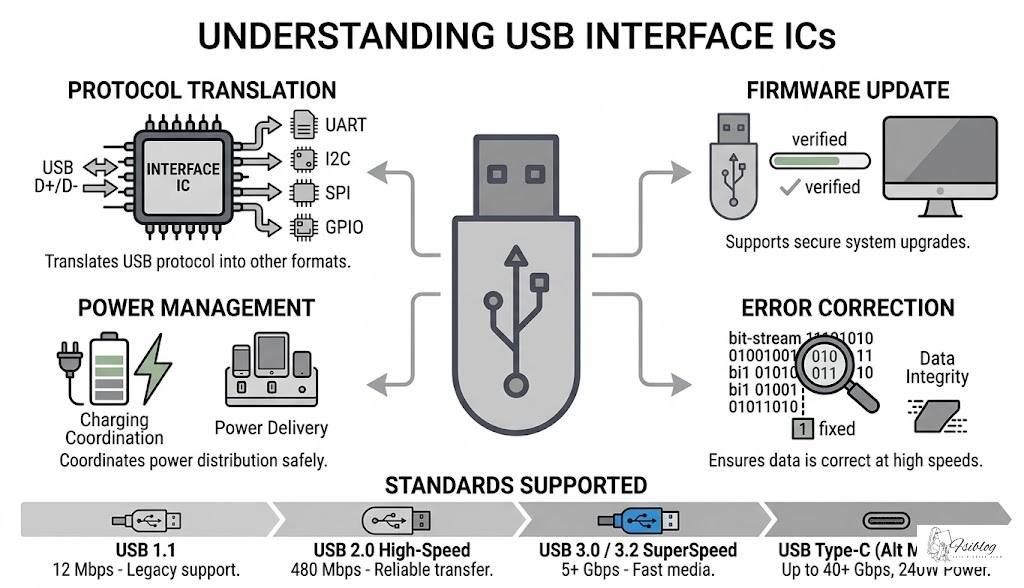
USB interface ICs are specialized chips that manage data transmission between electronic devices using the Universal Serial Bus (USB) protocol. They translate USB signals into other communication protocols like UART, I2C, or SPI, allowing microcontrollers, sensors, and processors to exchange information efficiently.
In modern smart devices, these ICs support a wide range of functions:
- Connectivity: Linking smartphones, laptops, peripherals, and sensors.
- Firmware Updates: Allowing systems to be upgraded safely and reliably.
- Power Management: Coordinating charging and power delivery safely.
- Error Correction: Ensuring data integrity during high-speed transfers.
USB interface ICs support various standards, including USB 2.0, USB 3.0, and USB Type-C. USB 2.0 provides reliable basic data transfer and charging, USB 3.0 enables faster multimedia transfers, and USB Type-C offers reversible connectors, higher data rates, and advanced power delivery. By integrating multiple functions in a single chip, USB interface ICs simplify system design, improve compatibility, and enable the seamless connected experiences expected in smart devices today.
Key Types of USB Interface ICs and Their Applications
USB interface ICs come in multiple types, each designed for specific applications:
- USB-to-UART Converters: Common in serial communication, debugging, and firmware updates.
- USB-to-I2C and USB-to-SPI Converters: Enable communication with sensors, peripheral devices, and embedded systems.
- Power Delivery Controllers and USB Type-C ICs: Manage safe charging and support higher currents and voltages.
These ICs are used across industries:
- Consumer Electronics: Smartphones, laptops, tablets, and wearable devices.
- IoT Devices: Sensor-to-gateway communication and cloud-connected systems.
- Interactive Displays: USB interface ICs are critical for touch control, peripheral integration, and real-time data transfer. electronic sandwich board manufacturer solutions, for instance, rely heavily on these ICs to update content, connect peripherals, and maintain reliable performance in public-facing displays.
By selecting the right type of IC, developers ensure reliable connectivity, smooth user experience, and energy-efficient operation across devices.
Essential Features to Consider When Selecting USB Interface ICs
Choosing the right USB interface IC requires attention to several factors:
- Data Transfer Speed: Match the IC with the USB standard appropriate for the application. USB 2.0 is sufficient for basic communication, while USB 3.0 and Type-C suit high-speed multimedia and large data transfers.
- Power Efficiency and Voltage Management: Efficient ICs reduce energy loss and protect sensitive components. Collaborating with reputable voltage reference device suppliers ensures consistent voltage regulation and long-term system stability.
- Compatibility: The IC should work seamlessly with different operating systems (Windows, Linux, Android) and hardware platforms. Poor compatibility can cause driver errors and increase development time.
- Integration and Footprint: Highly integrated, compact ICs reduce PCB space, simplify design, and allow slimmer devices like portable IoT modules or smart displays.
Considering these features ensures that the chosen IC meets performance, reliability, and regulatory standards expected in UK electronics.
Role of USB Interface ICs in Smart Device Connectivity
USB interface ICs act as the backbone of modern device communication. They connect devices with peripherals such as keyboards, cameras, storage drives, and sensors, ensuring stable data exchange.
Key benefits include:
- Multi-Function Support: Handling charging, data transfer, and multimedia communication through a single interface.
- Enhanced Reliability: Maintaining system stability in high-demand applications, including smart home devices and wearables.
- Industry Versatility: Supporting applications across consumer electronics, industrial automation, and interactive display systems.
As smart ecosystems expand, USB interface ICs remain foundational components, providing reliable connectivity and supporting the seamless, interconnected experiences users expect.
Choosing the Right USB Interface IC Supplier
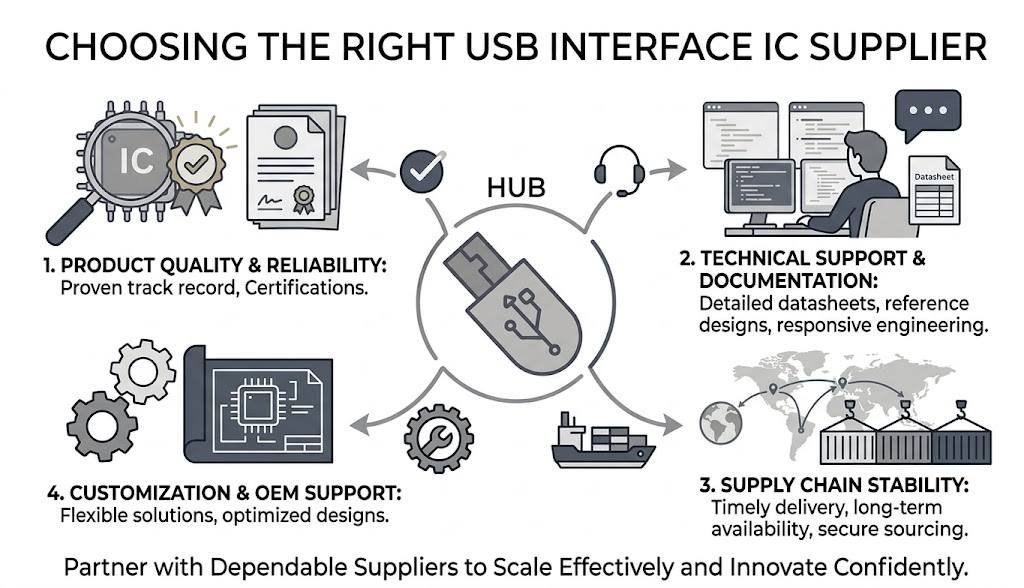
Selecting a reliable supplier is as important as choosing the right IC itself. Consider:
- Product Quality and Reliability: Choose suppliers with a proven track record, certifications, and quality control processes.
- Technical Support and Documentation: Detailed datasheets, reference designs, and responsive engineering support speed up development and reduce errors.
- Supply Chain Stability: Ensure long-term availability, timely delivery, and secure sourcing for uninterrupted production.
- Customization and OEM Support: Flexible suppliers offer custom IC solutions or optimized designs to meet specific application requirements.
By partnering with dependable suppliers, UK developers can maintain product quality, scale effectively, and innovate confidently.
Conclusion
USB interface ICs are indispensable for modern smart devices, enabling connectivity, power management, and reliable data transfer. Choosing the right type of IC, understanding its applications, and working with trustworthy suppliers, especially electronic sandwich board manufacturer solutions or reputable voltage reference device suppliers, ensures device reliability and excellent user experience. For UK developers, these considerations help maintain compliance, enhance performance, and future-proof electronics designs in an increasingly connected world.