


When planning a holiday abroad, most travellers focus on booking flights, choosing hotels, and creating an itinerary. However, one important factor that many people overlook is how exchange rates and payment choices can affect their travel budget.
Currency values change daily, and the way you exchange or spend money overseas can significantly impact how much your trip costs. By understanding a few key foreign currency trends, UK travellers can avoid unnecessary fees, make smarter financial decisions, and stretch their travel budget much further.
Below are practical tips to help you manage travel money more effectively before and during your trip.
Understand How the Pound Performs Against Major Currencies

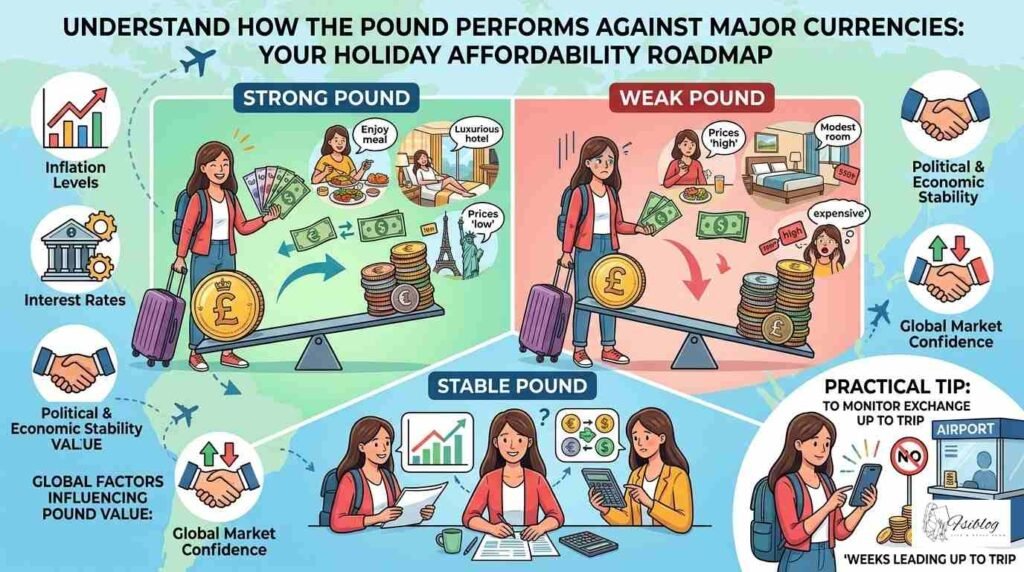
The value of the British pound directly affects how expensive your holiday becomes. When the pound is strong, UK travellers receive more foreign currency for their money. When it weakens, everything from meals to hotel stays becomes more expensive.
Recently, sterling has fluctuated against both the euro and the US dollar, which are two of the most commonly used currencies for British travellers. Even small changes in exchange rates can noticeably affect your daily spending abroad.
For example:
| Situation | Impact on Travellers |
|---|---|
| Pound strengthens | UK travellers get better value abroad |
| Pound weakens | Travel expenses increase overseas |
| Stable exchange rates | Easier to predict travel costs |
Exchange rate movements are influenced by many global factors, including:
- Inflation levels
- Central bank interest rates
- Political and economic stability
- Global market confidence
Because these factors change frequently, exchange rates can shift quickly.
Practical Tip
Monitor exchange rates in the weeks leading up to your trip. If the pound is performing well, exchanging some currency early may help you lock in a better value.
Avoid waiting until you reach the airport to exchange money. Airport currency desks typically offer less favourable rates and higher fees.
Identify Travel Destinations That Influence Currency Demand
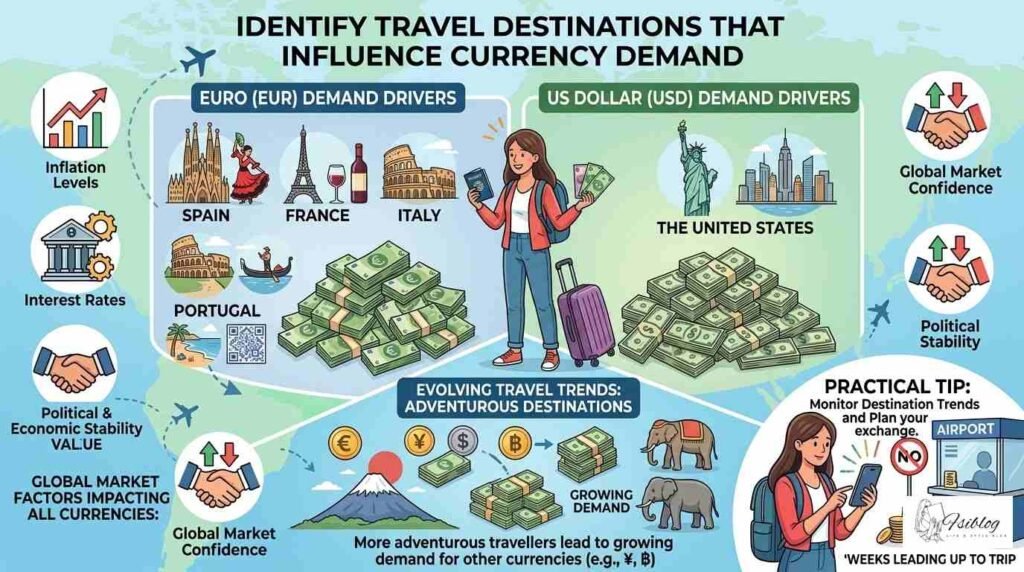
Currency demand often reflects where UK travellers are choosing to go on holiday. Popular destinations naturally lead to higher demand for certain currencies.
Traditionally, currencies like the euro and US dollar dominate because of the popularity of destinations such as:
- Spain
- France
- Italy
- Portugal
- The United States
However, travel trends are constantly evolving.
More adventurous travellers are increasingly exploring emerging destinations such as Sri Lanka and Nepal, where tourism is growing rapidly. As more UK visitors travel to these locations, demand for less commonly exchanged currencies may increase.
This shift can sometimes influence availability and exchange rates at certain travel money providers.
Why This Matters for Travellers
Less common currencies may not always be available instantly at every exchange bureau. Planning ensures you avoid last-minute stress when preparing travel money.
Some travellers also choose to exchange widely used currencies like US dollars or euros first and then convert them locally if needed.
Understand How Travellers Are Paying Abroad
The way people pay when travelling internationally has changed significantly in recent years. While cash is still useful in many places, digital payments and travel-friendly banking options have become much more popular.
Today, travellers often combine several payment methods to stay flexible and secure.
Common Payment Options for Travellers
| Payment Method | Advantages | Things to Watch |
|---|---|---|
| Cash | Accepted everywhere | Risk of loss or theft |
| Debit cards | Convenient and widely accepted | Foreign transaction fees |
| Prepaid travel cards | Lock exchange rates | May have reload fees |
| Mobile wallets | Fast and secure | Not accepted everywhere |
Prepaid travel cards are particularly popular because they allow travellers to load money before departure and lock in exchange rates. Many of these cards also come with mobile apps that help you track spending and manage balances while travelling.
However, it is still wise to carry a small amount of local currency for:
- Taxis
- Small cafes or markets
- Tips or service charges
- Rural areas where cards may not be accepted
Reduce Fees When Exchanging Currency
One of the most common mistakes travellers make is exchanging money without checking the true cost.
Exchange providers often advertise “zero commission”, but the real cost may be hidden in the exchange rate itself.
This is why comparing travel money exchange providers before buying foreign currency can make a big difference to your overall travel budget.
Things to Compare
When choosing where to exchange money, check:
- Exchange rates offered
- Commission charges
- Delivery fees for online orders
- Minimum order requirements
- Buy-back guarantees
Some online travel money services offer better exchange rates than high street shops or airport desks.
Ordering currency online for home delivery or airport collection can provide better value.
Smart Strategies to Stretch Your Travel Budget
Preparing your travel money strategy in advance can help you avoid unnecessary expenses.
Here are a few practical tips used by experienced travellers:
1. Exchange Some Currency Early
If exchange rates are favourable before your trip, exchanging part of your travel money early can protect you from sudden market changes.
2. Use Multiple Payment Methods
Carry a mix of:
- Local cash
- A debit card
- A travel card or credit card
This ensures you always have a backup option if one payment method fails.
3. Avoid Dynamic Currency Conversion
When paying by card abroad, merchants may offer to charge you in pounds instead of the local currency. This service often includes a poor exchange rate.
It is usually cheaper to pay in the local currency and let your bank handle the conversion.
4. Monitor Spending Through Travel Apps
Many banks and prepaid travel cards provide mobile apps that track spending in real time. This helps travellers stay within their holiday budget.
Make Currency Trends Work in Your Favour
Foreign currency markets may seem complicated, but understanding a few basic trends can make travel planning much easier.
By keeping track of exchange rates, understanding where currencies are in demand, and choosing the right payment methods, travellers can avoid unnecessary costs and make their holiday budget go further.
With a little preparation and awareness, you can spend less time worrying about money and more time enjoying your trip.
Travelling should be about experiences, relaxation, and discovery. When you manage your travel money wisely, you give yourself the freedom to enjoy every moment of the journey.