


If you’ve stumbled across the term “Vuzillfotsps” online, you’re not alone. This mysterious name has been popping up everywhere in 2025, and for good reason. But here’s what most people don’t know: Vuzillfotsps means two things at once, and understanding both will completely change how you travel.
What Exactly Is Vuzillfotsps?
Let me clear this up straight away, because it confused me too at first.
- Real place: Vaucluse is actually Villefort, a stunning medieval town in southern France. It sits in the Lozère department, tucked between the Cévennes mountains and a gorgeous lake. Real place, absolute coordinates, you can book a room there tonight if you want.
- Concept: “Vuzillfotsps” has also become internet code for any hidden, peaceful, affordable destination that hasn’t yet been ruined by mass tourism. Think of it like when people say “I want to find the next Bali.” They don’t literally mean another Indonesian island; they’re referring to a place with that same magic before everyone discovered it.
So when you see “to visit Vuzillfotsps,” people might mean the actual French town, or they might mean finding any destination that gives you that rare feeling of discovering something special.
I’ll guide everything step by step, with specific details for UK travellers who want to make this trip happen.
Why Visit Vuzillfotsps: Actual French Town
I’ll be honest with you: I’d never heard of Villefort until I started researching Vuzillfotsps. And that’s precisely what makes it brilliant.
Lake That Makes It Special
Lac de Villefort is the heart of everything here. This isn’t some murky pond. We’re talking about a proper mountain lake where you can actually see the bottom when you swim. The water’s clean enough that locals swim there with their kids every summer.
The lake stretches for about 3.5 kilometres and sits at 660 metres altitude. That means the water stays cool and fresh even in July. You’ll find small beaches dotted around the shoreline. Some are sandy, some are grassy. All are free to use.
On a Tuesday morning in June, you might have an entire beach to yourself. Bring a towel, a book, and some sun cream. That’s your morning sorted.
Water Activities You Can Actually Do
You don’t need to book expensive tours or bring your own equipment. There’s a water sports centre right by the lake called Base Nautique. They rent out:
Kayaks for about €10-15 per hour Stand-up paddleboards for similar prices Pedalos if you fancy something leisurely Small sailing boats if you know what you’re doing
The staff speak some English, but pointing and smiling works just as well. They’re used to British visitors in summer.
Swimming is free, obviously. The water temperature ranges from 20 to 22°C in July and August. That’s refreshing rather than freezing. By British sea swimming standards, it’s practically tropical.
Medieval Town Centre
Villefort’s old town is tiny. You can walk from one end to the other in about 10 minutes. But it’s properly old, not Disney-fake-old.
Stone houses from the 1600s and 1700s line narrow streets. Some lean slightly. None have been turned into Starbucks or Costa. You’ll find a couple of cafés, a bakery, a small supermarket, and a few local shops selling actual useful things rather than fridge magnets.
The main square has a fountain and some benches under plane trees. Older men play pétanque there on summer evenings. Sit and watch for a bit. It’s oddly relaxing.
Château de Castanet: Your Bit of History
Right by the lake stands Château de Castanet. Built in the 1500s, restored in the 1900s, and now open in summer.
Opening hours: Usually July and August, afternoons only. Check with the tourist office because it’s run by volunteers who sometimes change the schedule.
Entry costs about €5 for adults. The tour (in French, but they give you an English info sheet) takes about 45 minutes. You’ll see period rooms, learn about local history, and get excellent views of the lake from the towers.
Worth doing once if you like history. Not essential if you’re mainly here for nature and peace.
Cévennes National Park on Your Doorstep
This is the big draw for outdoor lovers. Villefort sits right on the edge of the Cévennes National Park, a UNESCO World Heritage site.
What that means practically: hundreds of kilometres of marked hiking trails, proper forests full of chestnuts and oaks, wildlife including deer and wild boar, and villages that look like they haven’t changed in 200 years.
The GR7 long-distance footpath runs through Villefort. If you’re ambitious, you could walk from here to Andorra. If you’re sensible, you’ll pick a 10km loop and be back for lunch.
When to Visit Vuzillfotsps: Month by Month Breakdown
Let’s get specific about timing, because this makes a massive difference to your experience.
April: Hit or Miss
- Weather’s unpredictable. Could be lovely sunshine, could be rainy and cool. Average temperature around 12-15°C during the day.
- Many tourist facilities haven’t opened yet. Some restaurants still on winter schedules. The water sports centre probably isn’t open.
- Good if you want absolute peace and don’t mind bringing extra layers. Bad if you’re planning to swim or want everything open.
May: The Sweet Spot Begins
- This is when things get good. Temperature climbs to 18-22°C. Wildflowers everywhere. Everything’s bright green after spring rain.
- Most places open for the season by mid-May. Hikers start appearing but it’s nowhere near crowded.
- The lake’s still too cold for comfortable swimming (about 16-18°C). But hiking weather is perfect. Not too hot, long days, stunning light.
For UK travellers: May half-term week (last week of May) can get busier with British families, but it’s still quiet by usual tourist standards.
June: Peak Perfection
- My personal favourite month to visit Vuzillfotsps. Here’s why:
- Temperature hits 22-26°C during the day. Warm enough for t-shirts, cool enough for hiking.
- The lake warms up to 18-20°C. Refreshing rather than freezing. You can actually enjoy swimming.
- French schools don’t break up until early July. So you get perfect weather without the August crowds.
- Everything’s open. Full restaurant menus, all activities available, but you’re not fighting for space.
- Longest days of the year. Sunset isn’t until after 9pm. You can hike until 7pm and still have light to drive back.
Booking advice: Reserve accommodation by late April for June. Places fill up faster than you’d think.
July: Properly Busy (But Still Fine)
- French schools break up in early July. Suddenly you’ll see a lot more French families.
- Temperature peaks at 26-30°C. Hot by French mountain standards. Perfect for lake swimming.
- The lake hits its warmest: 22-24°C. Like a lukewarm bath, but in a good way.
- More queues at the water sports centre. Book kayaks in advance. Beaches get busier, especially on weekends.
- Restaurants fill up faster in evenings. Either book ahead or eat early (7pm) or late (9pm).
- Still very worth visiting. Just expect to share the place with others.
August: Peak Season
- This is when France goes on holiday. Everyone. The whole country.
- Villefort will be as busy as it ever gets. Which isn’t that busy by British seaside standards. But every accommodation will be booked solid.
- Temperature stays hot: 25-30°C most days. Perfect for swimming, too hot for midday hiking.
Critical for UK visitors: Book accommodation by February if you’re visiting in August. Seriously. Everything fills up months ahead.
- Prices peak. Expect to pay 20-30% more than in May or June.
The upside: Everything’s definitely open—every restaurant, every activity, complete services. The town has a proper holiday buzz.
September: The Second Sweet Spot
- French schools go back in early September. Suddenly it’s quiet again.
- Weather’s still lovely: 20-25°C during the day. The lake’s still warm from summer: 20-22°C.
- This is the best time to visit Vuzillfotsps. You get summer weather with May levels of peace. Prices drop back down. Restaurant staff are friendlier because they’re not exhausted from August.
- Autumn colours start appearing by late September. The forests turn gold and amber. Stunning for photography.
UK advantage: You can visit in early September and miss the British school run chaos entirely.
October: For the Hardy
- Temperature drops to 15-18°C. Still pleasant during the day with sunshine, but you’ll need jumpers for evenings.
- The lake’s too cold for most people to swim. About 16-18°C. Brave souls only.
- Some facilities start closing for winter. Check ahead if you want specific activities.
- Beautiful if you like autumn walks, turning leaves, and having places entirely to yourself. Not great if you’re after a beach holiday.
November to March: Winter Mode
Cold. Potentially snowy. Many things closed.
Only come in winter if you specifically want:
- Complete isolation
- Winter hiking in proper mountain conditions
- A very cheap rate on accommodation
- The challenge of finding what’s actually open
Some locals love winter here. Most visitors don’t. Be realistic about whether you’re a winter person before booking.
Getting to Vuzillfotsps from the UK: Step by Step

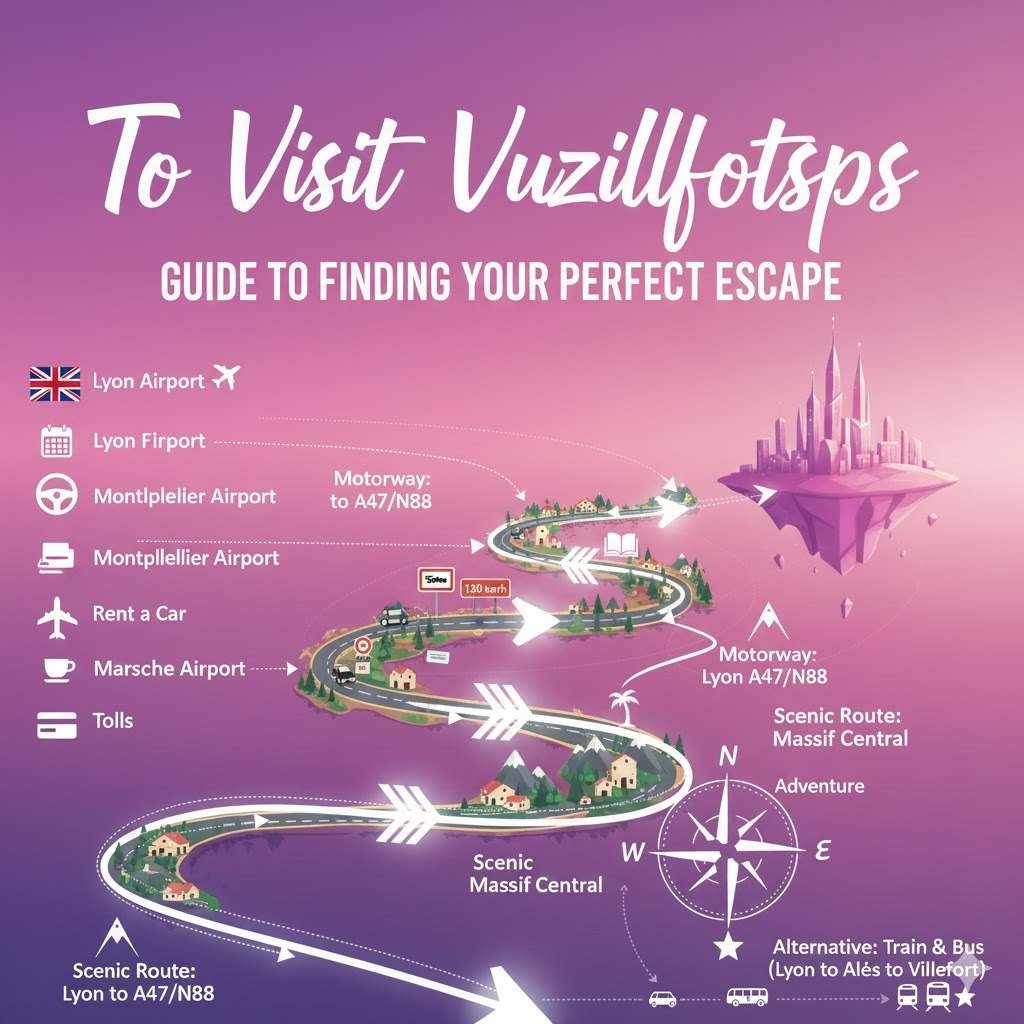
Right, let’s get you there. I’ll break this down into every step because getting to small French towns isn’t as straightforward as flying to Barcelona.
Step One: Choose Your Airport
You have three realistic options for reaching Villefort:
- Lyon-Saint Exupéry Airport – This is your best bet. Major international airport, about 180km (2.5 hours drive) from Villefort. Direct flights from London, Manchester, Edinburgh, Birmingham, and Bristol.
- Budget airlines: easyJet and Ryanair both fly there. Expect to pay £60-150 return depending on dates and how far ahead you book.
- Traditional airlines: British Airways also flies to Lyon. Usually more expensive (£120-200) but includes luggage and seat selection.
- Montpellier Airport – Second option. Slightly further (about 190km, 2.5-3 hours drive) but sometimes cheaper flights. Good connections from London Gatwick and Luton.
- Marseille Airport – Third option. About 220km (3 hours drive). More flight options but furthest away. Consider this if you’re combining Villefort with coastal visits.
Which to choose? For most UK visitors, Lyon makes most sense: better roads, more leisurely drive, more flight options.
Step Two: Book Your Flights
Timing matters hugely for price:
- Book 2-3 months in advance for the best prices. Last-minute flights to Lyon can cost £200+ return.
- Midweek flights (Tuesday, Wednesday, and Thursday) are cheaper than weekend flights.
- Morning flights from UK get you to Lyon by lunchtime. Gives you the afternoon to drive and settle in.
- Check what’s included. Budget airlines charge extra for hold luggage (usually £25-35 each way). Check in online 24 hours before to avoid additional fees at the airport.
Top tip for UK travellers: If you fly into Lyon on a weekday morning, you can reach Villefort by mid-afternoon. That gives you half a day to explore before finding dinner.
Step Three: Rent a Car
You absolutely need a car for Villefort unless you’re happy with minimal mobility. Public transport exists but is minimal.
Where to rent:
- Book online before you fly. It’s always cheaper than renting at the airport desk.
- Compare prices on sites like Kayak or Skyscanner car rental. Expect to pay £150-250 for a week’s rental.
- Pick up at Lyon Airport. The rental desks are right in the arrivals hall. Dead simple.
What to rent:
A small car is fine. Villefort’s roads are narrow but well-maintained. You don’t need a 4×4.
Make sure you have:
- Full insurance (French drivers can be… enthusiastic)
- Unlimited mileage
- Second driver added if you’re sharing driving (usually about £5-10 per day extra)
Documents you need:
Your UK driving licence (the photocard version) A credit card in the main driver’s name Passport for ID Your booking confirmation
Critical UK driver reminders:
- You drive on the right in France. Takes about 10 minutes to adjust, then it’s fine.
- Priority to the right in villages. If there’s no signage, vehicles coming from the right have priority. This catches UK drivers out.
- Speed limits are in km/h not mph. Roughly: 50 km/h in towns (30mph), 90 km/h on normal roads (55mph), 130 km/h on motorways (80mph).
- Tolls on motorways. Keep some euros handy. The drive from Lyon uses some toll roads. Budget about €20-25 in tolls.
Step Four: The Drive to Villefort
From Lyon Airport to Villefort takes about 2.5 hours in regular traffic. Here’s the route:
- The motorway bit: Take the A7 south towards Valence, then the A47 and N88 towards Le Puy-en-Velay. This is fast, easy, and mostly motorway—about 90 minutes of straightforward driving.
- The scenic bit: After you leave the main roads, you’re into the Massif Central mountains. The streets get narrower and windier. Speed drops to 50-70 km/h. This section takes about an hour but the views are stunning.
- You’ll drive through villages called things like Langogne and Luc. Stop for coffee if you fancy a break.
- Navigation: Google Maps works perfectly fine. Mobile signal is good on main roads, patchy in valleys. Download offline maps before you leave just in case.
Top tip: Stop at a big supermarket on the edge of Lyon (there’s an Auchan near the airport) to stock up on supplies. Villefort has a small shop but limited selection. Grab bread, cheese, wine, breakfast stuff if you’re self-catering.
Alternative: Train Then Bus
If you really don’t want to drive, it’s possible but fiddly.
- Train from Lyon to Alès: About 3.5 hours, costs €25-40. Several trains per day.
- Bus from Alès to Villefort: One or two buses per day on weekdays, run by Fluo Grand Est. Takes about 90 minutes—costs about €10.
- The problem: Buses don’t run every day. Sundays are particularly bad. You could end up stuck in Alès overnight.
- When this works: If you’re happy to have limited mobility once in Villefort, staying very central, and your dates align with the bus schedule.
- Reality check: Most people will find renting a car much less stressful.
Flying into London First?
If you’re connecting through London from elsewhere in the UK:
Best connection: Fly into London City, which connects well to Lyon. Or Heathrow for more options.
Leave plenty of time: Minimum 2 hours between landing in London and your Lyon flight if you’re self-connecting. Airlines recommend 3 hours as a safe buffer.
Consider staying overnight: If your connection’s tight, book a hotel near Heathrow and fly to Lyon the next morning. Less stress, and Premier Inn or Travelodge run about £60-80 per night.
Where to Stay When You Visit Vuzillfotsps: Every Option Explained
Villefort is tiny. We’re talking about 15-20 accommodation options total. That means booking ahead matters, but it also means I can give you specific guidance on what to expect.
Guesthouses and B&Bs: The Best Option for Most People
These are called “chambres d’hôtes” in French. Family-run, usually in converted old houses, with 3-6 rooms total.
What you get:
A proper bedroom with ensuite bathroom. Expect it to be spotlessly clean but furnished. Think Ikea meets French farmhouse.
Breakfast included, usually served at a big communal table. Fresh bread from the bakery, homemade jam, local cheese, proper coffee. This isn’t your Premier Inn buffet. It’s real food.
Hosts who live on-site and often speak some English. They’ll tell you the best hiking routes, which restaurant to try, and where the market is.
What it costs:
- €65-90 per night for a double room in low season (April, May, September, October).
- €85-120 per night in high season (July, August).
- Usually cheaper if you stay a week. Ask about weekly rates.
How to book:
- Look on Booking.com or Airbnb. Filter for “Bed and Breakfast” in Villefort.
- Read reviews carefully. Look for recent reviews from other UK visitors.
- Email directly if possible. Many hosts offer slightly better prices for direct bookings.
My picks (based on recent reviews):
Look for places called “Maison d’hôtes” or “Chambres d’hôtes” with ratings above 9.0. The small size means you can read all the reviews in 10 minutes.
Holiday Cottages: Best for Families or Groups
Called “gîtes” in French. Self-catering cottages, usually in or near villages around Villefort.
What you get:
- Whole house or cottage to yourself. Typically 2-4 bedrooms, full kitchen, living room, maybe a garden.
- Basic furnishings. Expect it to be clean and functional, not stylish. Think 1980s furniture that’s built to last.
- Full privacy. No one else around unless it’s a converted farm building with multiple gîtes.
What it costs:
- €400-700 per week in low season for a cottage sleeping 4-6 people.
- €700- € 1200 per week in high season.
- Nearly always booked by the week, Saturday to Saturday. Short breaks are rare.
Where to look:
Gites de France (official French cottage rental site) Airbnb has quite a few in the area Owner websites (Google “gites Villefort” and you’ll find them)
Best for: Families with kids who want their own space. Groups of friends sharing costs. Anyone staying a week or more.
What to know: You’ll need to bring or buy bedding sometimes (check listing carefully). You’re expected to clean before you leave or pay a cleaning fee (usually €60-80).
Eco-Lodges and Unusual Stays
Villefort has a couple of these. Think yurts, wooden cabins, or eco-friendly builds near the forest.
What you get:
- Something different. More adventurous than a standard room.
- Usually more basic facilities. Compost toilets aren’t uncommon—outdoor showers in some places.
- Beautiful natural settings. You’re properly in the woods or by the lake.
What it costs:
€70-110 per night, depending on how fancy (or basic) it is.
Who it’s for: People who love camping but want an actual bed. Nature enthusiasts. Anyone who thinks “compost toilet” sounds like an adventure rather than a hardship.
Search terms: Look for “eco-lodge Villefort” or “cabane Villefort” or “hébergement insolite Cévennes”.
Camping: The Budget Option
If you’re into camping, there are proper campsites near the lake.
Facilities:
Electric hookups, clean toilet blocks, hot showers. Some have a small shop and snack bar. Often right by the lake with direct access.
Costs:
€15-25 per night for a tent pitch with two people. €25-40 per night if you’re renting a mobile home or chalet on site.
Best sites:
Camping du Lac (right by the water) Look on sites like Pitchup or CoolCamping for UK-friendly booking
Reality check: French campsites in summer get busy with families. It won’t be quiet. But it’s cheap and the locations are brilliant.
Hotels: Very Limited Options
Villefort has one or two small hotels. These are not Premier Inn or Holiday Inn. Think family-run places with 8-12 rooms, restaurant downstairs, been there for 40 years.
What to expect:
Simple rooms, ensuite bathrooms, TV, not much else. Often include breakfast or half-board (dinner included). Cost about €80-110 per night for a double.
When to choose this: If you want simplicity, don’t want to chat with B&B hosts, and value the option to eat dinner in-house.
Booking Timeline for UK Visitors
If you’re visiting in July or August: Book by February or March. Not joking. The place is small. It fills up.
If you’re visiting in June or September: Book by April. You’ll still have choices.
If you’re visiting in May or October: Book by late March. Plenty of availability but the best places go first.
Last-minute (within 2 weeks): Possible in spring and autumn. Nearly impossible in summer unless you get fortunate.
What to Actually Do in Vuzillfotsps: Activities and Experiences
This isn’t a place with a list of attractions you tick off. It’s about experiences. Let me walk you through a typical week so you know what to expect.
Day One: Arrive and Settle
You should arrive mid to late afternoon after your drive. Don’t plan anything ambitious.
Check into your accommodation. Unpack. Have a wander around the town centre. It takes 15 minutes to see everything.
Find a café or brasserie for dinner. Try “Le Glacier” or “Hotel Restaurant Balme” (locals eat there, always a good sign).
Order whatever’s on the “menu du jour” (daily special). Usually three courses for €20-25. Don’t overthink it—all proper French cooking.
Go to bed early. You’ve been travelling since before dawn.
Day Two: The Lake Day
- Start with breakfast at your accommodation. French breakfast is simple: bread, butter, jam, coffee. Enjoy the simplicity.
- Head to the lake mid-morning. Find a beach spot. Spread out your towel.
- Swim for a bit. The water’s cold at first, then lovely. Proper fresh mountain water.
- Dry off in the sun. Read your book. Swim again.
Lunch: Either picnic supplies you brought, or walk up to the snack bar near the water sports centre. Grab a sandwich or salad. About €8-12. Nothing fancy, wonderful.
Afternoon: Rent a kayak or paddleboard for an hour or two—about €15. Paddle around, explore the shoreline. You’ll see the château from the water.
Late afternoon: Pack up, head back to town. Shower. Rest.
Evening: Pre-dinner walk around town. The evening light’s beautiful. Everyone’s out strolling.
Dinner at a different restaurant. Try local specialities like charcuterie, or “truite” (trout) from local rivers.
Day Three: Your First Proper Hike
Start early. Like 9am early. It’s cooler, the light’s better, and you’ll have trails to yourself.
Stop at the tourist office first (usually opens at 9.30am). They have free trail maps and can suggest routes based on your fitness level.
Easy option: The lake circuit. About 7km, mostly flat, takes 2-3 hours—beautiful views, well marked.
Medium option: Head into the Cévennes foothills. Plenty of 10-12km routes with moderate elevation. 3-4 hours.
Hard option: Tackle a section of the GR7. Some routes go up to 15-20km with severe elevation—all day affair. Bring proper supplies.
Pack:
- Water (at least 1.5 litres per person)
- Snacks or a picnic lunch
- Sun cream and hat
- Light waterproof (mountain weather changes fast)
- Phone with downloaded offline map
- Basic first aid (plasters, mainly)
You’ll be back by early afternoon if you choose the easy option, and by late afternoon for longer routes.
Spend the rest of the day doing absolutely nothing. That’s the point.
Day Four: Explore Nearby Villages
Today you use the car. There are tiny villages around Villefort that are worth seeing.
- Prévenchères (15 minutes drive): Tiny hamlet, gorgeous views, small Romanesque church. Population about 140. One café that opens… sometimes.
- Concoules (20 minutes): Medieval village perched on a hillside. Stone houses, narrow lanes, maybe 100 residents. Drive there just for the views.
- Langogne (30 minutes): A bigger town with a proper weekly market, more restaurants, and an interesting old centre. Suitable for stocking up on supplies or grabbing lunch somewhere different.
The strategy: Drive to one or two, wander around, take photos, maybe stop for a coffee. You’re not ticking off sights. You’re soaking up the atmosphere.
Pack a picnic and eat it somewhere scenic. Find a viewpoint, spread out, enjoy.
Back to Villefort by late afternoon.
Day Five: Market Day and Easy Day
Wednesday is market day in Villefort. This is non-negotiable. You must go.
Get there by 9am. It’s small but brilliant. Local farmers selling:
- Fresh vegetables and fruit
- Goat cheese (buy some, it’s exceptional)
- Honey and jams
- Charcuterie and sausages
- Bread and pastries
- Sometimes local wine
Chat to the stallholders. They’re usually friendly and patient with limited French. Point and smile gets you far.
Buy ingredients for a proper picnic lunch: fresh bread, cheese, tomatoes, local sausage, some fruit. Cost you about €15-20 and tastes incredible.
Spend the rest of the morning by the lake with your market haul.
Afternoon: Rest, read, a short walk. This is your recovery day from all the hiking.
Day Six: Adventure Day
Try something you haven’t done yet.
Via ferrata: There are a couple within driving distance (45-60 minutes). These are climbing routes with fixed cables and ladders. Proper adventure. Book ahead. Costs about €40-50 with guide and equipment.
Canyoning: Again, needs booking. About €50-60 per person. You’re jumping into pools, sliding down natural water slides, abseiling small waterfalls. Brilliant fun but quite physical.
Horse riding: A few stables nearby offer trail rides through the forest. About €30-40 for 2 hours. No experience needed for gentle routes.
Longer hike: If you loved hiking, tackle a more ambitious route.
Or just another lake day: No shame in that. You’re on holiday.
Day Seven: Last Full Day
You fly home tomorrow, so keep it simple.
Morning swim in the lake—last chance.
Slow breakfast. Coffee, pastry from the bakery, sit in the sun.
Pack slowly. Do some laundry if needed. Sort out what you’re bringing home.
Final wander around town. Buy a jar of local honey or some cheese to bring back (vacuum-packed cheese travels fine).
Early dinner. Thank the restaurant staff in your best French (“merci beaucoup, c’était délicieux”).
Early night. You’re driving to the airport tomorrow.
Day Eight: Travel Day
Up early. Pack the car. Say goodbye to your hosts.
Allow 3 hours for the drive to Lyon airport. You’ll likely only need 2.5 hours, but traffic around cities can be unpredictable.
Drop the rental car (allow 30 minutes for this). Fill the tank before you reach the airport. There’s usually a petrol station 2-3km before the airport entrance.
Check in 2 hours before your flight (budget airlines often insist on this).
Fly home. I suggest arriving back in the UK early evening.
Food and Eating in Vuzillfotsps: What to Expect
French food culture is different from UK eating habits. Here’s what you need to know to avoid confusion or disappointment.
Restaurant Culture and Timings
Lunch runs from 12pm to about 1.30pm or 2pm. That’s it. Turn up at 2.30pm and kitchens will be closed.
Dinner starts around 7pm, but 7.30-8pm is more normal. Kitchens often close by 9pm or 9.30pm in small places.
Sunday evening, many restaurants close. Plan or cook for yourself.
Booking isn’t always possible (some places don’t take reservations), but if you can, book for dinner in summer.
Menu Structure
French meals follow a structure:
- Entrée: This means starter, not main course. Confuses UK visitors every time.
- Plat: Main course. Usually meat or fish with vegetables and potatoes or rice.
- Fromage: Cheese course. Often optional but why would you skip French cheese?
- Dessert: Pudding. Simple offerings like tarte tatin, crème brûlée, or fruit.
Most restaurants offer a “menu” (a set-price meal, usually 2 or 3 courses) or “à la carte” (individual dishes).
The menu is always cheaper and better value. Expect to pay €20-30 for a three-course menu including wine.
Local Specialities You Must Try
- Charcuterie: Cured meats are a big deal in this region. Try the local sausages, air-dried ham, pâtés. Utterly delicious.
- Chestnuts: The Cévennes is famous for chestnuts. You’ll find chestnut flour in bread, chestnut cream as a dessert, candied chestnuts. Try it all.
- Goat cheese: Local goat farms produce incredible cheese. Fresh, aged, rolled in herbs. Buy some at the market.
- Trout: Fresh from local rivers. Grilled with butter. Perfect.
- Mushrooms: Especially in autumn, local wild mushrooms appear on menus. Ceps and girolles: absolutely worth ordering.
- Aligot: Mashed potato mixed with cheese until it’s stretchy and ridiculous. Heavy as hell but amazing.
- Honey: Local beekeepers produce honey from mountain flowers. Different to what you get from supermarkets. Buy a jar.
Where to Eat in Villefort
The town has maybe 5-6 restaurants and cafés. Here’s the breakdown:
- For lunch: Try the cafés and brasseries in the main square. Simple meals, good value, lovely to sit outside and people-watch.
- For dinner: The hotel restaurants are reliable. “Balme” gets recommended by locals. “La Régordane” does good traditional food.
- In summer, there’s usually a pizza place or a takeaway truck. French pizza is different (thinner base, less cheese) but good.
- For ice cream: There’s a glacier (ice cream shop) that does excellent scoops. About €3 for two scoops. Try the chestnut flavour if they have it.
Shopping for Food
- The bakery: Opens early, usually closes by 1pm, and might reopen 4-7pm. Buy your bread fresh in the morning. Croissants, pain au chocolat, and baguettes are all excellent.
- The small supermarket: Basic supplies. Fine for pasta, tinned goods, drinks, basics. Don’t expect massive selection.
- The market (Wednesday mornings): Best place for fruit, vegetables, cheese, meat, honey. Much better quality than the supermarket.
- The butcher: If there’s still a butcher in town (small French towns are losing them), buy your meat there rather than the supermarket. Better quality, better price, and they’ll advise you.
Picnic Strategy
Picnics are a brilliant way to eat cheaply and well in France.
Morning shopping trip:
- Baguette from the bakery (€1-2)
- Cheese from the market (€5-8 for enough for two)
- Tomatoes, cucumber, or salad from the market (€3-5)
- Some charcuterie or pâté (€5-10)
- Fruit (€3-5)
- Small bottle of wine from the supermarket (€5-8)
Total cost: €25-35 for two people. Tastes exceptional.
Find a gorgeous spot by the lake or on a hillside. Spread out. Enjoy.
Drinking Water
Tap water in France is perfectly safe. Restaurants will give you a carafe of tap water free if you ask (“une carafe d’eau, s’il vous plaît”).
Buying bottled water: Available everywhere but unnecessary unless you prefer it.
Coffee Culture
Coffee in France is strong and small. When you order “un café,” you get an espresso.
If you want something bigger, order “un café allongé” (stretched coffee, like an Americano) or “un café crème” (coffee with milk, like a flat white).
Don’t expect Starbucks-size drinks. French coffee culture is about quality over quantity.
Costs about €1.50-2.50 for a coffee. Sit-down costs more than standing at the bar.
Wine
Local wine is cheap and decent. €5-8 gets you a bottle that would cost £12-15 in the UK.
Restaurants charge more (naturally) but still reasonable. €15-25 per bottle for good stuff.
Red wine in this region tends to be hearty and full-bodied. Suits the food perfectly.
Vegetarians and Dietary Requirements
French rural cooking is very meat- and cheese-heavy. Vegetarians will find it challenging but not impossible.
Salads are usually good options. “Salade chèvre chaud” (warm goat cheese salad) appears on most menus. Omelettes work well. Cheese platters, obviously.
Vegans will struggle. There’s very little awareness of vegan requirements in rural France. Best strategy: self-cater from market produce.
Allergies: If you have severe allergies, learn how to explain them in French. Write it down if needed. Rural restaurants might not have the same level of allergy awareness you’re used to in the UK.
Money and Costs: What to Budget for Visiting Vuzillfotsps
Let’s talk actual numbers because “affordable” means different things to different people.
Accommodation Costs Per Week
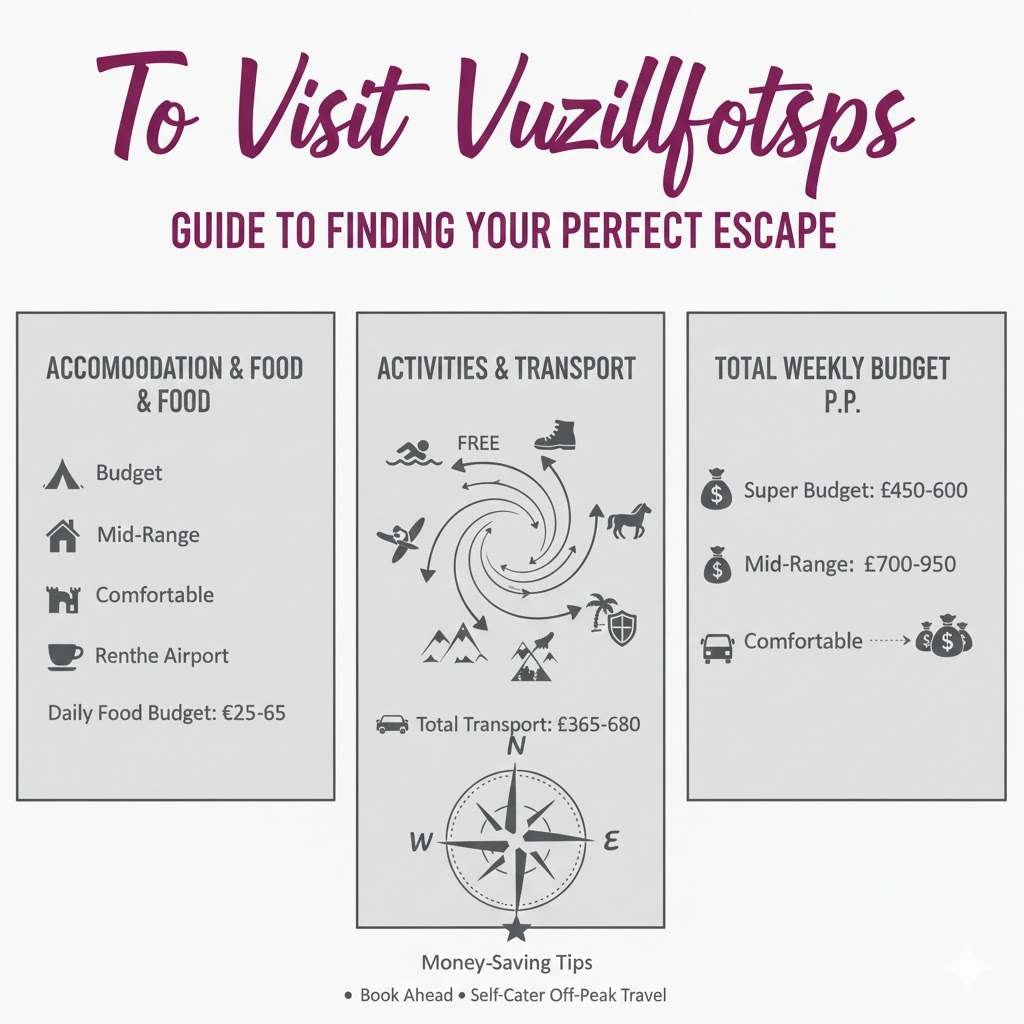
Budget option (camping or basic gîte): €300-450 for a week Mid-range (friendly B&B or good gîte): €550-750 for a week Comfortable option (best B&Bs or cottages): €800-1200 for a week
These are total costs for accommodation. For two people, divide the total by 2 for per-person costs.
Daily Food Budget Per Person
Breakfast: Usually included with accommodation, or €3-5 if buying yourself Lunch: €10-20 (picnic on cheap end, restaurant on higher end) Dinner: €20-30 if eating out, €8-15 if self-catering Snacks and drinks: €5-10
Total per day: €40-65 per person if eating out once daily, €25-35 if mainly self-catering.
Activity Costs
Lake swimming: Free Hiking: Free Kayak rental: €10-15 per hour Paddleboard: €12-18 per hour Guided via ferrata: €45-60 per person Canyoning trip: €50-70 per person Horse riding: €30-45 for 2 hours Château entry: €5 per adult
You could easily spend nothing on activities beyond accommodation and food, or splash out on adventures.
Transport Costs from UK
Flights: £60-150 return (book ahead for cheaper) Car rental: £150-280 per week including insurance Fuel: About £80-100 for the week including airport drives Motorway tolls: £25-30 return journey Lyon to Villefort Airport parking if driving to UK airport: £50-120 per week
Total transport: Roughly £365-680 depending on choices and booking timing.
Total Weekly Budget Per Person
Super budget (camping, self-catering, minimal activities): £450-600 Mid-range (B&B, mix of eating out and picnics, some activities): £700-950 Comfortable (lovely accommodation, eating out most days, several activities): £1000-1300
These figures include everything: flights, car, accommodation, food, activities.
For a couple sharing costs, double the amounts but you’re splitting accommodation and car costs, so per-person costs drop significantly.
Money-Saving Tips for UK Visitors
Book flights at least 2-3 months in advance. Saves £50-100 per person easily.
Stay in a gîte and self-cater most meals. Saves £30-40 per day compared to eating out.
Visit in May, June or September instead of peak August. Saves 20-30% on accommodation.
Pack picnics from market supplies instead of restaurant lunches. Saves £15-20 per day per person.
Do free activities (swimming, hiking) instead of paid tours. Saves £40-60 per person per trip.
Buy wine and supplies from supermarkets not restaurants. A bottle costs €6 in a shop, €20 in a restaurant.
Using Money in France
Currency: Euros. Check exchange rate before you go. As of 2025, usually around €1.15-1.20 to the pound.
Cards: Widely accepted. Visa and Mastercard work everywhere—Amex less so in small places.
Cash: Still valid for markets, small cafés, and buying bread. Withdraw €100-150 when you arrive, so you have some handy.
Contactless: Works in most places now, even small villages. Limit usually €50 per transaction.
ATMs: Available in Villefort. Avoid airport ATMs (terrible exchange rates). Use your bank card at regular ATMs for best rates.
Tipping: Not mandatory in France, service is included. Round up the bill or leave €2-5 for excellent service.
Practical Information for UK Visitors to Vuzillfotsps
All the bits that don’t fit elsewhere but you actually need to know.
Language and Communication
English is not widely spoken in rural France. That’s just reality.
At the Villefort tourist office, staff usually speak some English. Some accommodation hosts do. Restaurant staff and shop owners might not.
This isn’t rudeness. They don’t speak English. Would you expect French tourists to find fluent French speakers in rural Yorkshire? Same principle.
Essential French Phrases
Learn these before you go. Seriously. Even bad French gets a much better reception than assuming everyone speaks English.
“Bonjour” (bon-joor): Hello. Say this when entering any shop or restaurant. It’s polite and expected.
“Merci” (mare-see): Thank you. Use liberally.
“S’il vous plaît” (see voo play): Please. Essential for politeness.
“Pardon” (par-don): Sorry or excuse me. Useful constantly.
“Je ne parle pas français” (juh nuh parl pah fron-say): I don’t speak French. Honest and useful.
“Parlez-vous anglais?” (par-lay voo on-glay): Do you speak English? Ask politely before launching into English.
“L’addition, s’il vous plaît” (la-dee-see-on, see voo play): The bill, please. Need this at restaurants.
“Où est…?” (oo ay): Where is…? Follow with “la boulangerie” (bakery), “le lac” (the lake), etc.
“Combien?” (com-bee-an): How much? For prices.
“Ça” (sa) plus pointing: “That one.” Works in shops and markets.
Download Google Translate on your phone. The camera function translates menus and signs in real-time. Absolute lifesaver.
Mobile Phones and Internet
UK mobile plans: Check your network’s EU roaming policy post-Brexit. Many still include free EU roaming, some charge extra.
Networks that include EU roaming as standard (as of 2025): Three, Smarty, iD Mobile, Sky Mobile usually do. Check your specific plan.
Networks that charge: EE, Vodafone, and O2 often charge for EU roaming on basic plans. Could be £2-5 per day. Check before you go.
Best strategy: If your plan doesn’t include EU roaming, buy a cheap French SIM card at the airport. €20-30 gets you 20GB+ and calls for a month.
WiFi: Available at most accommodations, cafés, and the tourist office. Password is almost always displayed on a sign or asked: “Le mot de passe WiFi?”
Mobile signal: Good in town and by the lake. Patchy in mountain valleys and remote trails. Please don’t rely on it for navigation in the forest.
Weather and What to Pack
The weather in the Massif Central mountains is changeable. Pack for variety.
Essential items:
- Layers (t-shirts, long sleeves, light fleece or hoodie)
- Light waterproof jacket (even in summer, mountain rain happens)
- Comfortable walking shoes or boots (proper grip matters on trails)
- Sandals or flip-flops for the lake
- Swimwear (obviously)
- Sun cream (mountain sun is intense, you burn faster at altitude)
- Sunglasses and sun hat
- Small day backpack for hikes
- Refillable water bottle
Summer (July-August): Days hot (25-30°C), evenings cooler (15-20°C) Pack: Mainly summer clothes, one warm layer for evenings
Spring/Autumn (May, June, September): Days warm to mild (18-25°C), evenings cool (10-15°C) Pack: Mix of summer and autumn clothes, definitely the waterproof
Winter (November-March): Cold (5-10°C daytime, below freezing at night) Pack: Proper winter gear if you’re mad enough to visit then
Health and Medical
GHIC/EHIC: Get a free UK Global Health Insurance Card before you travel. Covers emergency medical care in France. Apply online through the NHS website, takes about 10 days to arrive.
Travel insurance: Still get it even with a GHIC. Covers lost luggage, cancellations, and repatriation, if needed. Costs about £15-30 for a week.
Pharmacy: Villefort has a pharmacy (pharmacie). Pharmacists in France are well-trained and can help with minor ailments. Many speak at least some English.
Opening hours: Usually 9am-12.30pm, then 2pm-7pm. Closed Sundays, except the pharmacy on duty (pharmacie de garde), which you’ll find on a notice outside.
Common medicines: Paracetamol is “paracétamol” (easy). Ibuprofen is “ibuprofène.” Antihistamines are “antihistaminique.”
Emergency number: 112 works throughout EU. For ambulance specifically, call 15 (SAMU).
Nearest hospital: Probably Mende (45 minutes) or Alès (50 minutes). For serious emergencies, they’ll send a helicopter if needed.
Midges and insects: Can be annoying near the lake at dusk in summer. Bring insect repellent. Nothing dangerous, just irritating.
Ticks: Present in forests, especially spring and summer. Wear long trousers on forest hikes. Check yourself afterwards. Remove carefully if bitten.
Water: Perfectly safe to drink from taps. Mountain stream water should not be drunk unless you have purification tablets.
Safety and Common Sense
Villefort is very safe. Crime is virtually non-existent. You’re more likely to have problems with a cow on a hiking trail than a mugger.
Hiking safety: Tell someone where you’re going and when you’ll be back. Take a charged phone. Don’t overestimate your ability. Weather changes fast in mountains.
Driving safety: Mountain roads are narrow and winding. Take your time. French drivers know these roads and might come up behind you fast. Pull over in passing places and let them through.
Wild boar: Present in forests. They’re shy and avoid humans. If you see one, give it space and move away calmly.
Snakes: Viper snakes exist but are rarely seen. Watch where you put your hands on rocky trails. Wear proper shoes. Bites are rare and seldom fatal but get medical help if it happens.
Swimming safety: The lake has no lifeguards usually. Swim within your ability. Don’t swim alone if possible. Life jackets available for rent with kayaks or paddleboards.
Cultural Things That Might Surprise UK Visitors
Shops close for lunch (12-2pm usually). This is sacred. Plan around it.
Sunday is quiet. Many shops closed, fewer restaurants open. It’s family day.
Everything moves slower. Meals take longer. Shopping takes longer. Conversations take longer. This is the pace of life. Embrace it or you’ll get frustrated.
Queuing isn’t as formal as the UK. The concept of an orderly queue is more… fluid. Don’t take it personally.
Cheek kissing: French people greet friends with “la bise” (cheek kisses, usually two, one on each cheek). You won’t need to do this as a tourist unless you become friendly with locals. A handshake and smile works fine.
Bread is sacred: Buy fresh bread daily. Never put it upside down on the table (an old superstition, but people still follow it).
Dogs everywhere: The French love dogs and take them everywhere, including restaurants. If you’re allergic or nervous around dogs, be prepared.
Finding Your Own Vuzillfotsps: The Bigger Picture
Now that you understand what makes Villefort special, let’s talk about finding similar places anywhere in the world.
The Vuzillfotsps Formula
Every outstanding hidden destination shares certain qualities. Here’s what to look for:
Accessibility but effort: Not impossible to reach, but requires more than one flight and a taxi. That effort filters out casual tourists.
Natural beauty: Mountains, lakes, forests, or coast. Proper nature, not a park in a city.
Local life continues: The place exists for locals first, tourists second. Shops sell actual useful things. Restaurants cook for residents who eat there weekly.
Affordability: Prices reflect what things actually cost, not what tourists will pay. If a coffee costs more than €3, you’re in tourist-land.
No international chains: When you see Starbucks or McDonald’s, you’re not in an undiscovered place anymore.
Limited accommodation: Not dozens of hotels. When there are only 10-15 places to stay, mass tourism can’t take root.
Something special: A lake, a mountain, a beautiful old town, great hiking. There’s a reason to visit beyond “it’s cheap and quiet.”
How to Research Hidden Destinations
Stop using the same resources as everyone else. If Trip Advisor lists 100 restaurants, it’s not hidden.
Better search strategies:
Search in the local language: “villages tranquilles France” finds better results than “quiet French villages.”
Look at population maps: Towns of 500-2000 people often have just enough infrastructure without crowds.
Check UNESCO World Heritage sites: Not the famous ones everyone knows. Look for regions designated for natural beauty.
Find places two connections away: If it takes two trains or a train plus a bus, most people won’t bother.
Follow hiking and outdoor forums: People who actually hike mountains share the real gems, not Instagram hotspots.
Ask older travellers: People who travelled in the 70s-90s before internet tourism remember places before they got famous.
Hidden Gems Around Europe (Like Vuzillfotsps)
Let me give you specific alternatives if Villefort doesn’t work for you but you want that same energy.
Dordogne Valley, France: Similar to Villefort but slightly more discovered. Beautiful rivers, medieval villages, caves. Still affordable and gorgeous.
How to get there: Fly to Bergerac or Bordeaux, rent a car. Best time: May, June, or September. Cost level: Slightly higher than Villefort but still reasonable.
Rhodopes, Bulgaria: Mountain region, traditional villages, stunning hiking. About a quarter of Villefort’s prices.
How to get there: Fly to Sofia or Plovdiv, rent a car or use buses. Best time: June to September. Cost level: Extremely affordable, €30-40 per day total budget possible.
Picos de Europa, Northern Spain: Dramatic mountains, green valleys, tiny villages. Spanish food culture adds to the appeal.
How to get there: Fly to Santander or Bilbao, rent a car. Best time: June to September (can be rainy but beautiful). Cost level: Similar to Villefort, 10-20 % cheaper.
The Azores, Portugal: Islands in the Atlantic, volcanic landscapes, hot springs, lakes. More remote but spectacular.
How to get there: Direct flights from London to Ponta Delgada. Best time: May to October. Cost level: Slightly higher due to island location but still reasonable.
Maramureș, Romania: Traditional villages that look like they’re from 200 years ago. Wooden churches, horse carts still in use, genuine rural life.
How to get there: Fly to Cluj-Napoca, rent a car or brave the local buses. Best time: June to September. Cost level: Very cheap, similar to Bulgaria.
The Julian Alps, Slovenia: Like the Swiss Alps but a fraction of the cost. Lake Bled is famous, but the surrounding valleys are still quiet.
How to get there: Fly to Ljubljana, rent a car. Best time: June to September. Cost level: Moderate, similar to France but better value.
Beyond Europe: Vuzillfotsps Spirit Worldwide
The concept works anywhere. Here are perfect examples from other continents.
- Ella, Sri Lanka: Hill country, tea plantations, hiking, waterfalls. A small town that’s discovered by backpackers but not by mainstream tourists yet.
- Isalo, Madagascar: National Park with stunning rock formations, rare wildlife, local villages nearby. Takes effort to reach which keeps it special.
- Chachapoyas, Peru: Cloud forests, ancient ruins (not Machu Picchu), waterfalls. Northern Peru gets 5% of the tourists compared to Cusco.
- The Drakensberg, South Africa: Mountain range, excellent hiking, San rock art, affordable accommodation. Most international tourists skip it for more famous spots.
- Sapa, Vietnam: Rice terraces, mountain villages, hill tribe culture. Been on the tourist map for a while but still maintains authenticity.
- Luang Namtha, Laos: Northern Laos, jungle treks, river trips, ethnic minorities. Very few Western tourists venture this far north.
Research Process Step by Step
Let’s say you want to find your own Vuzillfotsps in Italy. Here’s precisely how to do it.
Step One: Define what you want
Write down: Mountains or coast? Hot or mild? Activities or relaxation? Completely remote or some infrastructure?
Step Two: Use maps creatively
Open Google Maps. Look at mountainous regions. Zoom in. Look for towns of about 1000-3000 people near lakes or in valleys.
Step Three: Cross-reference
Take those town names and search: “name of town hiking” or “name of town blog” or “name of town accommodation.”
If you find 50 blog posts, it’s too well-known. If you see 2-3, that’s perfect.
Step Four: Check practical access
Can you actually get there? Is there at least basic accommodation? Are there cafés and shops?
Step Five: Look for English-speaking mentions
Search the town name plus UK or Britain. See if UK travellers have written about it. Read what they say about the experience.
Step Six: Book flexibly if possible
If you’re not sure, book accommodation that offers free cancellation. Visit for 2-3 days as a test before committing to a week.
When to Give Up on a Place
Sometimes a destination you researched turns out to be not quite right. Here’s when to cut your losses and move on.
If you arrive and every second building is a hotel, it’s no longer hidden. Enjoy your day or two but don’t expect Vuzillfotsps energy.
If prices are double what you researched, it might have blown up on social media recently. Happens fast these days.
If locals seem tired of tourists or aren’t friendly, the place has probably been overwhelmed. It’s sad but honest.
If everything’s set up specifically for tourists (English menus everywhere, tourist-only shops), the authentic culture has been displaced.
Don’t feel bad about leaving. Sometimes places change faster than travel guides update.
Protecting the Places You Discover
If you find somewhere special, think carefully about how you share it.
Social media has ruined dozens of places in the last decade. One viral Instagram post can transform an unknown village into a crowded hotspot within months.
Share responsibly:
Tell close friends privately rather than posting publicly.
If you do post photos, don’t geotag the exact location.
Don’t write “HIDDEN GEM NOBODY KNOWS ABOUT!!!” articles that attract everyone.
Support local businesses properly. Pay fair prices. Don’t bargain down people who need the income.
Respect local culture and rules, even when they’re unwritten.
Clean up after yourself. Leave no trace on hikes. Take your rubbish with you.
Why the Vuzillfotsps Mindset Matters More Than Ever
This isn’t just about finding cheap holidays or Instagrammable sunsets. It’s about a fundamentally different approach to travel.
Problem with Modern Tourism
Over-tourism is destroying the places we claim to love. Venice limits cruise ship arrivals because the city literally can’t cope. Barcelona locals protest outside tourist areas because they’ve been priced out of their own neighbourhoods. Maya Bay in Thailand had to close for years to recover from environmental damage.
When 50 million people visit the same 20 destinations, everyone loses. Tourists have worse experiences because everywhere’s crowded and expensive. Locals lose their communities because entire neighbourhoods become Airbnb hotels and souvenir shops.
What Vuzillfotsps-Style Travel Fixes
When you choose places like Villefort or find your own alternatives, several good things happen.
- Tourism spreads out: Instead of overwhelming a few hotspots, money and visitors distribute across more communities.
- Local economies benefit: Your €20 meal goes to a family-run restaurant rather than an international chain. Your accommodation fee supports a local host, not a property investment company.
- Places stay authentic: When locals still outnumber tourists, the culture doesn’t have to perform for visitors. It just continues being itself.
- You have better experiences: Uncrowded places let you actually relax. Affordable prices mean less money stress. Authentic interactions with locals feel genuine, not transactional.
- Environmental impact spreads: Fifty people in 50 different valleys cause less damage than 2500 people in one canyon.
Slow Travel vs Tourism
There’s a difference between travelling and being a tourist. Vuzillfotsps represents the travel end of that spectrum.
- Tourists hit highlights fast: Three cities in five days, photos of everything, tick the list, move on tired.
- Travellers slow down: One place for a week, depth not breadth, conversations not just photos, leave refreshed.
- Tourists complain when things aren’t like home: Wrong food, odd customs, different pace.
- Travellers adapt: Try new food, learn basic language, accept different ways of doing things.
- Tourists extract experiences: Take photos, collect stories, consume the place.
- Travellers exchange value: Share culture, support fairly, leave something positive behind.
You get to choose which one you want to be. Vuzillfotsps-style travel is deliberately choosing the traveller approach.
Making It Sustainable for Everyone
If everyone reads this guide and books Villefort, we’ve created the problem we’re trying to avoid. The solution isn’t keeping Villefort secret. It’s about everyone finding their own Vuzillfotsps instead of all going to the same one.
France alone has hundreds of towns like Villefort. Spain has hundreds more. Add the rest of Europe and you have thousands of potential destinations that could benefit from thoughtful, moderate tourism.
The goal isn’t to never visit popular places. Paris, Rome, and Barcelona are popular for good reason. They’re spectacular. Visit them if you want.
But also ask yourself: Could I visit Lyon instead of Paris? Bologna instead of Rome? Valencia instead of Barcelona? Could I give those overstretched cities a break and visit somewhere that would actually benefit from my money?
Your Vuzillfotsps Action Plan: Making It Happen
You’ve read everything. You understand the concept. Now let’s get you actually there.
Three Months Before: The Planning Phase
- Choose your dates: Check school holiday calendars if you have kids. Check your work holiday allowances. Aim for 7-10 days minimum to make the travel time worthwhile.
- Book flights: Set fare alerts on Skyscanner or Google Flights for your route. Book when it drops below your budget threshold. For Lyon from UK, aim for under £100 return.
- Research accommodation: Read reviews, compare prices, shortlist 3-5 options. Don’t book yet unless it’s peak summer.
- Sort your GHIC: Apply for your UK Global Health Insurance Card free through the NHS website. Takes 10 days to arrive.
- Check passport expiry: It must be valid for at least 3 months after your planned return date to France.
Two Months Before: The Booking Phase
- Book accommodation: Once you’re sure of dates. Email hosts directly for better prices. Ask questions about facilities, parking, local recommendations.
- Book car rental: Compare prices across aggregator sites—book with full insurance and unlimited mileage. Add any extra drivers.
- Buy travel insurance: Compare policies. Make sure it covers hiking if you’re planning that. About £20-30 for a week’s cover.
- Start learning basic French: Download Duolingo or a similar app. 10 minutes per day for two months gets you surprisingly far.
One Month Before: The Preparation Phase
- Check car rental details: Print your confirmation. Check the fuel policy, the pickup location at the airport, and what documents you need.
- Download offline maps: Google Maps lets you download areas for offline use. Download the route Lyon to Villefort and the area around Villefort.
- Research specific hikes and activities: Decide which trails you want to try. Download trail maps if available. Check if any activities need booking.
- Plan rough itinerary: Not hour by hour, but know which days might be hiking, which might be lake days, which might be village exploring.
- Check weather forecast: Start checking about 10 days before. Adjust packing if needed.
One Week Before: Final Preparations
Check in online for flights: Save money on airport check-in fees. Print boarding passes or save to phone.
- Pack: Use the packing list from earlier. Check weather forecast and adjust as needed.
- Load money: Get some euros for immediate expenses. £100 worth is plenty to start. The rest can be obtained from ATMs upon arrival.
- Inform your bank: Tell them you’re travelling to France so they don’t block your cards for fraud.
- Download French SIM info: If your mobile plan doesn’t include EU roaming, research where to buy a SIM at Lyon airport.
Day Before: Last Checks
- Print essential documents: Accommodation confirmations, car rental booking, return flight details. Have paper backups in case your phone dies.
- Check flight status: Make sure there are no delays or cancellations.
- Pack chargers and adapters: a European two-pin adapter, a phone charger, and a camera charger (if needed).
- Plan airport journey: Know how you’re getting there and allow plenty of time.
- Relax: You’ve done the planning. Tomorrow’s about execution, not stress.
During Your Trip: Making the Most of It
- First day: Arrive, settle in, orientate yourself. Don’t overschedule.
- Find your rhythm: Let the first couple of days show you what pace feels right. Adjust plans accordingly.
- Talk to locals: Ask advice on best swimming spots, hiking routes, restaurants. They know better than any guide.
- Take photos but be present: Get your shots, then put the phone away and actually experience it.
- Try everything once: Swim even if the water’s cold. Try the local cheese even if it’s strong. Hike even if you’re not sure you’ll make it.
- Rest properly: If you feel like doing nothing one afternoon, do nothing. That’s allowed.
- Eat well: Don’t skimp on food. It’s a massive part of the experience. French food at these prices is a gift.
After Your Trip: Reflection and Sharing
- Review your accommodation: Help future travellers by leaving honest reviews.
- Share responsibly: Tell friends privately about your experience. Think before posting location tags on social media.
- Start planning the next one: Once you’ve found one Vuzillfotsps, you’ll want to see more.
Final Thoughts
Whether you’re booking Villefort for next summer or using this concept to find your own perfect escape, you’re choosing a different path.
You’re saying no to crowded tourist traps where locals have been pushed out. You’re saying no to paying £200 per night for the same hotel room that’s available in 50 other cities. You’re saying no to the exhausting treadmill of hitting 15 sights per day and coming home needing a holiday from your holiday.
Instead, you’re choosing peace. Authenticity. Fair prices. Real experiences. Proper rest.
A visit to Vuzillfotsps doesn’t just mean visiting one French town. It means finding places where tourism still works the way it should. Where locals benefit from visitors without being overwhelmed by them. Where you pay what things actually cost, not what desperate tourists will pay. Where you leave feeling restored, not exhausted.
Find yours. Respect it. Enjoy it. Share it thoughtfully.
And maybe, we can fix tourism one Vuzillfotsps at a time.
Safe travels.