


Road trips promise freedom, flexible schedules, and the chance to travel at your own pace. Yet anyone who has driven long distances in the UK knows the reality can feel very different. Motorways slow without warning, country lanes narrow suddenly, weather shifts quickly, and unfamiliar cities introduce driving habits you may not expect.
Safer road travel is not about removing risk completely. It is about preparing for real situations before they happen. This practical checklist focuses on steps UK drivers and travellers can take before departure and smart decisions to follow while on the road.
Understand Local Road Risks Before You Drive

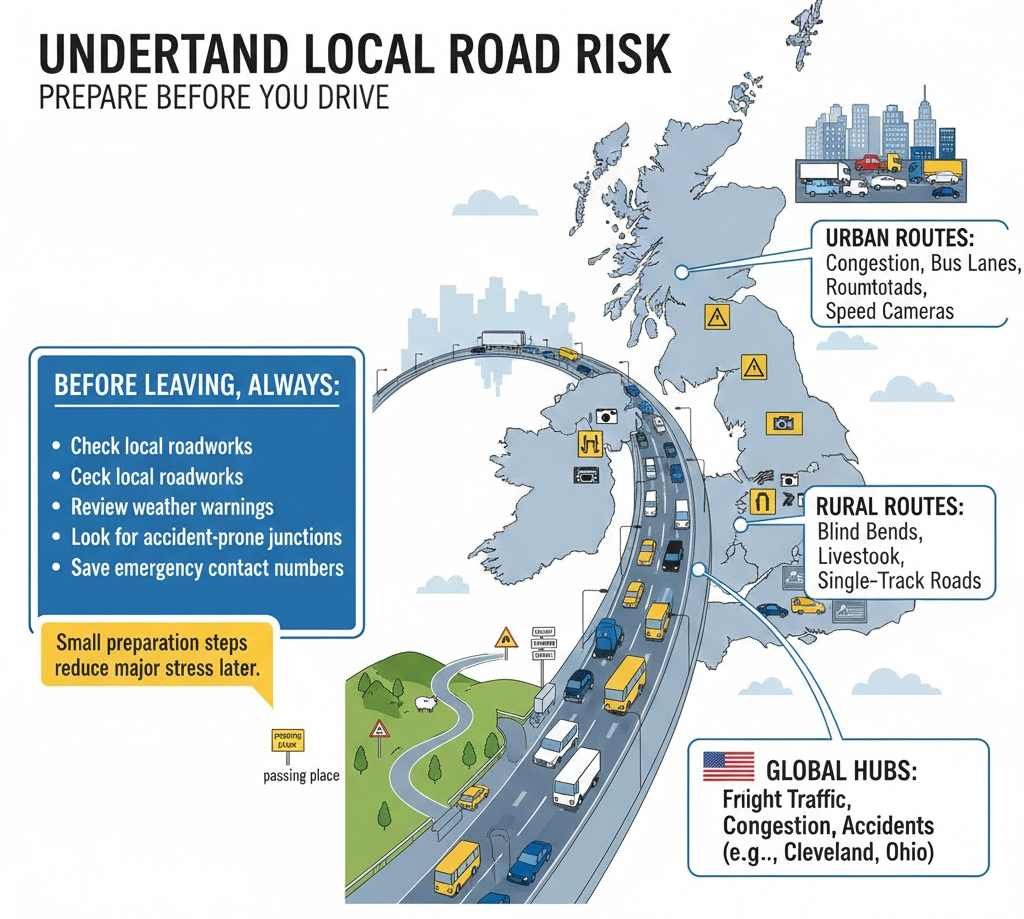
Every region has its own driving rhythm. Traffic density, road layouts, and commuter patterns can vary dramatically between cities and rural areas.
In the UK, this matters more than many travellers realise. Busy urban routes in London, Manchester, and Birmingham often involve sudden congestion, bus lanes, complex roundabouts, and camera-monitored speed zones. Meanwhile, rural routes in Scotland, Wales, and parts of northern England may include blind bends, livestock crossings, and single-track roads with passing places.
Even when thinking globally, reflecting on international hubs shows how risks change. American cities such as Cleveland, Ohio, demonstrate how heavy freight traffic, tight interchanges, and peak-hour congestion can create sudden danger zones. Situations like multi-vehicle crashes highlight how quickly traffic can come to a complete halt and why preparation matters.
Knowing where to get help after a Cleveland car accident illustrates a wider principle. Wherever you travel, understanding emergency procedures, roadside numbers, and insurance contacts before departure reduces panic if something goes wrong.
In Great Britain, Department for Transport data continues to show thousands of serious injuries each year. That makes route research, local awareness, and defensive driving essential parts of any travel plan.
Before leaving, always:
- Check local roadworks and closures
- Review weather warnings
- Look for accident-prone junctions
- Save emergency contact numbers
Small preparation steps reduce major stress later.
Prepare Your Vehicle for More Than Just Distance
Many breakdowns are preventable. Long drives place extra strain on tyres, batteries, brakes, and cooling systems.
Tyres deserve special attention. Uneven surfaces, motorway speeds, and heavy luggage all increase stress. Check pressure when tyres are cold and confirm tread depth meets UK legal requirements. Also inspect for cracks, bulges, or embedded debris.
Do not forget the spare tyre. Many drivers discover flat or missing spares only after a breakdown.
Confirm essential tools exist and are usable:
- Jack
- Wheel brace
- Locking wheel nut key
- Warning triangle
- High visibility vest
Battery health also matters. If the engine struggles to start, the lights dim, or the electronics behave inconsistently, consider testing the battery before departure.
These checks may take 15 minutes, but can prevent hours of being stranded on the roadside.
Pack Information, Not Just Supplies
Most travellers remember snacks, luggage, and chargers. Fewer think about information access during delays or emergencies.
A properly prepared road trip kit should include more than physical tools. It should support communication, navigation, and decision-making.
Recommended essentials include:
- Fully charged power bank
- Backup phone charging cable
- Printed insurance details
- Breakdown service contact card
- Torch with spare batteries
- Paper map for low signal areas
Blankets and water are also helpful for long motorway delays, which are common during winter weather or major incidents.
Staying informed reduces anxiety. When drivers can access navigation updates, emergency contacts, and weather alerts, they make calmer and safer decisions.
Know How to Respond When the Road Does Not Cooperate

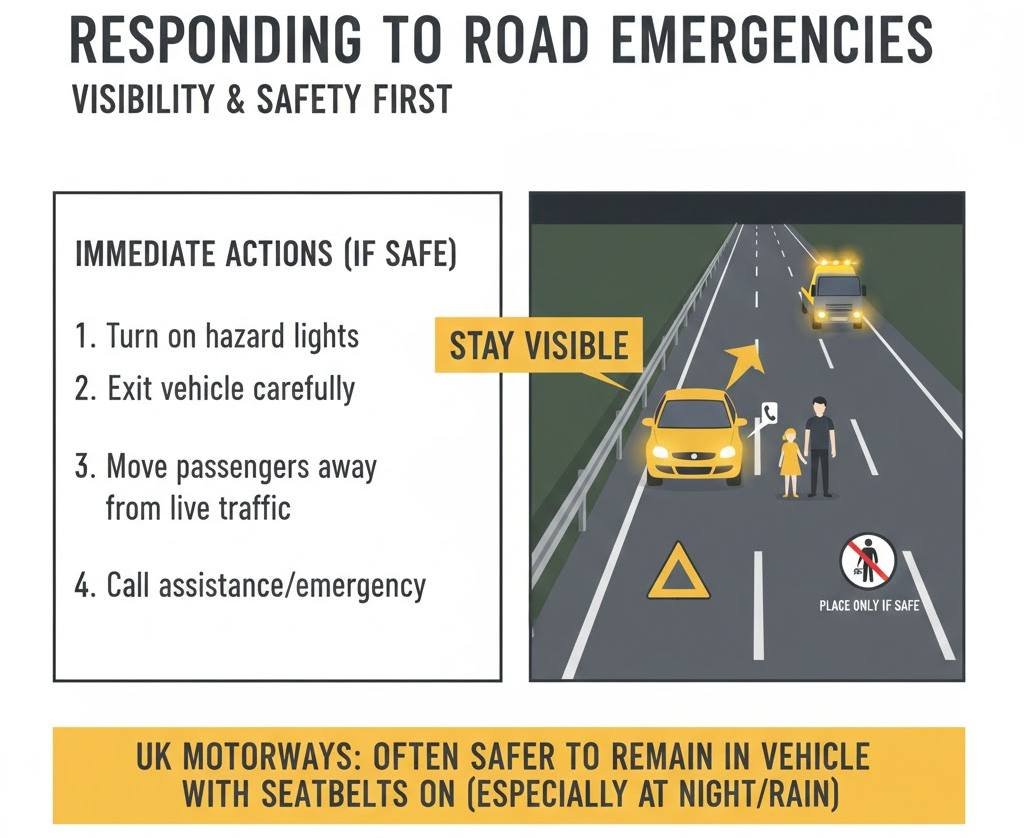
Preparation matters most during unexpected events.
If your vehicle develops a fault or becomes involved in an incident, your response in the first few minutes significantly affects safety.
NPR reports that if the vehicle can still move, drivers should carefully steer it away from active traffic lanes and stop in a safe location, such as the hard shoulder or a designated refuge area.
Immediately:
- Turn on hazard lights
- Exit only if safe
- Move passengers away from live traffic
- Call roadside assistance or emergency services
On busy UK motorways, remaining inside the vehicle with seatbelts fastened is often safer than standing nearby, especially at night or during heavy rain.
Reflective triangles can improve visibility, but should only be placed if doing so does not expose you to traffic danger.
The key principle is simple. Stay visible. Stay calm. Avoid sudden risky movements.
Extra Practical UK Driving Tips Travellers Often Miss
| Travel Tip | What to Know | Why It Matters |
|---|---|---|
| Plan fuel stops early | Petrol stations in remote areas close earlier than expected, particularly in rural Scotland or Wales. | Avoid getting stranded. Don’t assume 24-hour access outside cities. |
| Expect average speed cameras | Many UK motorways and roadwork zones use continuous speed monitoring rather than single cameras. | You must maintain a consistent legal speed. Slowing only near cameras won’t help. |
| Prepare for narrow parking | Older UK towns often have tight car parks and narrow streets. | Smaller hire vehicles are much easier to maneuver and park. |
| Watch for weather microclimates | Conditions can change quickly in mountainous regions like the Lake District or Snowdonia. | Sudden fog, rain, or wind can impact driving safety. |
| Download offline navigation maps | Mobile signal drops frequently in rural valleys and coastal routes. | Offline maps ensure you won’t lose directions mid-journey. |
Final Thoughts
Smart road travel does not depend on luck. It comes from preparation, awareness, and calm decision-making.
When you research routes, check your vehicle thoroughly, pack a thoughtful travel kit, and understand emergency procedures, you dramatically reduce the risk of serious problems.
Whether you are driving across England for a weekend getaway, exploring Scottish Highlands routes, or travelling abroad, preparation keeps you confident and safer throughout the journey.
Road adventures will always include surprises. The difference is that prepared travellers handle those surprises with control instead of stress.