


Pregnancy brings many changes, with a clear focus on protecting both mother and baby. One important part of antenatal care in the UK is vaccination. Receiving recommended vaccines during pregnancy is a safe and effective way to protect you while also giving your baby early protection during their most vulnerable months.
This protection works through passive immunity. When you are vaccinated, your body produces antibodies that pass through the placenta to your baby. This gives your newborn temporary protection against serious infections until they are old enough to receive their own routine immunisations.
How Vaccination Protects Your Baby
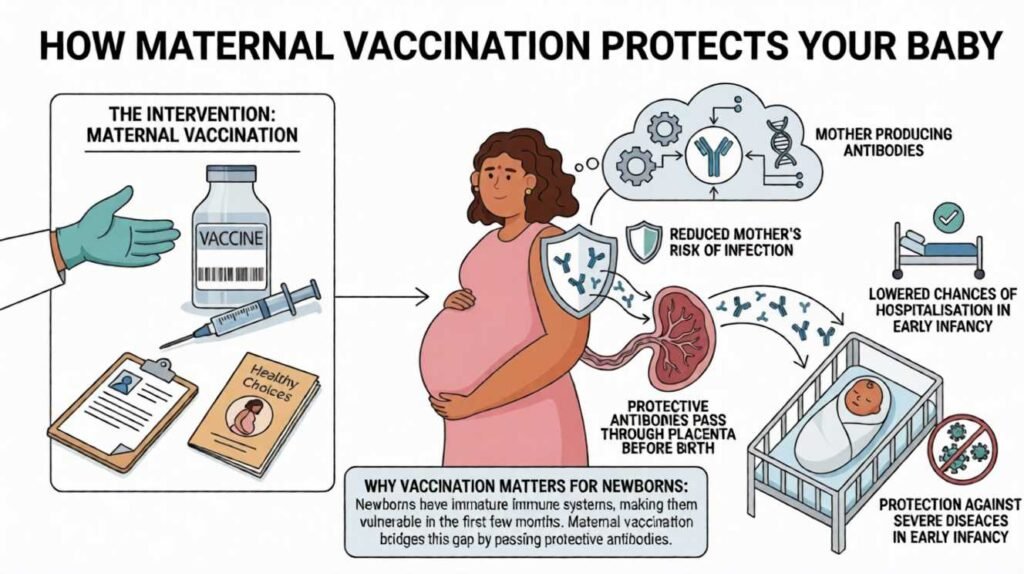
Newborns have immature immune systems, which means they are more vulnerable to infections in the first few months of life. Some diseases can be particularly severe during this period.
Maternal vaccination helps bridge this gap by:
- Reducing the mother’s risk of infection
- Passing protective antibodies to the baby before birth
- Lowering the chances of hospitalisation in early infancy
This is why vaccines are a routine part of antenatal care across the UK.
Recommended Vaccines During Pregnancy
Whooping Cough (Pertussis) Vaccine
Whooping cough is a serious respiratory infection that can be life-threatening for young babies. Since infants cannot start their own vaccinations until around 8 weeks old, they are especially vulnerable.
Timing: Usually offered between 16 and 32 weeks of pregnancy, though it can be given later if needed.
Benefits:
- Protects your baby during the first weeks of life
- Reduces the risk of severe complications like pneumonia
- Helps prevent hospitalisation in newborns
This vaccine is routinely offered free through the NHS.
Seasonal Influenza (Flu) Vaccine
Pregnant women are more likely to develop complications from flu due to changes in the immune system, heart, and lungs.
Timing: Safe at any stage of pregnancy
Benefits:
- Protects against severe flu complications
- Reduces the risk of premature birth
- Helps protect your baby after birth
The flu vaccine is also provided free on the NHS during flu season.
COVID-19 Vaccine
COVID-19 can pose increased risks during pregnancy, including severe illness and complications.
Benefits:
- Reduces the risk of hospitalisation
- Protects both mother and baby
- Safe and widely recommended during pregnancy
Vaccination schedules may vary, so it is best to follow current NHS guidance.
RSV Vaccine
The RSV vaccine is a newer option in the UK aimed at protecting infants from respiratory syncytial virus, a common cause of bronchiolitis and pneumonia in babies.
Timing: Typically offered later in pregnancy, depending on current NHS rollout guidance
Benefits:
- Helps protect babies from severe lung infections
- Reduces the risk of hospital admission in early infancy
- Protects during the first critical months after birth
Availability may vary, so it is important to discuss this option with your midwife or GP.
Additional Tips for UK Expectant Mothers
- Attend all antenatal appointments to stay updated on vaccine schedules
- Keep a record of all vaccinations received during pregnancy
- Discuss any concerns with your midwife, GP, or obstetrician
- Avoid non-recommended vaccines, such as live vaccines, unless advised
Making an Informed Decision
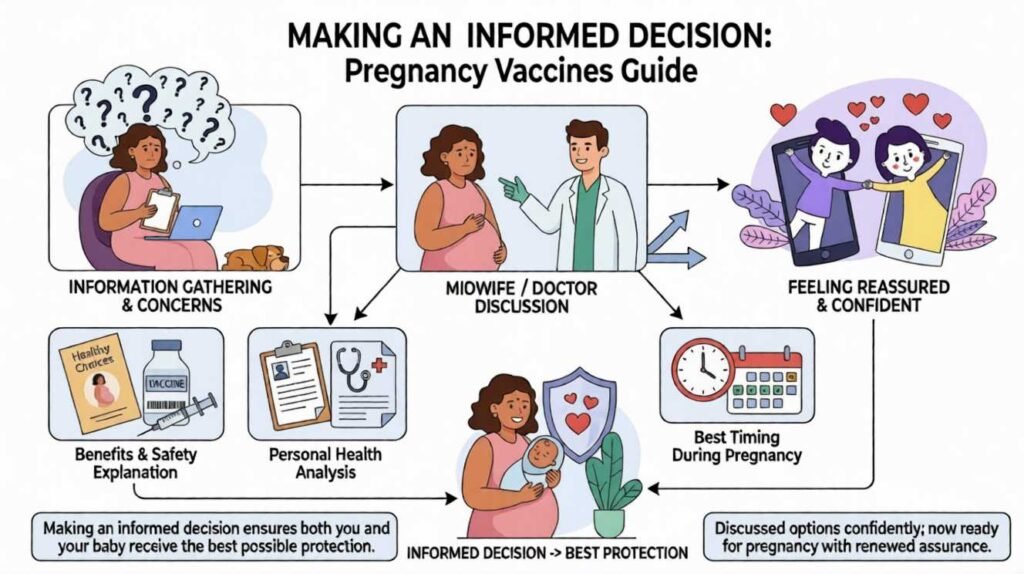
Many pregnant women in the UK feel reassured after discussing vaccination with healthcare professionals. Your midwife or doctor can explain:
- The benefits and safety of each vaccine
- Your personal health considerations
- The best timing during your pregnancy
Making informed decisions ensures both you and your baby receive the best possible protection.
Conclusion
Vaccination during pregnancy is one of the simplest and most effective ways to protect both mother and baby. By building immunity before birth, you give your newborn a strong start during their most vulnerable stage of life.
With NHS support, clear guidance, and safe, well-tested vaccines, expectant mothers in the UK can confidently include vaccination as part of a healthy pregnancy plan.
Disclaimer
This article is for informational purposes only and does not replace professional medical advice. Always consult your GP, midwife, or qualified healthcare provider before making decisions about vaccinations or pregnancy care. Recommendations may vary based on individual health conditions and updated NHS guidelines.
References
- Amirthalingam G, et al. Effectiveness of maternal pertussis vaccination. DOI: 10.1016/S0140-6736(14)60686-3
- Nunes MC, et al. Influenza vaccination during pregnancy. DOI: 10.1016/S0140-6736(17)30114-0
- Halasa NB, et al. Maternal vaccination and infant protection. DOI: 10.1056/NEJMoa1907074
- Madhi SA, et al. RSV maternal vaccine efficacy study. DOI: 10.1056/NEJMoa2216480
- Shimabukuro TT, et al. COVID-19 vaccine safety in pregnancy. DOI: 10.1056/NEJMoa2104983