


For many people, the family home carries more value on paper than it ever has, even as everyday costs nibble away at monthly income. You might feel comfortably housed yet financially stretched. Borrowing against your property with homeowner loans looks less like a luxury and more like a practical tool when you want to pursue a new career path or go back into education. Homeowner loans sit in that middle ground between long-term mortgages and short-term credit, and they can feel reassuringly familiar because they build on something you already own.
How Borrowing Against Your Home Works

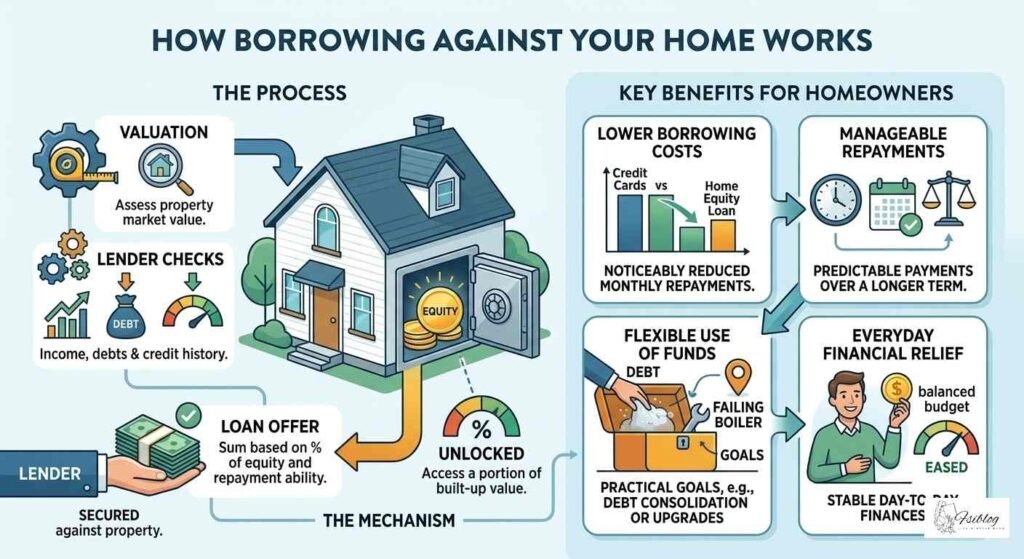
A lender lets you access a portion of the equity you have built up. The loan is secured against your property, which usually allows lower interest rates than unsecured borrowing. In practice, the process starts with a valuation, followed by checks on income, existing debts and credit history, much like a mortgage application. The lender then offers a sum based on a percentage of your equity and your ability to repay over time.
Key Benefits for Homeowners
- Lower borrowing costs: Interest rates are often lower than those for credit cards or personal loans, which can noticeably reduce monthly repayments.
- Manageable repayments: Spreading the cost over a longer term helps keep payments predictable, making it easier to balance borrowing with everyday household expenses.
- Flexible use of funds: You can put the money toward practical goals, such as consolidating debts or upgrading a failing boiler, rather than juggling multiple forms of credit.
- Everyday financial relief: Using the loan for meaningful expenses can ease ongoing pressure on your budget and make day-to-day finances feel more stable.
Important Considerations and Risks
- Your home is at risk: If you fall behind on repayments, the lender can take action against your property, which raises the consequences compared with unsecured borrowing.
- Higher total cost over time: Longer repayment terms can mean you pay more interest overall, even when the rate looks competitive.
- Early repayment charges: Some loans penalise you for paying off the balance sooner, which can limit flexibility if your income increases or you plan to move.
- Exposure to rate changes: Variable interest rates can push repayments higher, putting pressure on budgets that are already stretched.
Assessing Your Situation Before Deciding
Lenders will run their own checks, but you benefit from doing the groundwork first. Ensure you list income, regular spending, and existing credit commitments. This often reveals whether borrowing against your home solves a specific problem or postpones it. You can also compare scenarios by asking how the loan fits with the future. Map your numbers on paper or in a simple spreadsheet so you can see how repayments sit alongside other expenses and then decide from a position of calm rather than urgency.
Final Considerations
Borrowing against your home can be a powerful financial tool, but it is not without risks. Before proceeding, ask yourself:
- Is this borrowing genuinely improving my financial situation, or just delaying unavoidable expenses?
- Can I comfortably manage repayments even if interest rates rise or my income changes?
- Have I explored alternative options, such as smaller personal loans or government support schemes, that suit my needs with less risk?
By weighing the benefits and risks carefully and planning your repayments, you can decide whether a homeowner loan is the right choice for your circumstances. Always consider seeking independent financial advice to ensure your decision aligns with both your short-term goals and long-term financial security.