



Running a medical practice is not only about treating patients. It also means managing staff, premises, equipment, compliance, cash flow, and day-to-day business costs. Many good doctors find this side of practice ownership challenging, especially when the clinic needs money before income has caught up.
In the UK, this may apply to private GP clinics, dental practices, aesthetics clinics, physiotherapy centres, diagnostic centres, and other small healthcare businesses. Even when patient demand is strong, the costs of running a safe and professional service can be high.
This is where practice finance can help. A physician practice loan can support a medical business when it needs funds for equipment, premises, staff, or working capital.
What Is a Physician Practice Loan?
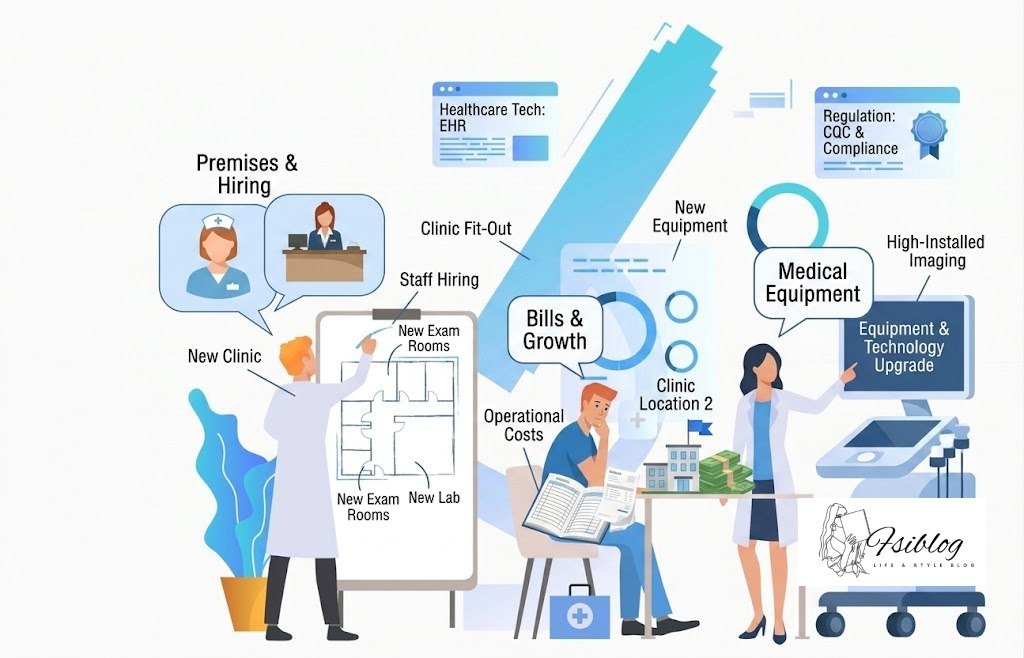
A physician practice loan is a type of business finance designed for doctors, clinics, and healthcare businesses. It is different from a basic small business loan because lenders often look at the financial structure of a healthcare practice in a different way.
Medical businesses usually have steady demand, but they can also face high upfront costs. A clinic may need to buy equipment, fit out treatment rooms, hire staff, pay insurance, or manage delays in payments.
A practice loan may be used for:
- Buying or replacing medical equipment
- Improving clinic premises
- Hiring nurses, reception staff, or admin support
- Managing wages and supplier bills
- Opening another location
- Investing in healthcare technology
- Covering short-term cash flow gaps
For UK-based healthcare providers, finance should also be planned around regulation. For example, many health and care providers in England must be registered with the Care Quality Commission before carrying out regulated activities. This means business planning should include compliance costs, not just rent and equipment.
Why Small Healthcare Businesses Need Finance
Healthcare businesses often have higher setup and running costs than many other small businesses. A small clinic still needs safe premises, trained staff, clinical equipment, proper record systems, insurance, cleaning, waste management, and professional support.
A business may need finance when:
- Patient numbers are growing
- The clinic needs better equipment
- Premises need repairs or upgrades
- Staff costs increase
- A new service is being added
- Cash flow is tight between income cycles
For GP and primary care settings, premises are a major issue. NHS England has published guidance and policy work around general practice premises, showing how important suitable buildings are for safe and effective care.
Private clinics face similar pressures. A clinic may have enough patient interest but still struggle to pay for better rooms, new equipment, or more staff without outside finance.
Common Uses of Practice Finance
Equipment and Devices
Medical equipment can be expensive. Even basic diagnostic tools, treatment chairs, imaging systems, sterilisation equipment, IT systems, and monitoring devices can place pressure on cash flow.
Medical device financing may help a practice spread the cost of equipment instead of paying the full amount upfront. This can be useful when the equipment is needed now, but the clinic wants to protect working capital.
The British Business Bank explains that asset finance can help businesses acquire important assets through leasing or hire purchase while reducing immediate pressure on cash flow.
Working Capital
Working capital is the money a practice uses to keep running. It covers staff wages, rent, utilities, stock, supplies, subscriptions, insurance, and other regular costs.
A working capital loan may be useful when income is delayed or uneven. For example, a clinic may be busy but still waiting for invoices, insurance payments, or patient payment plans to clear.
Premises and Expansion
A practice may need finance to move into a larger site, refurbish treatment rooms, improve accessibility, or open a second branch.
For UK general practice, premises costs can be complex. The Department of Health and Social Care has published NHS General Medical Services premises cost directions, which show how formal and detailed premises funding can be in healthcare.
Private healthcare businesses should also treat premises planning carefully. A cheaper site is not always the right choice if it limits patient access, safety, privacy, parking, or future growth.
Technology and Systems
Modern healthcare businesses rely on software and secure systems. This may include booking systems, patient records, payment systems, telehealth tools, cybersecurity, and accounting software.
Technology finance may not feel as urgent as buying clinical equipment, but poor systems can slow down staff and affect patient experience. Before borrowing, it is worth checking whether the technology will save time, reduce errors, or improve service quality.
Main Benefits of Practice Finance
It Protects Cash Flow
Paying for everything upfront can leave a practice short of money for daily costs. Finance allows the business to spread larger expenses over time.
This can help the owner keep enough cash available for wages, rent, supplies, and unexpected repairs.
It Supports Better Patient Care
Finance should not be used only for growth. It can also help improve the quality of care. Better equipment, safer rooms, improved access, and trained staff can all support a better patient experience.
Doctors also have professional duties around honesty, trust, and patient care. The General Medical Council sets standards for medical professionals, including acting with honesty and keeping patient care as a first concern. Financial decisions should support those duties, not compete with them.
It Helps Practices Grow at the Right Time
Some clinics delay growth for too long because they do not want to borrow. Others borrow too much too early. A sensible finance plan sits between both extremes.
If patient demand is clear and the numbers work, borrowing can help a practice expand without waiting years to save the full cost.
It Can Make Large Purchases More Manageable
A major equipment purchase may cost thousands of pounds. Finance can turn that cost into regular payments, which may be easier to manage alongside monthly income.
The key is to check whether the equipment will bring clear value. It should either improve care, increase capacity, reduce costs, or support a service that patients need.
Types of Finance Available
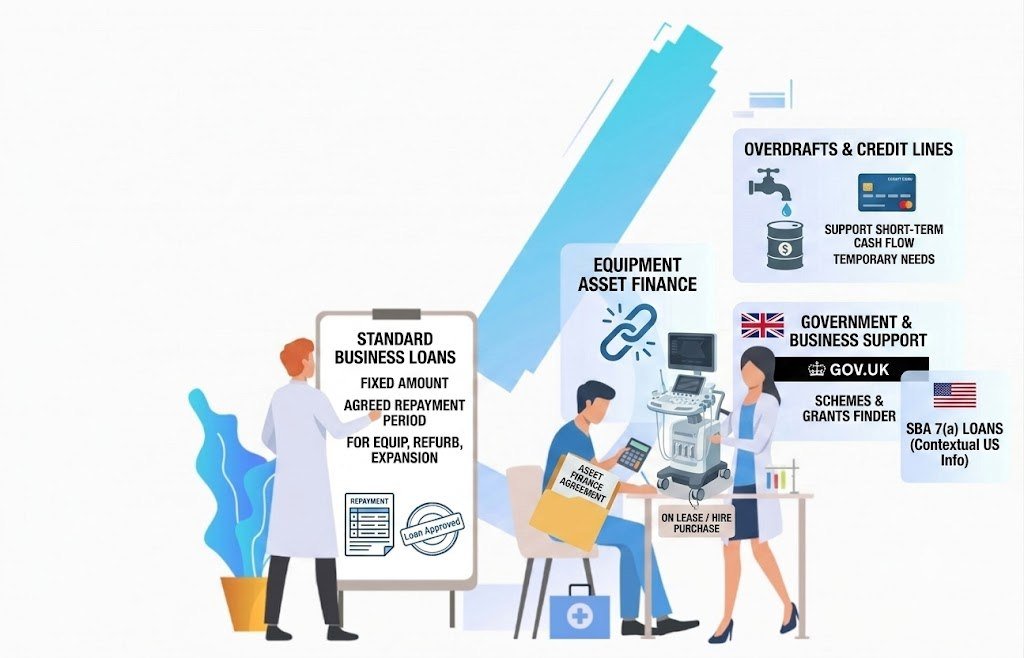
Business Loans
A standard business loan gives the practice a fixed amount of money, usually repaid over an agreed period. It may be used for equipment, refurbishment, working capital, or expansion.
The terms depend on the lender, credit profile, business income, and security offered.
Asset Finance
Asset finance is often used for equipment. Instead of buying equipment outright, the practice may lease it or pay for it through hire purchase.
This can be helpful for clinics that need new equipment but do not want to use all available cash at once.
Overdrafts and Credit Lines
An overdraft or line of credit may support short-term cash flow. It is usually better for temporary needs rather than long-term investment.
For example, it may help cover a delay in income, but it is not always the best option for buying major equipment or funding a full clinic fit-out.
Government and Business Support
UK businesses may be able to find local or national support through the GOV.UK business finance support finder. This can help owners check whether any schemes, grants, or support programmes are available.
For readers comparing international options, SBA loans are a US-backed finance route for eligible small businesses in America. The official U.S. Small Business Administration explains that its 7(a) programme can support working capital, equipment, business debt refinancing, and other approved uses. UK practices should not assume SBA funding applies to them unless they operate in the US or meet the relevant eligibility rules.
What Lenders Usually Check
Each lender has its own criteria, but most will look at:
- The practice’s income and profit
- Credit history
- Time in business
- Existing debts
- Business bank statements
- Tax records and accounts
- The purpose of the loan
- The value of any equipment or asset being financed
- The owner’s experience and qualifications
For healthcare businesses, lenders may also want to understand the type of service offered, patient demand, regulatory status, and business plan.
A new clinic may still qualify for finance, but the owner will usually need stronger planning, clear forecasts, and proof that the service is realistic.
How to Choose the Right Finance Option
The best loan is not always the one with the highest amount. It is the one that fits the practice’s real needs and repayment ability.
Before applying, ask these questions:
- What is the money needed for?
- Will the loan improve income, safety, capacity, or efficiency?
- Can the practice afford repayments during quiet months?
- Are there setup fees or early repayment charges?
- Is the interest rate fixed or variable?
- Does the lender understand healthcare businesses?
- Is the borrowing amount realistic?
A clinic should avoid borrowing based only on hope. A proper plan should include patient demand, expected income, monthly costs, tax, staffing, compliance, and emergency reserves.
Common Mistakes to Avoid
Many healthcare businesses run into problems because they borrow without enough planning. Common mistakes include:
- Borrowing more than the practice needs
- Ignoring fees
- Not comparing lenders
- Choosing short repayment terms that strain cash flow
- Buying equipment without checking real demand
- Forgetting insurance, maintenance, and training costs
- Not leaving money aside for quiet months
- Mixing personal and business spending
A loan should make the business stronger, not place it under constant pressure.
Practical Tips Before Applying
Before applying for finance, it is worth preparing the basics.
Start with recent accounts, bank statements, tax details, a list of current debts, and a clear explanation of how the funds will be used. If the loan is for equipment, get quotes from suppliers. If it is for expansion, prepare cost estimates for rent, refurbishment, staffing, utilities, and marketing.
It is also sensible to speak with an accountant who understands healthcare businesses. Medical practices can have different cost patterns from other small businesses, so general advice may not always be enough.
Conclusion
Finance can play an important role in helping a medical practice grow, improve patient care, and manage daily costs. Used carefully, it can help a clinic buy equipment, improve premises, hire staff, and deal with cash flow gaps.
For UK healthcare businesses, the key is to borrow with a clear plan. A practice owner should understand the full cost of the loan, compare lenders, check repayment terms, and make sure the finance supports safe and sustainable care.
The right finance option should not only help the business grow. It should also help the practice stay stable, professional, and ready to serve patients properly.