



There is something quietly brilliant about a day trip. You get the jolt of somewhere new, a change of scene, a story to tell on Monday, without any of the packing dread or the cost of a proper holiday. A train an hour up the line, a short drive to a market town you have driven past a hundred times, an afternoon on a stretch of coast you have never walked. It is a small adventure that fits inside a single day, and with a bit of thought beforehand, a decent day out becomes one you will still be talking about months later.
The catch is that you are working against the clock. A holiday forgives a slow morning. A day trip does not. So the aim is not to plan every minute into submission, but to sort out the handful of things that tend to go wrong and then leave plenty of room to follow your nose.
Building A Plan That Leaves Room To Wander
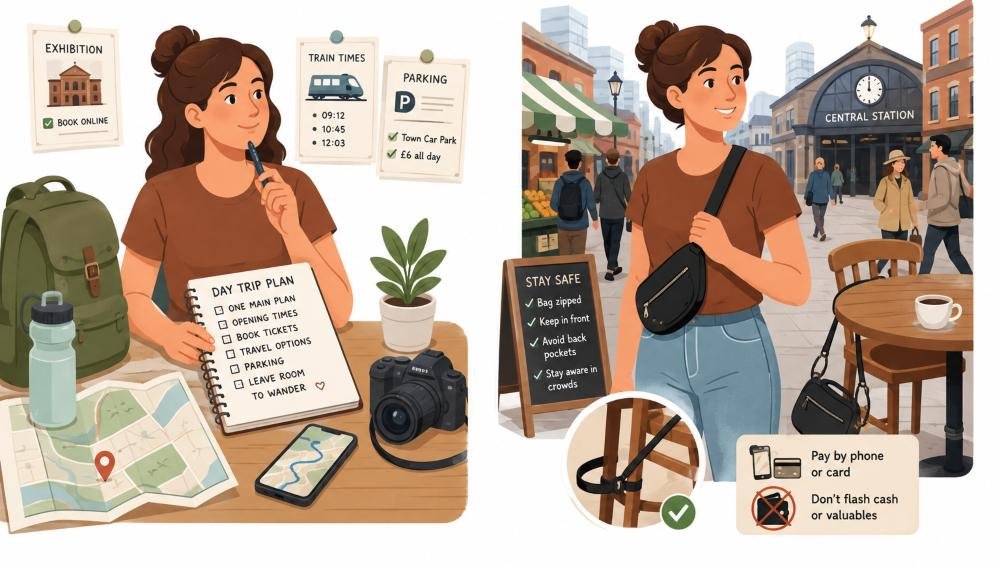
Start with one thing you actually want to do, and build the day around it rather than trying to cram in five. Maybe it is a single exhibition, a particular walk (the Ramblers keep a huge library of walking routes if you need ideas), a castle, or simply an afternoon poking about the independent shops of a town like Ludlow or Frome. Pick your anchor, and the rest of the day arranges itself without that hurried, box-ticking feeling.
Then deal with the boring but important bits. Check opening and closing times, and find out whether you need to book ahead. Plenty of National Trust properties, popular museums, and heritage railways now sell timed tickets, and turning up to a “sold out” sign after an hour in the car is a special kind of deflating. A quick look at the National Trust’s days out pages or the venue’s own site usually tells you what you need to know.
Sort your travel next. If you are going by train, the National Rail journey planner gives you times, changes, and a sense of what the day will cost, and a Railcard can take roughly a third off the fare if you have one. If you are driving, think about parking before you set off, because “we will just find somewhere” is famously optimistic in a busy town on a Saturday. None of this needs to be exhaustive. If you want a proper framework to work from, there are thorough guides to planning the best trip that take you through it step by step. The point is to build a loose scaffold, not a timetable, so you can still peel off down a side street that looks interesting.
Packing Light For A Day On Your Feet
The single rule of packing for a day out is to carry as little as you can bear to. You will be on your feet for hours, and a heavy bag turns a pleasant amble into a slog by mid-afternoon. A comfortable rucksack or a crossbody bag is usually all you need, filled with the essentials and nothing you have talked yourself into “just in case”.
Start with the obvious: wallet, keys, phone. A power bank has crept onto the essentials list, since your phone is now your map, your camera, your train ticket, and your way of paying for lunch, and it always seems to die at the worst moment. Bring a refillable water bottle rather than buying plastic ones all day. The Refill app, run by the charity City to Sea, maps tens of thousands of cafes, shops, and public fountains across the UK where you can top up for nothing. Pack a couple of snacks to bridge the gap between meals, a flapjack or a bit of fruit, so a delayed lunch does not derail the mood.
After that, let the forecast and the plan decide. This is Britain, so an honest look at the Met Office forecast the night before is worth ten minutes of your life. It is the difference between a light jacket in the bag and a proper soaking. Sun cream and a hat in summer, a waterproof the rest of the year, and a small first aid kit if you are heading anywhere near a trail. If you are not sure what a basic kit should hold, St John Ambulance sets out what to keep in a first aid kit for exactly this sort of outing. When you have a bit more time, it is worth running through an ultimate travel packing list once and simply crossing off everything that does not apply to a single day. After a few trips, you will know your own kit by heart.
Keeping Your Belongings Safe Without The Fuss
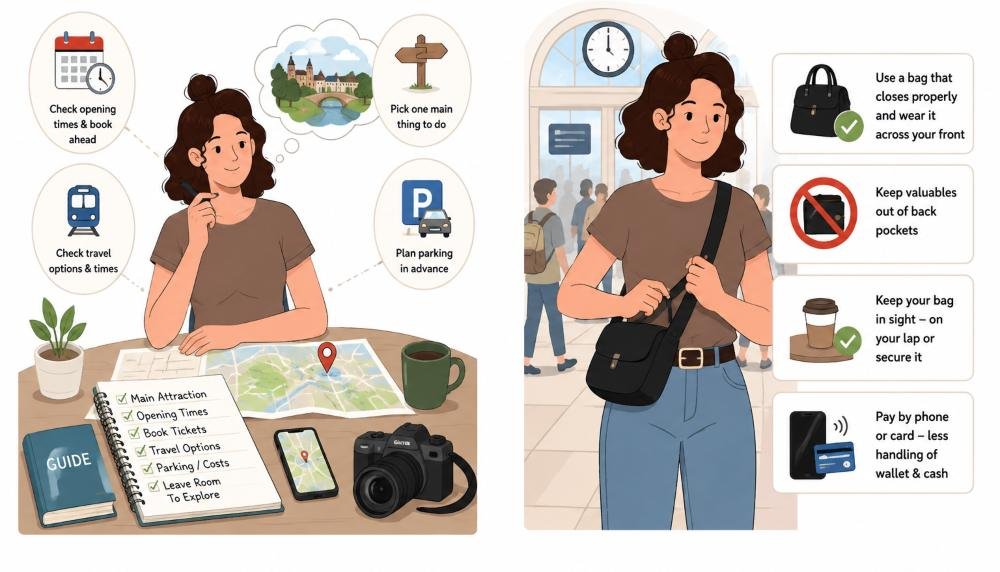
The last thing you want on a good day out is to spend it patting your pockets. A few small habits sort this out and let you relax. Choose a bag that closes properly, ideally one you can wear across your front, rather than an open tote or a rucksack with easy outer pockets. Stay switched on in the places thieves prefer: crowded markets, big stations, and the pinch points around ticket barriers and escalators. British Transport Police, who publish straightforward advice on avoiding pickpockets, make the same handful of points every time. Keep bags zipped and in front of you. Do not keep your phone or wallet in a back pocket. Do not make a show of expensive jewellery, cameras, or a thick wad of cash.
If you stop for a coffee or a bite, resist the very British habit of hooking your bag over the back of the chair or dropping it by your feet where you cannot see it. Keep it on your lap, or loop a strap around your leg. Paying by phone or card also means you are not fishing your wallet out every five minutes, which removes half the opportunities anyone has to help themselves to it.
Travelling Hands-Free
One of the real pleasures of a day out is being able to drift about unencumbered, and luggage is the enemy of that. Even a bulky rucksack or a couple of shopping bags can start to hold you back, keeping you out of a busy cafe, away from a small shop you would have loved, or simply making the whole day more of a chore. It is worse still when the day trip is one leg of a longer journey, and you have checked out of your room, but your train home is not until the evening.
This is where left luggage comes in. Lockers and staffed storage points let you stash your bags for a few hours and go about your day with your hands free. You will find them at most major UK stations, from King’s Cross to Edinburgh Waverley to Manchester Piccadilly, as well as at a growing number of independent drop-off points in city centres. The same networks exist all over the world, which matters the moment your wandering takes you further afield. If a city break in Japan is on the horizon, for instance, using Shinjuku Station luggage storage means you can throw yourself into one of the busiest, most electric neighbourhoods on earth without dragging a suitcase through the crowds. Drop the bags, and suddenly you can say yes to the unplanned detour.
Being There, Not Just Recording It
With the plan set and your bags stashed, the best part is simply arriving somewhere and letting it in. The one thing worth resisting is the urge to experience the whole day through a screen. Take your photos, of course, and then put the phone away for a while and use your own eyes: the buildings, the accents, the ordinary business of a place going about its day. There is decent evidence behind this, too. The Mental Health Foundation has found that most of us feel a real lift from being close to nature, with around 70 per cent of UK adults saying it improves their mood, and a fair bit of that comes simply from noticing where you are rather than scrolling past it.
Lean into the local, as well. Eat where the town eats, a family-run cafe or a proper chippy rather than the same chain you have at home, because food is one of the quickest ways to take the measure of a place. Wander off the obvious route. The best bits of a day trip tend to hide down a quiet lane or in a little park that was never in the guidebook. Ask a shopkeeper where they go for lunch, or fall into conversation with someone over a cuppa. Those small exchanges are often what you remember long after the photos have blurred together, and they are what turn a nice afternoon out into a proper story.
A day trip asks very little of you and gives a surprising amount back. Sort the few things that genuinely matter, the ticket, the forecast, a light bag, and somewhere to leave the heavy one, and then let the day do what it does best: be a small, complete adventure that drops you back home by bedtime, already half-planning the next one.