


In an age where most of our daily chats happen through screens, it is easy to forget that a real person sits at the other end. Whether we are firing off a quick WhatsApp reply, dropping a comment under a TikTok clip, or leaving a one-line email to a colleague, digital shortcuts can strip away the warmth that makes communication feel human. The convenience is wonderful, yet the cost can be emotional distance, misread tones, and hurt feelings that nobody ever intended to cause.
According to Ofcom’s Online Nation report, UK adults now spend roughly four hours a day online, and a growing share of that time is spent messaging rather than speaking. That shift is quietly changing the texture of our relationships. This guide looks at why empathy fades behind the keyboard and offers practical ways to bring warmth back to the way we talk online.
Why Empathy Fades Behind the Screen

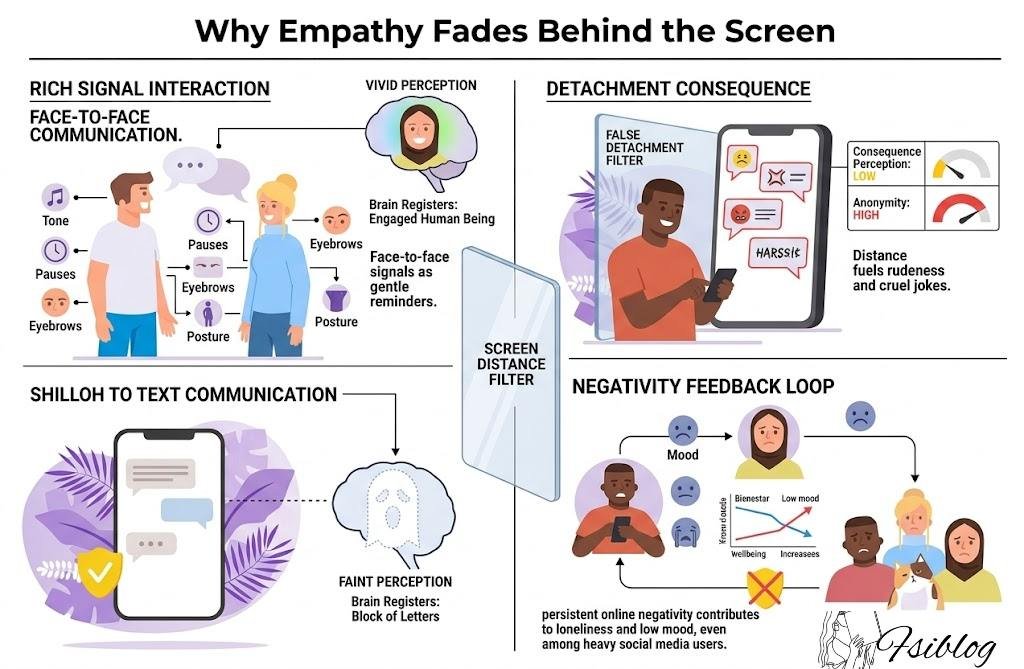
Face to face, we pick up on tone, pauses, raised eyebrows, and shifts in posture. These signals act as gentle reminders that we are engaging with someone who has feelings. The moment we switch to text, those cues disappear. All that is left is a block of letters, and our brains do not register the other person as vividly.
This is why ordinarily polite individuals sometimes post things they would never say in a pub or across a dinner table. The distance of the screen creates a false sense of detachment. A perceived lack of consequence, often paired with anonymous profiles, fuels rudeness, snide remarks, and cruel jokes that would embarrass the sender in person.
The Mental Health Foundation notes that persistent online negativity contributes to loneliness and low mood, even among heavy social media users. In short, shallow digital exchanges can leave everyone feeling worse, including the person typing the message.
A Quick Look at What We Lose
| Aspect | Real Life Conversation | Typical Text Conversation |
|---|---|---|
| Tone of voice and intonation | Expressive, conveys emotion and emphasis | Flat words on a screen |
| Eye contact and facial expression | Present, adds meaning and emotional cues | A profile picture, if any |
| Body language and gestures | Visible and important for communication | An occasional emoji |
| Clarification of meaning | Instant clarification through feedback | Long gaps and guesswork |
| Turn taking | Natural and fluid | Interruptions from other apps |
| Physical presence | Shared physical space | Complete physical absence |
Lined up side by side, it becomes clear why messages are so easy to misread, and why a two-word reply can feel colder than the sender ever meant.
Simple Habits That Bring Warmth Back
If you have caught yourself being curt, sarcastic, or dismissive online, the good news is that small changes make a noticeable difference. The following habits take seconds to apply, and they genuinely improve how people feel after speaking with you.
- Picture the person before you type. Take a breath and imagine their face. Would you say those words if they were sitting across the table?
- Replace lazy emojis with real sentences. A smiley does the job, but “that made me laugh, thank you” shows you were actually paying attention.
- Pause before replying in anger. The Samaritans recommend stepping away from upsetting messages for at least ten minutes before responding. A cool head avoids regret.
- Avoid dead-end replies. A plain “okay” or a thumbs up can read as disinterest. Add a short line that keeps the thread alive.
- Mind your manners. “Please”, “thank you”, and “have a lovely evening” cost nothing and soften every exchange.
- Ask before advising. Many people want to be heard. Check whether they want support or solutions.
- Proofread for tone, not just typos. Read your message back as though you were receiving it. Does it sound warm, neutral, or sharp?
None of these tips requires a personality transplant. They are simply the online equivalent of holding the door open for someone in the street.
Beyond Text: Adding a Voice and a Face
Typing has its place, but it is rarely the warmest format. Voice notes, phone calls, and video chats carry information that text cannot. Hearing a friend laugh or seeing your nan wave at the camera delivers a small but real dose of connection that a paragraph of words cannot match.
The BBC has reported on the rising popularity of voice messaging across British households, with many users saying it feels closer to a proper conversation than endless thumb tapping. If you normally text a close friend or relative, try swapping to a voice note for a week and see how the relationship feels.
When a Video Call Makes More Sense Than a Text
- Catching up with distant relatives who live abroad
- Speaking with older family members who find typing tiring
- Having difficult or emotional conversations that need tone
- Meeting new people where first impressions matter
- Reducing the loneliness that can come from long solo evenings
Making New Connections Through Cam to Cam Chat
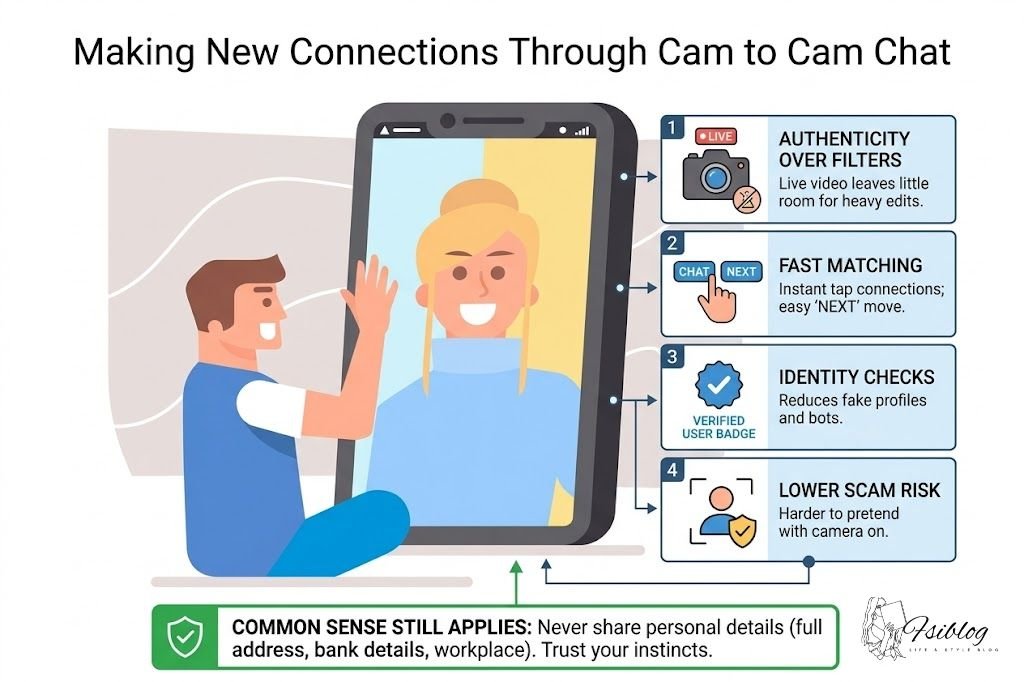
For anyone who wants to meet new people more humanely, a cam to cam chat platform can be a refreshing alternative to endless swiping on dating apps. You see the other person in real time, complete with smiles, hesitations, and natural reactions, which instantly reminds your brain that there is a real human on the line rather than a carefully curated profile.
Platforms of this kind offer a few practical benefits:
- Authenticity over filters. Live video leaves little room for heavily edited photos or polished scripts.
- Fast matching. A single tap connects you with a new chat partner, and another tap moves you along if the conversation is not clicking.
- Identity checks. Services such as CooMeet verify the women on the platform, which reduces the presence of fake profiles and bots.
- Lower scam risk. It is considerably harder to pretend to be someone else when your camera is switched on.
Common sense still applies. Never share personal information such as your full address, bank details, or workplace with someone you have just met, and trust your instincts if a conversation starts to feel off. The UK Safer Internet Centre offers sensible guidance on staying safe while socialising online.
Bigger Picture for Britain’s Digital Habits
The modern generation of British users is growing up with a smartphone in their hands almost from primary school. That brings brilliant opportunities for learning and friendship, but it also raises the risk of emotionally thin communication becoming the default. Research from the charity Mind suggests that the tone of our online interactions has a direct effect on mental wellbeing, for teenagers and adults alike.
That is why every warm message, thoughtful comment, and patient reply matters more than it might seem. Small acts of decency online add up to a kinder internet for everyone sharing it.
Final Thoughts
The choice between sounding like a bot and sounding like a human is almost always in our hands. Pausing before we type, choosing real words over copy-paste reactions, and occasionally turning on a camera are tiny adjustments that restore the warmth modern chats so often lack. Behind every username and profile picture sits a person with a bad day, a hopeful evening, or a story worth hearing. Treat them accordingly, and online conversation becomes something worth having rather than something to get through.