


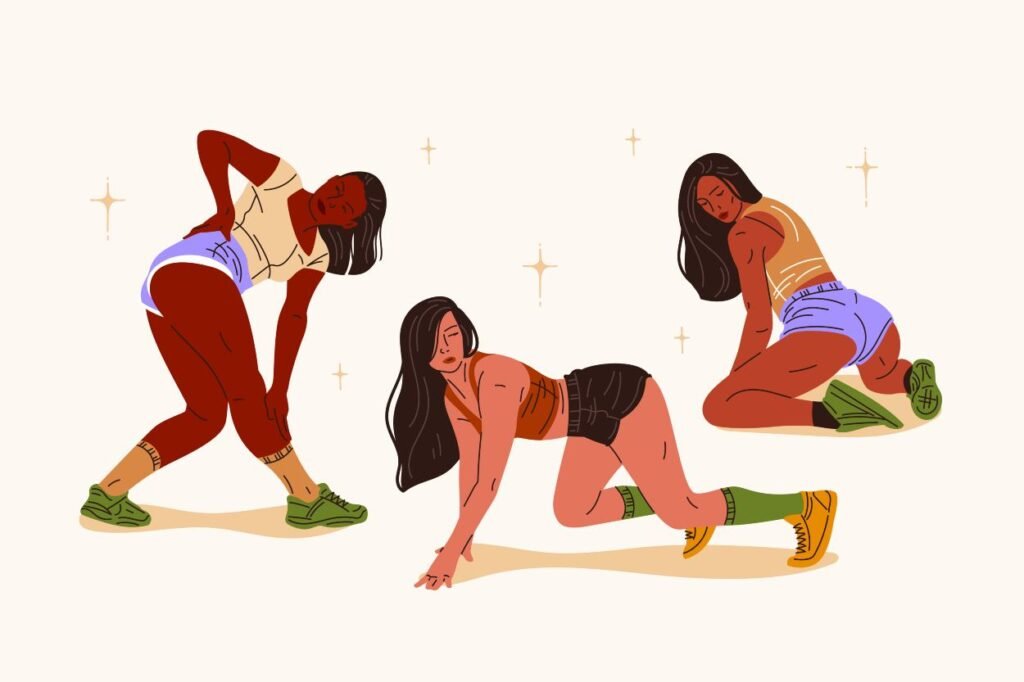
Many people come to their first Exotic Pole Dance class wearing regular trainers or dancing barefoot. They spend most of the lesson watching their instructor’s feet. She’s wearing high platform heels, and they make her movements look just like the videos that inspired them to try Exotic in the first place. So after a couple of classes, the question of which shoes to buy naturally comes up.
There are plenty of options. Pole Dancing Heels come as sandals, ankle boots and knee-high boots, with different heel and platform heights. It’s easy for a beginner to feel lost and choose a pair simply because it looks beautiful. But your first pair should be comfortable to learn in. Which style works best and how high your heels should be depends on the type of dancing you’ll be doing. So let’s start there.
What Is Exotic Pole Dance And How Is It Different?
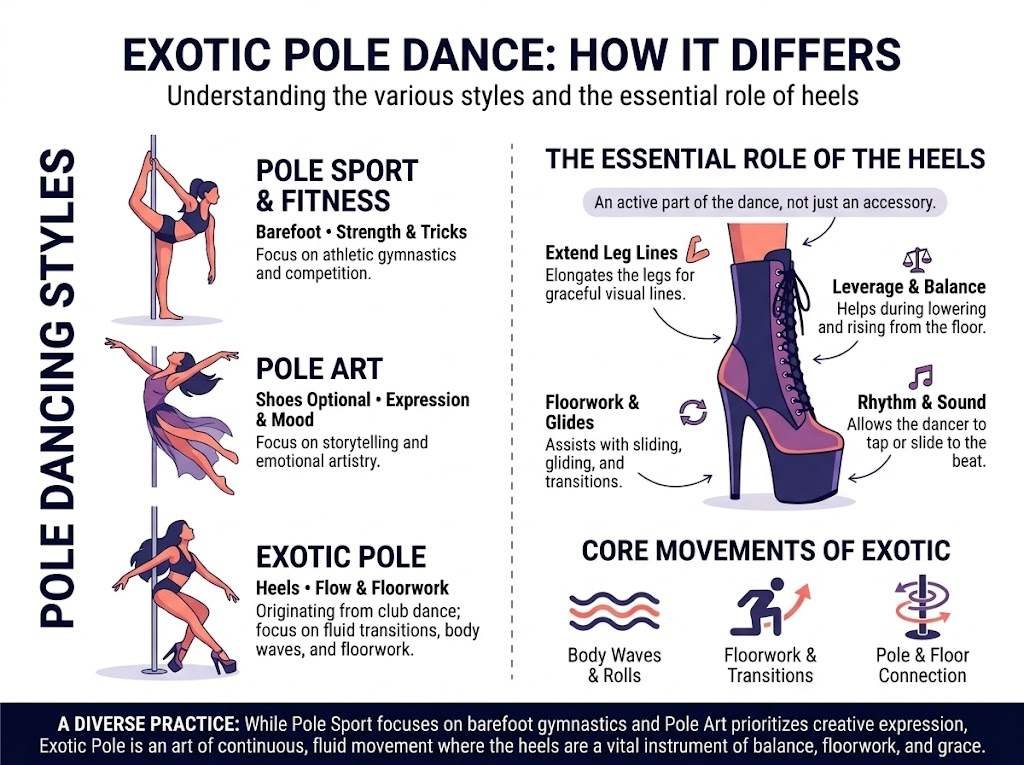
There are several styles of pole dancing. In Pole Sport and Pole Fitness, dancers usually train barefoot and focus on strength and tricks. It’s almost like gymnastics, and there are even competitions with national teams and world finals. In Pole Art, shoes are often optional too. The focus is more on expression and mood.
Exotic Pole Dance comes from club-style strip dancing, and heels are an essential part of it. Dancers spend a lot of time moving around the pole and on the floor. They do body waves, smoothly lower themselves to the floor and rise again. The platform can be used to tap out a rhythm or slide across the floor. There are pole tricks too, but they’re performed in heels.
So the shoes are part of the dance, not just something you wear. They affect how easily you can get up from the floor, keep your balance and extend your legs beautifully.
Which Pole Dance Heels Are Best For Beginners?
Once you understand what Exotic Pole Dance involves, choosing your first pair becomes easier. There are lots of styles, from closed-toe shoes and backless heels to boots that go above the knee. But for your first pair, the most important thing is that your feet stay securely in place.
For beginners, three options are worth considering:
- Sandals with ankle straps. The strap keeps your heel from slipping out, while your foot stays visible. This makes it easier to check whether you’re pointing your toes correctly.
- Ankle boots. They fit snugly around the ankle and help keep your foot stable. You’ll notice this especially when getting up from the floor.
- Knee-high boots. They support your lower legs and help protect them from bruises during floorwork. But they’re heavier, so moving in them can feel more difficult at first.
Most beginners choose sandals or ankle boots for their first pair. They’re easier to get used to when you’re learning to dance in heels. You can always buy boots later, once you know how much floorwork you’ll be doing.
What Heel Height Should Beginners Choose?
The same shoe often comes in several heights, from fairly low platforms to ones that look a little scary to stand on at first. In dance studios, you’ll hear people call them “twos”, “threes”, “fours” and “fives”. These numbers refer to the platform height in inches, with the heel getting higher as the platform does.
Beginners are usually better off starting with twos or threes. It’s easier to keep your balance when walking around the pole, and getting down to the floor and back up feels less intimidating. Your feet and ankles need time to get used to heels, and dance medicine guidance consistently favours building up new demands gradually, so a lower platform makes that easier.
Tall heels look amazing, and it’s tempting to buy a pair just like your instructor’s. But it’s better to wait until you feel comfortable moving in threes. Then switching to fours will be easier, with fewer falls along the way.
Common Mistakes When Buying Your First Pair
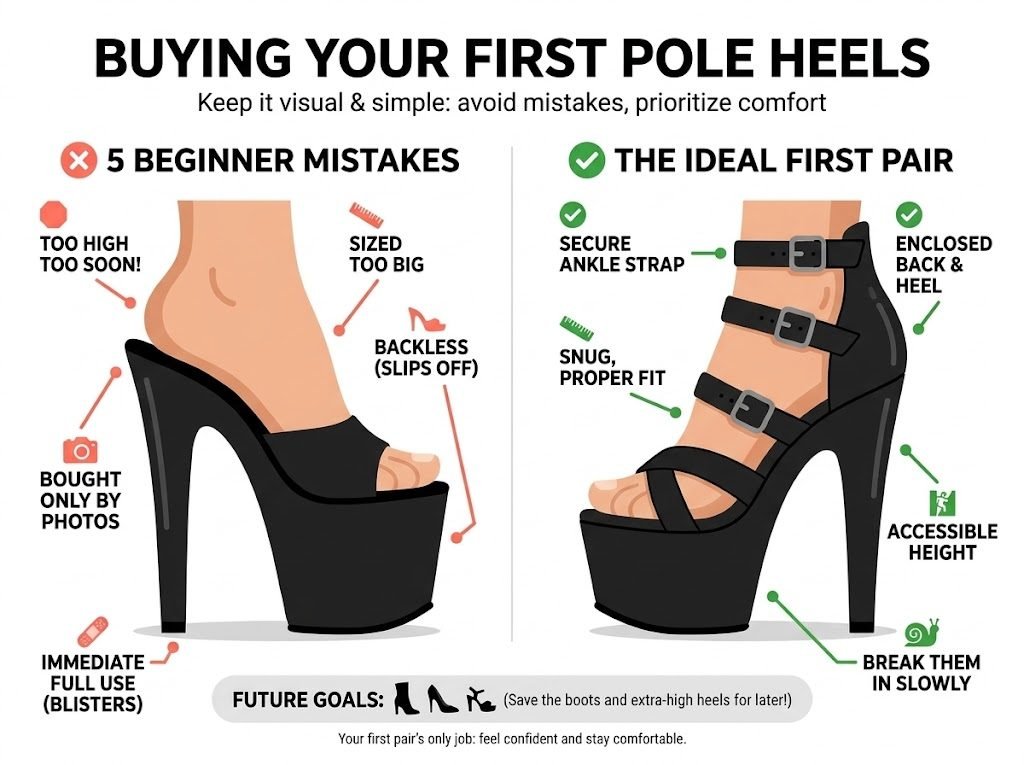
It’s understandable to want to start dancing in taller heels straight away. But rushing into your first purchase is often what leads to mistakes. Apart from choosing heels that are too high, beginners often:
- Buy shoes a size too big to avoid tightness, only to find their feet sliding around inside.
- Choose a pair based only on photos without checking how securely it holds the foot.
- Buy backless heels that slip off as soon as they make their first turn.
- Wear brand-new heels to a full training session and end up with blisters.
There’s no need to rush. Over time, you might have knee-high boots, five-inch platforms and bright pairs for performances in your wardrobe. But your first heels have a simpler job: helping you feel confident on your feet and get comfortable dancing around the pole.
Disclaimer
This article is general information only and is not medical or professional advice. Pole dancing in heels carries a risk of injury, so train with a qualified instructor and speak to a doctor or physiotherapist if you have any foot, ankle, knee or back problems.