


When Minnesota homeowners want a warmer house and lower heating bills, they often start by pricing out new windows. It feels like the obvious fix, since drafty windows are easy to feel on a cold day. In reality, the bigger opportunity is usually hiding above your head. Your attic is where a large share of a home’s heated air escapes, and addressing it well often delivers more comfort and savings per dollar than almost any other upgrade.
Getting that work done right depends heavily on who does it. Attic insulation looks simple from the outside, but the difference between a quick blow-in job and a properly air-sealed, correctly insulated attic shows up every winter on your energy bill. Here is what to understand before you hire.
Why Your Attic Matters More Than Your Windows
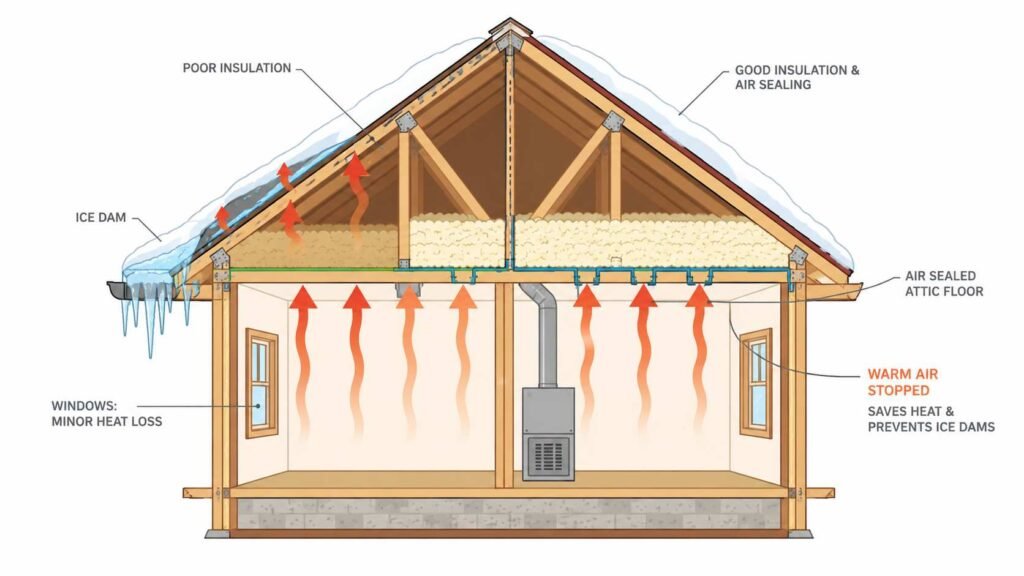
Warm air rises. In winter, the heated air in your living space pushes up toward the top of the house and finds every gap in the attic floor, a process often called the stack effect. Once that air leaks out, your furnace works harder and runs longer to replace it.
The U.S. Department of Energy lists air sealing and attic insulation among the most cost-effective ways to improve a home’s efficiency. New windows can help, but they are expensive and tend to have a long payback period. For most older Minnesota homes, sealing and insulating the attic returns far more comfort for the money.
There is a winter-specific benefit too. When heat escapes into a cold attic, it melts the underside of the snow sitting on your roof. That meltwater runs down and refreezes at the colder eaves, forming ice dams that back water up under your shingles and into the walls below. A well-sealed, well-insulated attic keeps the roof deck cold and helps prevent that damage before it starts.
Signs Your Attic Needs Attention
You do not always need a thermal camera to spot a problem. Common warning signs include the following.
- Heating bills that climb faster than your neighbors’ bills
- Upstairs rooms that never feel as warm as the rest of the house
- Drafts near ceilings, recessed lights, or the attic hatch
- Ice dams or heavy icicles along the eaves in winter
- Insulation that looks thin, uneven, matted down, or decades
Any one of these is worth a closer look. Several of them together usually mean your attic is underperforming and costing you money.
Air Sealing Comes Before Insulation
This is the step that separates a thorough contractor from a fast one. Adding insulation on top of unsealed gaps is a little like putting on a heavy sweater with the windows open. Before any new material goes down, the air leaks need to be sealed.
That sealing work includes recessed light housings, the tops of interior walls, plumbing and wiring penetrations, and the attic access door. These are the hidden pathways that let your heated air escape, and insulation alone does not stop them.
This diagnostic-first approach is the core of real home performance work. A contractor who measures and seals the leaks first, then insulates to the correct level, will get you a far better result than one who blows in more material and calls it finished.
What to Look for in an Attic Insulation Contractor
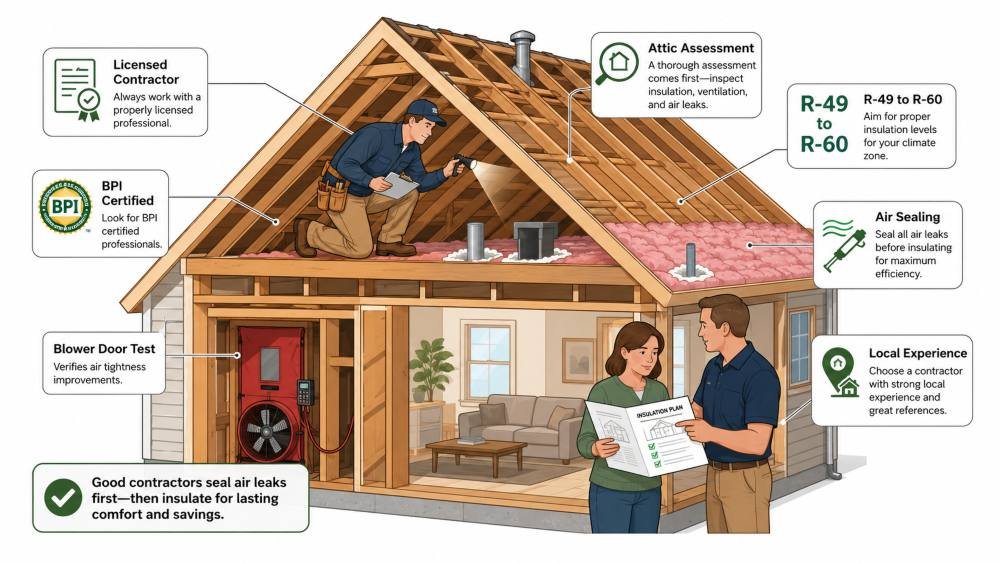
Once you know what good work involves, choosing the right company gets easier. A qualified Attic Insulation Contractor should check most of these boxes.
- Licensing. In Minnesota, look for a licensed building contractor, not a general handyman taking on a job outside their lane.
- BPI certification. The Building Performance Institute trains and certifies professionals to evaluate a home as a whole system rather than one part at a time. This is a strong signal that a contractor understands how air, heat, and moisture move through your house.
- An assessment first. The contractor should inspect your attic and, ideally, run a blower door test to measure air leakage before quoting the job. Be cautious of anyone who prices the work sight unseen over the phone.
- Correct R-value targets. Minnesota sits in a cold climate zone, and the Department of Energy recommends attic insulation in the R-49 to R-60 range. A good contractor will tell you how much you have now and how much to add.
- A clear plan for air sealing. If air sealing never comes up in the conversation, keep looking.
- References and local experience. Companies that have worked in your area for years understand how Minnesota homes are built and where they tend to fail.
Minnesota companies such as RetroGreen Energy, for example, begin every project with a full home assessment and seal air leaks before insulating, which is what makes the savings hold up over time. Nearly two decades of work on local homes is the kind of track record worth asking about when you compare quotes.
Rebates and Incentives in Minnesota
Upgrading your attic can also come with help on the cost. Several Minnesota utilities offer rebates on insulation and air sealing, including Xcel Energy, CenterPoint Energy, Minnesota Energy Resources, and Otter Tail Power. Program amounts change from year to year, so it is worth confirming exactly what your utility currently offers before you start.
One important note for this year. The federal tax credits that homeowners leaned on in recent seasons for energy efficiency improvements expired at the end of 2025. Utility rebates are now the main incentive available, and an experienced contractor can help you understand which local programs apply to your specific project.
Bottom Line
A comfortable, efficient home through a Minnesota winter usually starts at the top. Before you spend on new windows, get your attic assessed by a qualified, certified contractor who seals air leaks first and insulates to the right level. The payoff shows up as a warmer house, fewer ice dams, and a furnace that finally gets a break.