


It is half past six on a wet Tuesday, the kids are asking what is for tea, and the last thing anyone wants is to stand over a pan of rice for twenty-five minutes, watching it catch on the bottom. For years this was the moment when good intentions quietly collapsed into a takeaway menu or a beige ready meal. Speed and quality felt like opposites. You either cooked properly or you cooked quickly, and rarely both.
That trade-off is fading. A new generation of steam-cooked grains has landed on British supermarket shelves, and it has changed the weeknight maths for a lot of households. Pre-cooked pouches and trays now sit alongside the dried bags in the world food aisle, promising fluffy, separate grains in about the time it takes to lay the table. The clever part is that the quality gap between these and a proper stovetop pan has narrowed to the point where most people around the dinner table cannot tell the difference.
At the centre of this shift are microwaveable products such as 2 minute rice, where the raw grain is cooked in steam and sealed into a recyclable tray with no artificial preservatives, added oils or heavy salt. Around two minutes in the microwave and it is done: hot, loose and ready to eat. No pan to scrub, no timer to babysit, no guesswork about the water ratio.
Why Old-School Instant Rice Earned Its Bad Reputation
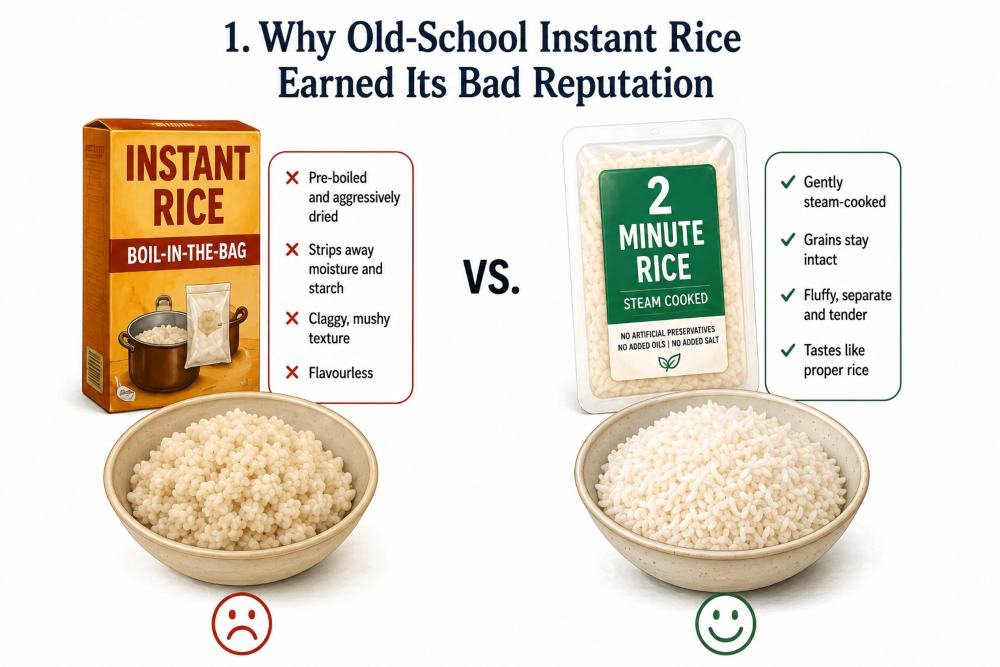
Anyone old enough to remember boil-in-the-bag rice from the 1980s will understand the scepticism. Early instant rice was pre-boiled, aggressively dried and packed into a dry box. That harsh processing battered the delicate starch structure inside each grain, and the result, once rehydrated at home, was often a claggy, flavourless mush that bore little resemblance to the real thing. It did the job, but nobody enjoyed it, and it saddled the whole category with a reputation that has taken decades to shake.
The problem was never the idea of quick rice. It was the method. Stripping a grain of all its moisture and then flooding it back with boiling water is a bit like wringing out a sponge and expecting it to look new again. Something is always lost along the way.
What Steam Filtration Actually Does Differently
Modern steam-cooked rice takes a gentler route. Good-quality grains, often basmati, jasmine or long grain, are washed and then cooked in an open, temperature-controlled stream of steam. Excess surface starch and moisture drain away naturally rather than being locked in, which keeps the grains firm, tender and separate rather than sticky. Because the finished rice is sealed straight after cooking, it stays fresh on the shelf without the synthetic stabilisers that older products leaned on.
The difference on the plate is real. Steam-cooked grains hold their shape, carry their natural aroma and reheat evenly, which is exactly what you want under a curry or folded through a salad. It is closer to how rice behaves when you cook it slowly at home, minus the twenty-five minutes and the scorched pan.
Where Quick Rice Fits Into A Balanced Diet
Rice sometimes gets an unfair press in the age of low-carb eating, but starchy foods are a cornerstone of sensible eating in this country. The NHS Eatwell Guide suggests that starchy carbohydrates should make up just over a third of what we eat, sitting right alongside fruit and vegetables as one of the two largest parts of the plate. Far from being the enemy, rice, potatoes, bread and pasta are our main source of energy, and the NHS notes that gram for gram, starchy foods contain fewer than half the calories of fat.
The nuance, as the British Nutrition Foundation points out, is about quality and portion size rather than cutting carbs out altogether. Choosing wholegrain versions where you can is the single easiest upgrade. Brown and wholegrain rice keep the fibre-rich outer layers that refined white grains lose, and the British Heart Foundation links regular wholegrain eating with a lower risk of heart disease and type 2 diabetes. Many steam-cooked ranges now include brown and mixed-grain trays, so swapping in a higher-fibre option is as easy as picking a different tray. The British Dietetic Association makes the same case: wholegrains are digested more slowly, which helps you feel fuller for longer, a useful thing when the alternative is grazing through the evening.
Portion control is where single-serve trays quietly earn their keep. A pre-measured tray takes the guesswork out of how much to cook, which means less food ends up scraped into the bin and less pressure on a tight weekly budget.
Rice Safety Rule Every UK Kitchen Should Know
Here is something that surprises a lot of people. Reheated rice is one of the more common causes of home food poisoning in Britain, and it has nothing to do with the microwave. Uncooked rice can carry spores of a bacterium called Bacillus cereus, and those spores survive cooking. If cooked rice is then left sitting at room temperature, the spores can multiply and produce toxins that reheating will not destroy. This is the mechanism behind the so-called fried rice syndrome that periodically does the rounds on social media.
The Food Standards Agency advice is refreshingly simple: cool any leftover rice quickly, ideally within an hour, keep it in the fridge for no more than a day, reheat it only once, and make sure it is steaming hot all the way through. This is precisely where sealed, pre-cooked single portions have a practical edge. A tray is cooked once, heated once and eaten, which neatly sidesteps the classic risk of a big pan of rice sitting out on the hob for hours after Sunday lunch.
Convenience That Does Not Cost The Earth
The other lingering worry about convenience food is packaging, and it is a fair one. The better steam-rice brands have moved to BPA-free trays made from clear plastic that most UK councils now accept. Plastic pots, tubs and trays are increasingly collected at the kerbside, and the government’s Simpler Recycling rules are bringing a more consistent set of accepted materials to households across England. A quick rinse to remove any residue, the film lid in the general waste, the tray in the recycling, and you have kept the convenience without the guilt.
Making The Most Of A Two-Minute Base
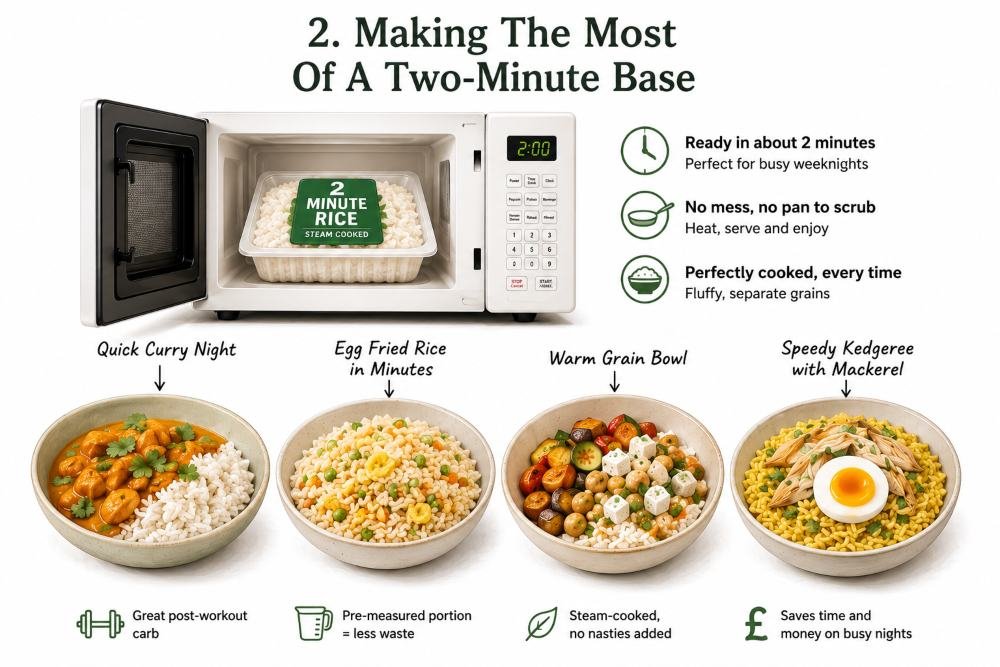
Once you stop thinking of it as an emergency option, a tray of ready rice becomes a genuinely useful building block. It is the obvious partner for a midweek curry or chilli, but it also turns leftovers into a meal in minutes. Tip it into a pan with a beaten egg, some frozen peas and a splash of soy for a quick egg-fried rice, stir it through roasted vegetables and feta for a warm grain bowl, or make it the base of a speedy kedgeree with smoked mackerel and a soft-boiled egg. For anyone training or trying to eat with a bit of intention, it is a clean carbohydrate you can portion in seconds after a workout.
None of this replaces the pleasure of a slow-cooked biryani on a lazy Sunday. But on the wet Tuesdays, when time is short and everyone is hungry, two minutes of steam-cooked rice is the kind of small, sensible convenience that makes eating well on a busy week feel a good deal more achievable.