


Boilers are one of the most essential appliances in any UK home. While you might cope without certain kitchen appliances, losing heating or hot water, especially during colder months, can quickly make your home uncomfortable and disruptive.
Understanding how old your boiler is helps you stay prepared, manage energy costs, and avoid sudden breakdowns. Whether you’ve just moved into a property or have lived there for years, knowing your boiler’s age gives you better control over maintenance and future planning.
Why Knowing Your Boiler’s Age Matters
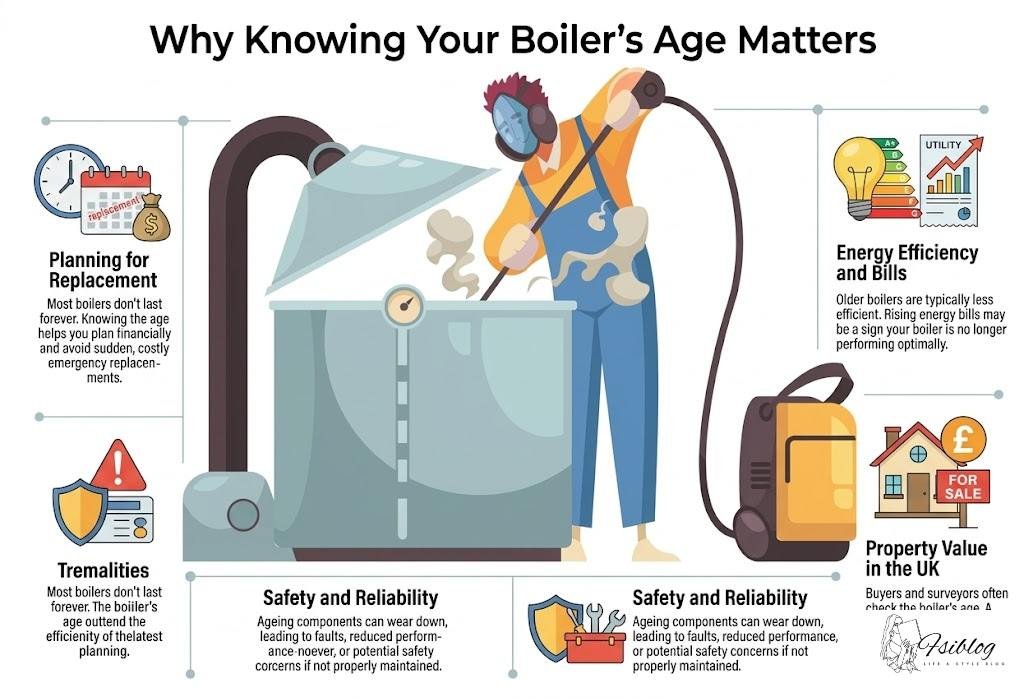
Before checking your boiler, it’s important to understand why this information is useful:
| Factor | Why It Matters |
|---|---|
| Planning for Replacement | Most boilers don’t last forever. Knowing the age helps you plan financially and avoid sudden, costly emergency replacements. |
| Energy Efficiency and Bills | Older boilers are typically less efficient. Rising energy bills may be a sign your boiler is no longer performing optimally. |
| Safety and Reliability | Ageing components can wear down, leading to faults, reduced performance, or potential safety concerns if not properly maintained. |
| Property Value in the UK | Buyers and surveyors often check the boiler’s age. A newer or well-maintained system can increase your home’s appeal and value. |
Check the Serial Number
One of the simplest ways to determine your boiler’s age is by checking its serial number.
Where to Find It
- Inside the front cover
- On a label underneath or on the side
- Near pipe connections
How It Works
Manufacturers encode production details within the serial number. However, each brand uses a different format.
For example, with Worcester Bosch boilers, the serial number often contains a hidden date code that may not be immediately obvious.
Practical Tip
Take a clear photo of the serial number and search the manufacturer’s website or support pages for decoding guidance.
Contact the Manufacturer
If decoding the serial number feels confusing, contacting the manufacturer is a reliable next step.
What They Can Help With
- Confirm manufacturing date
- Identify the model and specifications
- Guide lifespan and servicing
Most UK boiler manufacturers offer quick support via phone or email, and you’ll usually get an answer within minutes.
Ask a Boiler Engineer During a Service
A professional boiler engineer can quickly identify the age and condition of your system.
What to Expect
An experienced engineer can:
- Estimate the boiler’s age
- Assess wear and tear
- Check efficiency levels
- Recommend repairs or replacement
Companies like Able Plumbing provide qualified engineers who can give you a clear picture of your boiler’s health.
Why This Matters
A boiler’s condition doesn’t always match its age. A well-maintained 12-year-old boiler may perform better than a poorly maintained 6-year-old one.
Check Installation and Service Documents
Documentation is often the easiest and most accurate way to determine your boiler’s age.
Key Documents to Look For
- Installation certificate
- Benchmark logbook
- Service history records
- User manual
Where to Find Them
- Near the boiler in a protective sleeve
- With your home paperwork
- Provided by your installer
Important Insight
The installation date is often more useful than the manufacturing date, as it shows how long the boiler has actually been in use.
Look for Physical Signs of Age
If paperwork is missing, your boiler itself can give clues about its age.
Common Warning Signs
- Frequent breakdowns
- Strange noises such as banging or whistling
- Slow heating response
- Inconsistent hot water
- Rising energy bills
- Outdated controls or a lack of smart features
These signs often indicate that your boiler may be nearing the end of its lifespan.
Average Boiler Lifespan in the UK
Understanding typical lifespans helps you judge where your boiler stands:
General Lifespan Guide
- Combi boilers: 10 to 15 years
- System boilers: 15 to 20 years
- Conventional boilers: 15 to 20 years
Factors That Affect Lifespan
- Annual servicing
- Usage levels
- Water quality
- Installation quality
Regular maintenance can significantly extend your boiler’s life.
When Should You Start Thinking About Replacement?
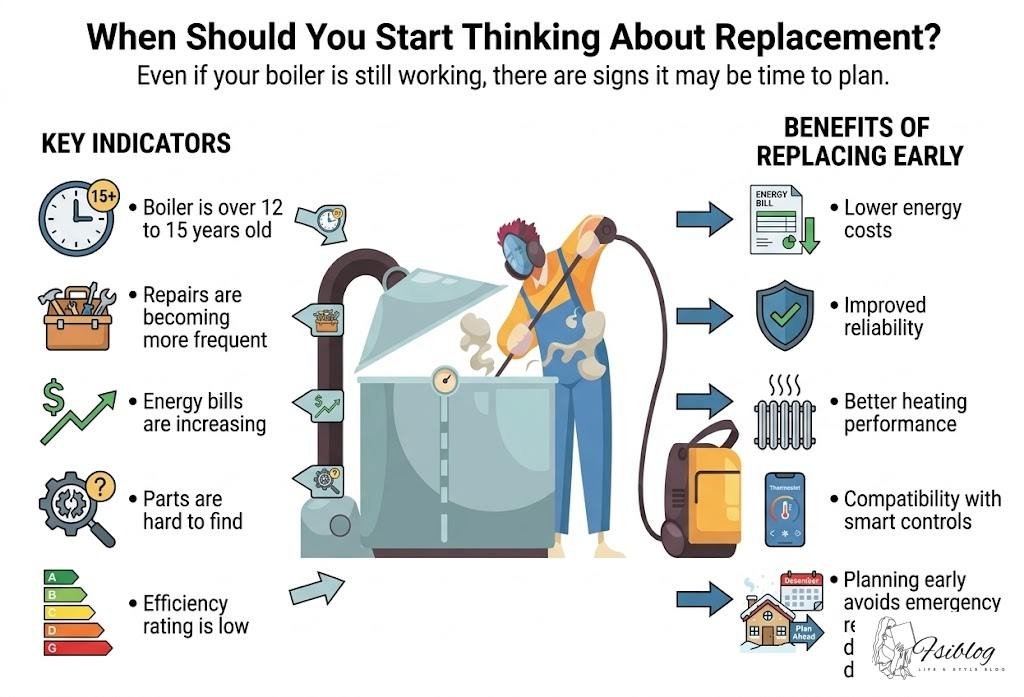
Even if your boiler is still working, there are signs it may be time to plan.
Key Indicators
- The boiler is over 12 to 15 years old
- Repairs are becoming more frequent
- Energy bills are increasing
- Parts are hard to find
- The efficiency rating is low
Benefits of Replacing Early
- Lower energy costs
- Improved reliability
- Better heating performance
- Compatibility with smart controls
Planning early avoids emergency replacements during winter when demand and costs are higher.
Practical Tips for UK Homeowners
| Tip | Why It Matters |
|---|---|
| Book Annual Servicing | Regular servicing keeps your boiler running efficiently, reduces breakdown risks, and ensures safe operation. |
| Keep Records Updated | A complete service logbook helps track maintenance history and can be useful for warranties or when selling your home. |
| Monitor Performance | Noticing changes in heating, unusual noises, or rising energy bills can help you catch issues early before they become costly repairs. |
| Get Expert Advice | Consulting a qualified engineer ensures you make informed decisions about repairs, maintenance, or replacement. |
Final Thoughts
Finding out how old your boiler is doesn’t need to be complicated. Whether you check the serial number, review documentation, contact the manufacturer, or consult a professional, each method gives you valuable insight.
For UK homeowners, staying informed about your boiler’s age helps you avoid unexpected breakdowns, control energy costs, and plan with confidence. With proper care and regular servicing, your boiler can continue to perform efficiently for years, but knowing when to act is just as important as maintaining it.