



When employees feel their safety is overlooked or that preventable risks are present, confidence, productivity, and morale naturally fall. Workplace safety is not only about avoiding serious incidents. It also includes preventing small hazards, reducing long-term health strain, and ensuring staff feel supported in their daily roles.
In the UK, employers have clear legal responsibilities under health and safety regulations, but compliance alone is not enough. The most successful workplaces build safety into everyday behaviour, making it routine rather than reactive. Small daily habits, consistently practised by both staff and management, often make the biggest difference in preventing accidents and improving confidence.
Below are four practical habits that organisations can develop to create a safer, more supportive working environment.
1. Build Constant Awareness of Your Environment

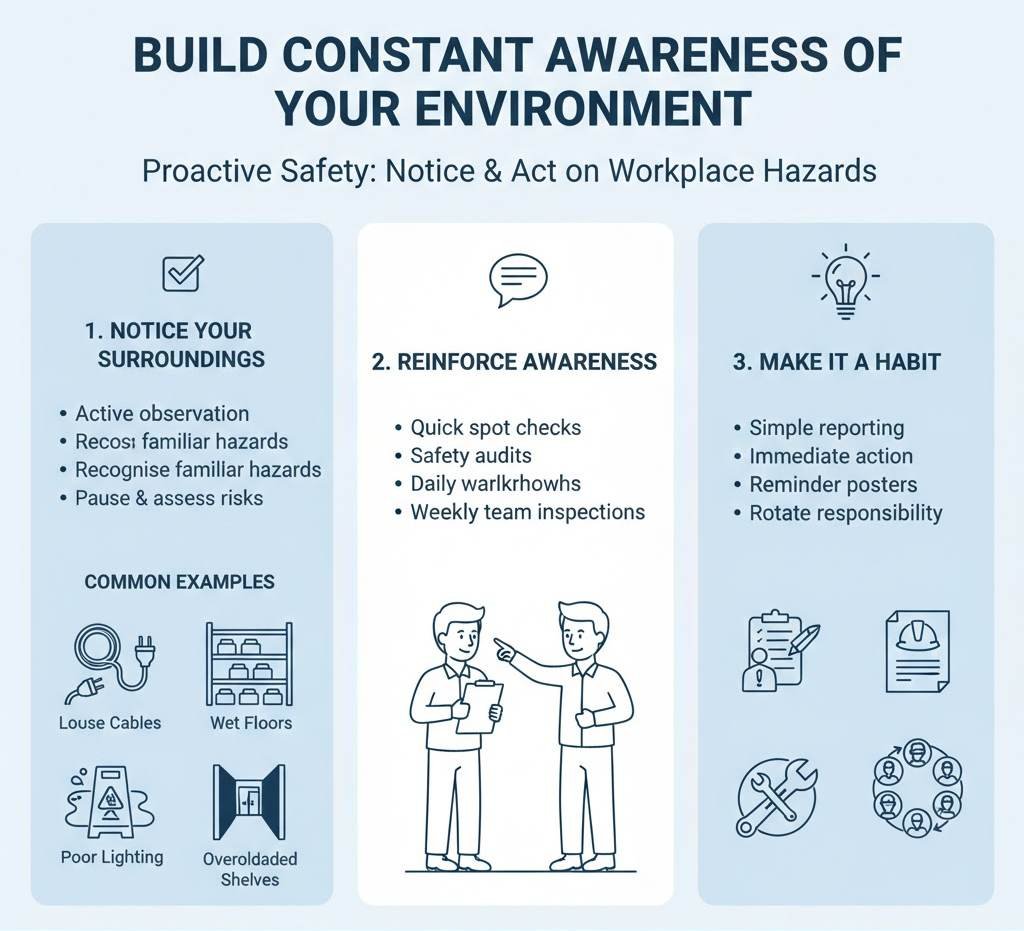
One of the most effective safety habits is encouraging employees to notice their surroundings at all times actively. Many workplace incidents occur not because hazards are invisible, but because people become used to seeing them and stop recognising the Risk.
Common examples include:
- Loose cables across walkways
- Wet floors near entrances during rainy weather
- Overloaded storage shelves
- Poor lighting in corridors or car parks
- Blocked fire exits
Encourage workers to pause briefly when entering any workspace and quickly assess whether anything looks unsafe or out of place.
Managers can reinforce this awareness through Quick spot checks and safety audits, which help identify risks before they escalate. These checks do not need to be complicated. Even short daily walkthroughs or weekly team inspections can significantly reduce hazards.
To make this habit effective:
- Create a simple reporting process for hazards
- Encourage immediate action where possible
- Display safety reminder posters in shared areas
- Rotate responsibility for safety checks among staff
When employees feel responsible for noticing risks, safety becomes part of normal working behaviour rather than a management instruction.
2. Communicate Openly and Act on Safety Concerns
Strong communication is the foundation of any safe workplace. Employees must feel confident that if they raise a concern, it will be taken seriously and addressed promptly.
In many workplaces, incidents occur not because risks were unknown, but because workers hesitated to report them. Fear of blame, embarrassment, or being ignored often prevents early reporting.
That is why leaders must actively try to cultivate a culture in which everyone feels comfortable coming forward with safety concerns, near-miss reports, or suggestions for improvement.
Practical ways to support this include:
- Anonymous reporting options for sensitive concerns
- Regular safety briefings or toolbox talks
- Open question sessions during team meetings
- Visible management involvement in safety discussions
- Quick feedback when someone reports an issue
Communication must work both ways. Management should provide clear instructions and also listen actively to frontline staff, who often notice risks first.
When workers know their voice matters, they are far more likely to raise concerns early, preventing small issues from becoming serious problems.
3. Prioritise Personal Wellbeing to Reduce Risk
Safety is not only about physical hazards. Fatigue, stress, dehydration, and burnout significantly increase the likelihood of workplace mistakes and accidents.
Research consistently shows that tired employees:
- React more slowly
- Misjudge distances or timings
- Forget safety steps
- Lose concentration more easily
Encouraging staff wellbeing, therefore, directly improves workplace safety.
Employers can help by:
- Ensuring staff take regular breaks
- Promoting hydration, especially in physical roles
- Monitoring excessive overtime
- Offering mental health support resources
- Providing ergonomic equipment for desk workers
Even small initiatives help, such as quiet rest areas or reminders to step away from screens.
Encouraging healthy commuting options such as cycling or walking can also improve long-term well-being. Providing showers, lockers, or secure bike storage makes this more practical for staff.
Above all, employees should understand that being mindful of the dangers of workplace accidents is not about fear, but about maintaining alertness and protecting themselves and colleagues through healthy working habits.
When staff feel physically and mentally supported, they naturally perform their roles more safely.
4. Adopt Continuous Learning and Practical Training
Safety knowledge cannot remain static. New equipment, updated regulations, changing processes, and evolving workplace layouts all introduce new risks.
Ongoing training ensures that safety awareness remains fresh and relevant.
Effective workplace learning may include:
- Annual health and safety refresher sessions
- Practical emergency response drills
- Manual handling training updates
- First aid certification courses
- Equipment-specific safety instruction
Importantly, training should be practical rather than purely theoretical. Hands-on demonstrations, real scenarios, and interactive sessions help employees remember procedures more effectively.
Continuous learning also benefits staff confidence. Employees who understand how to respond to incidents, operate equipment safely, and follow emergency procedures feel more secure in their roles.
From an organisational perspective, investing in training also:
- Reduces staff turnover
- Improves professional development
- Demonstrates duty of care
- Strengthens company reputation
When employees see that their employer actively invests in their knowledge and safety, workplace trust increases significantly.
Simple Daily Safety Habits Any Workplace Can Start Today
If you want to introduce immediate improvements, start with these simple daily actions:
- Begin shifts with a two-minute hazard check
- Encourage staff to report one safety observation per week
- Include a short safety reminder in team meetings
- Review near-miss incidents monthly
- Keep emergency contact details clearly visible
These small actions require minimal time but build strong long-term safety awareness.
Why Everyday Habits Matter More Than Occasional Policies

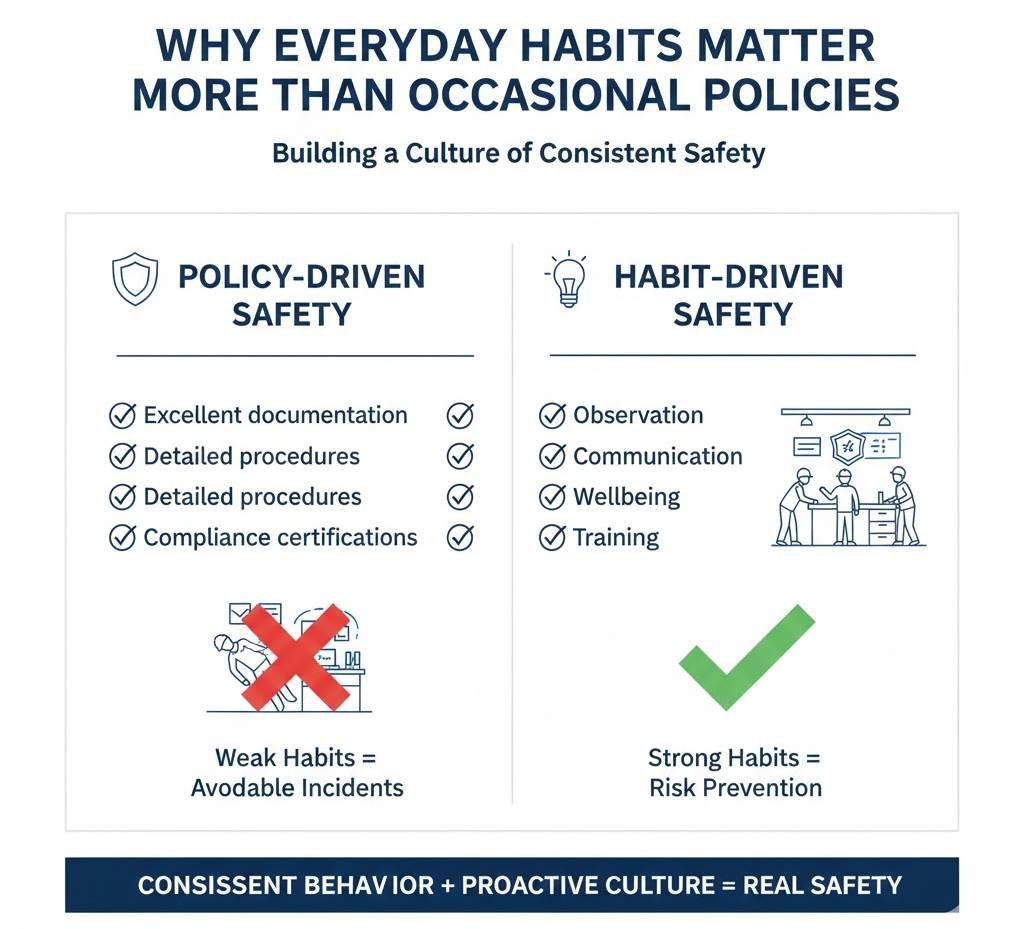
Many organisations rely heavily on written policies, but real safety comes from consistent behaviour.
A workplace may have:
- Excellent documentation
- Detailed procedures
- Compliance certifications
Yet still experience avoidable incidents if daily habits are weak.
In contrast, workplaces that prioritise:
- Observation
- Communication
- Wellbeing
- Training
Often, it prevents risks before they occur.
Safety culture is not built solely through paperwork. It develops through repeated everyday actions shared across the organisation.
Final Thoughts
A safer, more confident workplace is rarely built through one major change. Instead, it grows from small, consistent habits that employees and managers practise every day.
By encouraging environmental awareness, open communication, personal wellbeing, and continuous learning, organisations across the UK can reduce risks, strengthen staff confidence, and create a more supportive working environment.
When safety becomes part of everyday behaviour rather than an occasional priority, employees feel protected, valued, and empowered to perform at their best.