


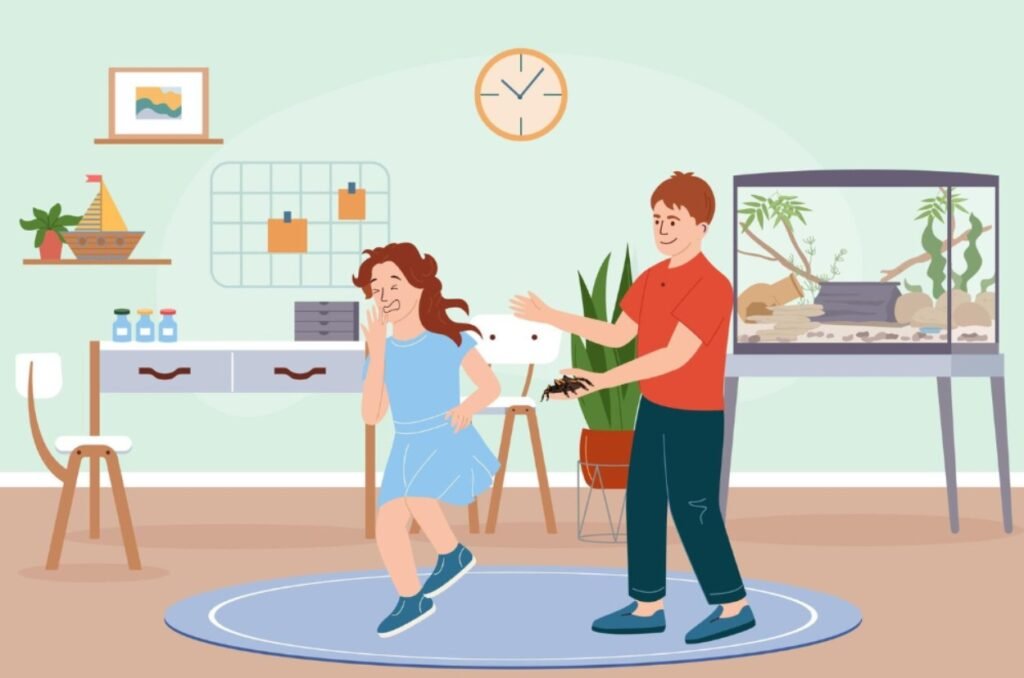
If your child has ever come home buzzing about a new toy range, trading cards, or a set of figurines they desperately need to complete, you already know the magnetic pull of collecting. What might look like a phase to us is one of the most rewarding hobbies a child can develop. From building patience and organisational skills to learning about value and taking pride in something they have built over time, collecting teaches kids far more than it might seem on the surface. And with the explosion of designer collectibles like K-pop Demon Hunters collectibles from Youtooz, there is a whole world of creative, story-driven items out there that kids genuinely love.
Why Collecting Is a Brilliant Hobby for Kids

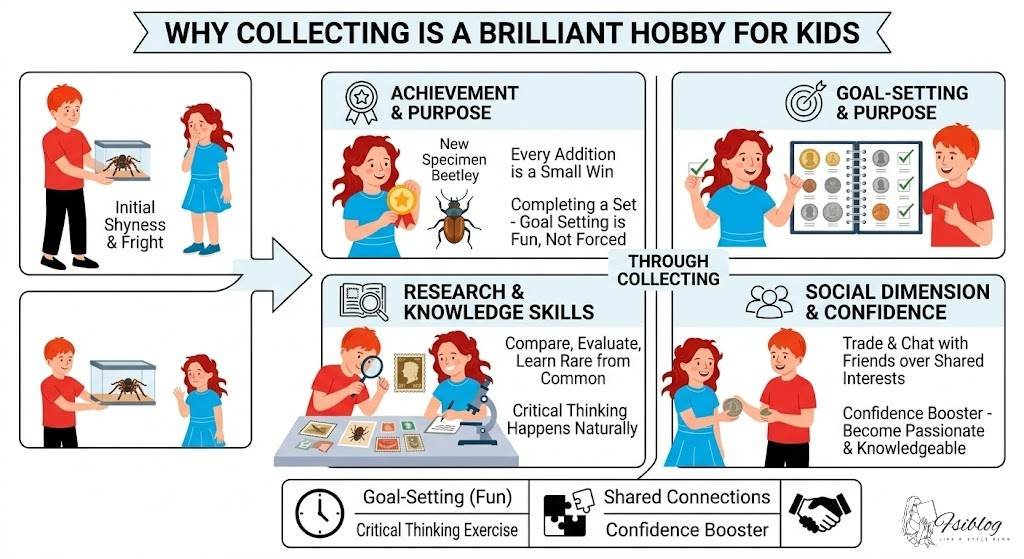
Collecting gives children a sense of purpose and achievement. Every new addition to a collection is a small win, and working towards completing a set teaches goal-setting in a way that feels fun rather than forced. It also encourages research skills. Children who collect quickly learn to compare, evaluate, and make decisions about what to add next. Is this one rare? Is that one worth swapping for? These are the kinds of critical thinking exercises that schools try to replicate, happening naturally at the kitchen table.
There is a social dimension too. Trading with friends, attending collector events, or simply chatting about their favourite pieces helps children build connections around shared interests. For kids who are a bit shy, having a topic they are passionate and knowledgeable about can be a real confidence booster.
Pop Culture Collectibles That Kids Love Right Now
The collectibles market has come a long way from the sticker albums of our childhood. Today’s designer collectibles blend art, storytelling, and fandom in ways that genuinely captivate children and adults alike. Vinyl figures, limited-edition plush toys, and stylised characters from popular shows, games, and music acts are hugely popular. The appeal often lies in the design quality and the stories behind each piece, which makes collecting feel more like curating a personal gallery than simply accumulating stuff.
K-pop-inspired collectibles have seen a particular surge among older children and tweens, tapping into the global wave of Korean pop culture that has swept through music, fashion, and entertainment. These items are often produced in limited runs, which adds an element of excitement and exclusivity that kids find irresistible.
How to Support Your Child’s Collecting Hobby Without Breaking the Bank
One of the biggest concerns parents have is cost. Collections can escalate quickly if there are no boundaries, and children do not always have a natural sense of budget. The key is to treat collecting as an opportunity to teach money management. Setting a monthly collecting budget, encouraging your child to save pocket money towards a specific piece, or using collecting milestones as rewards for chores or good behaviour, all turn the hobby into a practical life lesson.
Car boot sales, charity shops, and online marketplace groups can also be goldmines for finding collectibles at a fraction of the retail price. Teaching your child to hunt for bargains adds another layer of skill to the hobby and makes each find feel even more special.
Keeping Collections Organised
Part of the fun of collecting is displaying and organising what you have. Helping your child set up a dedicated shelf, storage box, or display case gives them ownership of their space and teaches them to look after their belongings. For items that hold value, this is also a good time to introduce concepts like condition and preservation. Keeping boxes, protecting items from direct sunlight, and handling pieces carefully are all habits that serve children well beyond collecting.
A simple spreadsheet or notebook tracking what they have, what they want, and what they have traded can also be a surprisingly engaging activity. Some children take enormous pride in maintaining a detailed inventory, which is essentially project management in miniature.
Collecting as Quality Time Together
The best thing about supporting your child’s collecting hobby is the quality time it creates. Browsing shops together, researching upcoming releases, attending a local collector fair, or simply sitting down to reorganise a display can become rituals you both look forward to. It is a way to enter your child’s world on their terms and show genuine interest in what excites them. For more ideas on family-friendly activities and lifestyle tips, there is always something new to explore that brings families closer together.
When a Hobby Becomes a Life Skill
What starts as a childhood hobby can evolve in surprising ways. Some young collectors develop an eye for design that leads to creative careers. Others learn negotiation and entrepreneurship through trading. A few discover that the items they collected as children become genuinely valuable over time. Whatever direction it takes, the foundational skills of patience, organisation, research, and passion that collecting nurtures are ones that will serve your child for life.
So the next time your child asks for just one more figurine, consider saying yes. You might just be investing in more than a toy.
Teaching Kids the Value of Rarity and Patience
One of the most powerful lessons collecting teaches is that not everything is instantly available. Some items take time to find, and others may require saving, trading, or waiting for a re-release. This naturally builds patience in children, something that is increasingly rare in a world of instant gratification.
Parents can use this as an opportunity to explain concepts like rarity, demand, and timing. For example, a limited-edition figure may not be available today, but with persistence and smart searching, it might turn up later. This helps children understand that effort and consistency often lead to better rewards than impulsive decisions.
Digital vs Physical Collecting: Finding the Right Balance
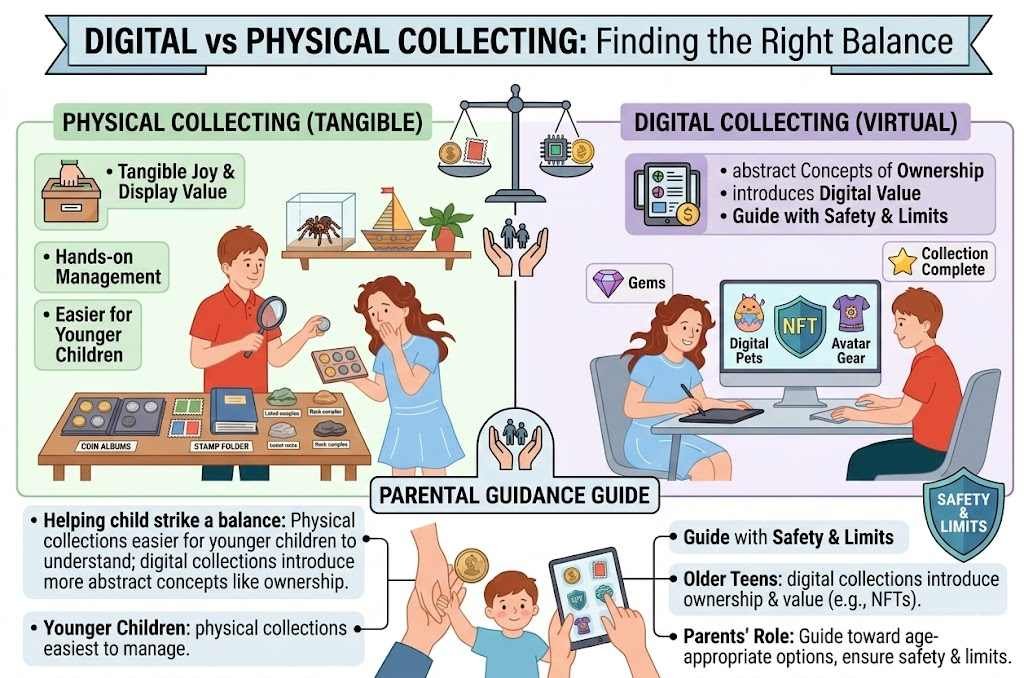
Today’s children are growing up in both physical and digital worlds, and collecting exists in both spaces. While physical collectibles offer tangible joy and display value, digital collections like in-game items or NFTs (for older teens) are also gaining popularity.
Helping your child strike a balance is important. Physical collections are easier for younger children to manage and understand, while digital collections can introduce more abstract concepts like ownership and value. Parents should guide children toward age-appropriate options and ensure that any digital collecting is done safely and within limits.
Quick Guide: Supporting a Healthy Collecting Habit
| Area | What to Encourage | Why It Matters |
|---|---|---|
| Budgeting | Set a monthly spending limit | Teaches money management |
| Research | Compare items before buying | Builds critical thinking |
| Organisation | Use shelves, boxes, or trackers | Encourages responsibility |
| Social Interaction | Trade or discuss with friends | Develops communication skills |
| Patience | Wait for rare or desired items | Reduces impulsive behavior |
| Care & Maintenance | Keep items clean and safe | Instills long-term value awareness |
Final Conclusion
When a hobby becomes a life skill, it is no longer just about the objects being collected; it is about the person your child is becoming in the process. Collecting nurtures curiosity, discipline, and a sense of ownership that few other hobbies can match.
By guiding your child with gentle boundaries and genuine interest, you turn collecting into something far more meaningful than simply acquiring items. It becomes a journey of learning, bonding, and personal growth.
In the end, the real value of collecting is not measured by how rare or expensive the items are, but by the memories created, the skills developed, and the confidence your child gains along the way.