


Buying natural hair in bulk is about consistency, not only price. A smart choice depends on cuticle alignment, texture behaviour, shedding level, density, and the way the hair responds after washing. For UK salons, mobile stylists, and online resellers, a well-planned bulk order can stabilise stock, reduce per-bundle cost, and create a reliable product line that clients return for week after week.
Bulk buying is useful only when quality can be repeated from one order to the next. Before any large purchase, it is sensible to test samples, wash one bundle, and compare reliable raw hair vendors’ wholesale options that can support steady stock needs across multiple seasons.
What Makes Bulk Natural Hair Different
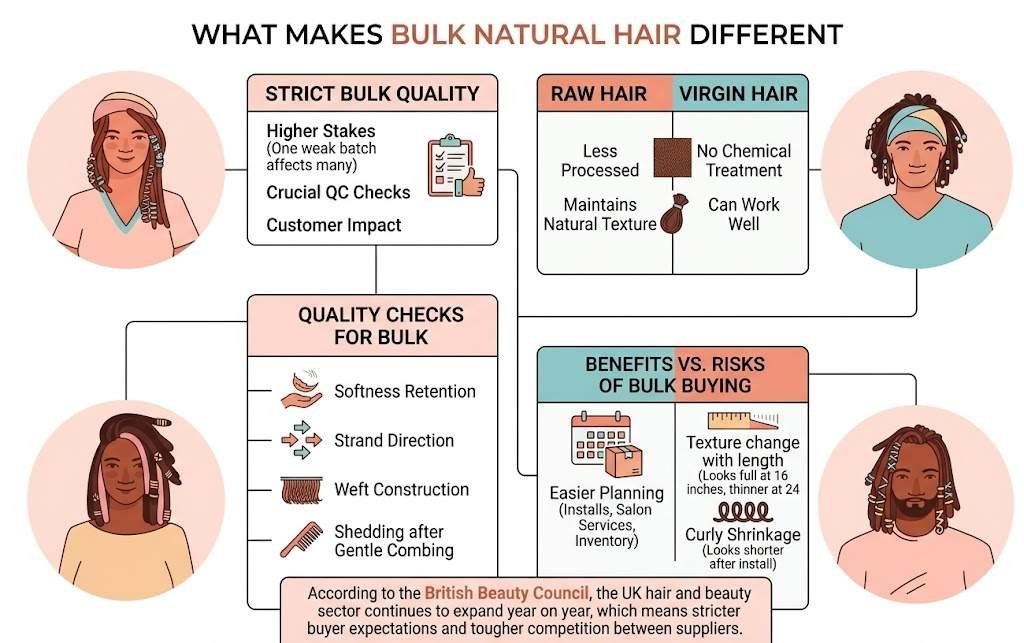
Bulk orders are judged more strictly because one weak batch can affect several clients or resale customers at once. With human hair bundles, check softness retention, strand direction, weft construction, and shedding after gentle combing. Raw hair often keeps a more natural texture because it is less processed, while virgin hair can also work well when the strands have not been chemically treated.
The benefit of bulk buying is easier planning for installs, salon services, and inventory management. The risk is higher too. A texture that looks full at 16 inches may appear thinner at 24 inches, and curly hair often looks much shorter after install because of natural shrinkage. According to the British Beauty Council, the UK hair and beauty sector continues to expand year on year, which means stricter buyer expectations and tougher competition between suppliers.
Types of Natural Hair You Will See in Bulk Listings
Not every bundle labelled “natural” is the same. Knowing the categories helps you avoid paying premium prices for stock that has been processed more than the listing suggests.
Raw Hair
Raw hair is collected directly from a single donor and is usually unsteamed and unprocessed. The cuticles run in one direction, which reduces tangling. It tends to come in natural straight, wavy, and curly textures, often sourced from South Indian, Vietnamese, Burmese, or Cambodian donors.
Virgin Hair
Virgin hair has not been chemically treated with dye, perm, or relaxer, but it may have been steam-processed to create uniform curl patterns. It performs well for clients who want styling flexibility without aggressive chemical modification.
Remy Hair
Remy hair has aligned cuticles but may have been mildly processed. It is the most common category in the UK wholesale market and offers a balance between price and longevity for everyday salon use.
| Hair Type | Typical Lifespan | Best For | Price Indicator (per bundle, GBP) |
| Raw Hair | 2 to 3 years with care | Custom colour, long wear, premium clients | £80 to £180 |
| Virgin Hair | 1 to 2 years | Styled looks, varied curl patterns | £55 to £120 |
| Remy Hair | 6 to 12 months | Everyday wear, budget-friendly clients | £30 to £75 |
| Non-Remy Hair | 2 to 4 months | Short-term protective styles | £15 to £35 |
Prices vary by length, density, and supplier reputation. A useful general guide on consumer protection for cosmetic and beauty products is published by Citizens Advice, which is helpful for resellers managing UK customer returns and quality complaints.
How to Check a Wholesale Hair Supplier
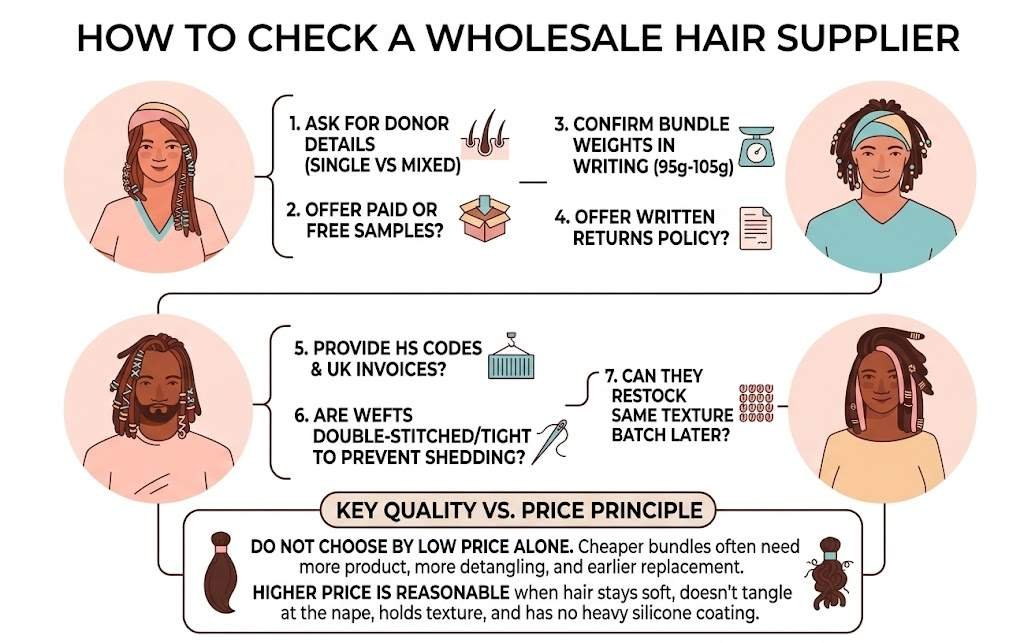
A serious wholesale hair vendor should explain hair origin, bundle weight, texture matching, and return conditions clearly. Vague claims like “premium quality” are not enough. Ask how the hair behaves after washing, whether the same texture can be reordered later, and how the supplier handles a defective batch.
Use the checklist below when evaluating any new supplier:
- Do they share single-donor or mixed-donor sourcing details?
- Will they send paid or free samples before a large order?
- Are bundle weights confirmed in writing (typically 95g to 105g per bundle)?
- Do they offer a written returns policy for defective stock?
- Are wefts double-stitched or machine-tight to prevent shedding?
- Can they restock the same texture batch later for repeat clients?
- Do they provide HS codes and proper invoices for UK customs clearance?
Do not choose by low price alone. Cheaper bundles may work for temporary styling, but they often need more product, more detangling, and earlier replacement. A higher price is reasonable when the hair stays soft, tangles less at the nape, and holds its texture without heavy silicone coating.
Raw Hair: When It Makes the Most Sense
Raw hair wholesale suits buyers who want long-term wear, custom colouring, and a natural finish. Since raw hair is usually less processed, it tends to react better to heat styling and washing. Even so, it is not maintenance-free. Long lengths and curly textures need moisture, careful detangling, and lower heat settings to last well.
A simple sample test is enough before scaling the order. Wash one bundle, let it air dry, brush from ends to roots, and check shedding. If the bundle loses softness quickly or tangles heavily after a single wash, the bulk order will likely create problems for clients later.
The National Hair and Beauty Federation publishes industry guidance for UK salons handling extensions, plus training resources that can help staff identify quality hair before stocking it on shelves or behind the chair.
UK Considerations Bulk Buyers Often Miss
UK bulk buyers face a few extra factors compared with other markets. Ignoring them can quickly erase the savings of buying in bulk.
Import Duty and VAT
Most natural hair imported into the UK is subject to standard customs duty plus 20 percent VAT. Always confirm whether your supplier ships DDP (delivery duty paid) or DAP (delivery at place). Full guidance on rates and procedures is available on the HMRC import portal at gov.uk.
Trading Standards and Accurate Labelling
If you resell hair in the UK, you must describe the product accurately. Calling Remy hair “raw” or labelling steam-processed bundles as “virgin” can trigger consumer complaints under the Consumer Protection from Unfair Trading Regulations 2008.
Storage Conditions
UK humidity varies sharply between seasons. Store bundles in breathable cotton bags or sealed boxes with silica gel sachets. Avoid plastic wrap for long-term storage because trapped moisture can produce musty odours and dull the cuticle.
Allergy and Patch Testing
Some clients react to processing chemicals or coatings used on lower-grade hair. Patch testing 48 hours before installation is good practice and is consistent with general allergy guidance from the NHS.
Sample Testing Process Before Scaling Your Order
A structured test removes guesswork. Run every supplier sample through the steps below before placing a four or five-figure bulk order.
| Step | Test Name | What to Do | What to Look For |
| 1 | Visual Check | Inspect weft, length, and colour under daylight | Even weft, no glue patches, consistent colour |
| 2 | Comb Test | Detangle from tip to root with a wide-tooth comb | Minimal shedding, no matting at the weft |
| 3 | Wash Test | Wash with sulphate-free shampoo and air dry | Cuticle stays smooth, no chemical smell |
| 4 | Heat Test | Apply heat at 180 degrees Celsius briefly | No burnt smell, holds shape after cooling |
| 5 | Bleach Test (raw only) | Lift one strand to a lighter shade | Even lift, no breakage or melting |
| 6 | Wear Test | Install on a mannequin or test client for 7 days | Holds curl, low shedding, soft to touch |
A bundle that fails two or more steps is not suitable for a bulk order, no matter how attractive the per-unit price looks.
Common Mistakes When Buying Natural Hair in Bulk
Most buying problems appear when the decision is based on a photo or a price list instead of real testing. The list below covers the mistakes that most often cost UK buyers money.
- Choosing only by length instead of density, texture, and final install style.
- Ignoring shrinkage in curly and wavy textures (a 20-inch curly bundle may install at around 14 inches).
- Ordering large quantities before testing washing, heat, and shedding on a sample.
- Using heavy oils that make extensions greasy and reduce natural movement.
- Trusting product photos that may be edited, filtered, or borrowed from another supplier.
- Skipping a written agreement on bundle weight, batch consistency, and refund terms.
- Mixing batches from different suppliers in one client install (textures rarely match exactly).
These mistakes are easier to avoid when the first order is treated as a quality check rather than a routine purchase.
Another issue is mixing B2B and retail logic. One end customer may accept a slight variation, but salons and resellers need predictable stock month after month. For bulk buyers, stable quality and clear contractual terms often matter far more than the lowest quoted price.
Pricing Expectations for UK Wholesale Buyers
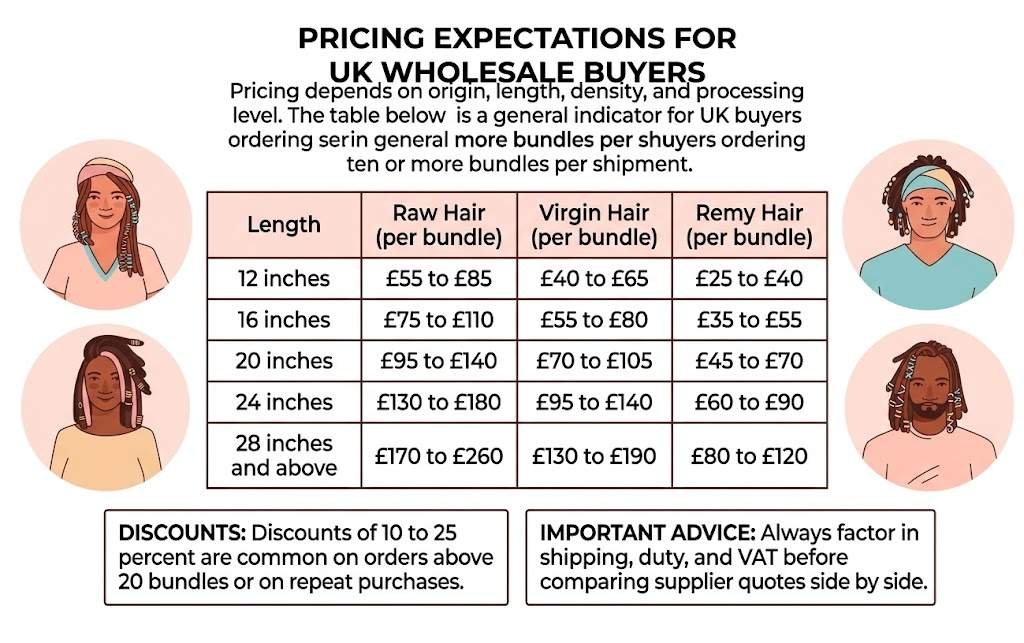
Pricing depends on origin, length, density, and processing level. The table below is a general indicator for UK buyers ordering ten or more bundles per shipment.
| Length | Raw Hair (per bundle) | Virgin Hair (per bundle) | Remy Hair (per bundle) |
| 12 inches | £55 to £85 | £40 to £65 | £25 to £40 |
| 16 inches | £75 to £110 | £55 to £80 | £35 to £55 |
| 20 inches | £95 to £140 | £70 to £105 | £45 to £70 |
| 24 inches | £130 to £180 | £95 to £140 | £60 to £90 |
| 28 inches and above | £170 to £260 | £130 to £190 | £80 to £120 |
Discounts of 10 to 25 percent are common on orders above 20 bundles or on repeat purchases. Always factor in shipping, duty, and VAT before comparing supplier quotes side by side.
Building a Long-Term Supplier Relationship
A reliable wholesale relationship is more valuable than chasing the lowest price each time you reorder. Once you find a supplier whose stock passes your tests, place steady repeat orders so they prioritise your batch consistency. Communicate clearly about texture preferences, packaging, lead times, and seasonal demand. Pay invoices promptly to keep priority status during peak months.
Industry events and trade shows such as Salon International in London give UK buyers a chance to meet vendors in person, inspect physical stock, and compare textures side by side before opening a wholesale account.
Final Checklist Before You Place a Bulk Order
- Have you washed and combed at least one sample bundle?
- Is bundle weight confirmed in writing on the proforma invoice?
- Is the supplier transparent about hair origin and processing method?
- Have you calculated the full landed cost (price plus shipping plus duty plus VAT)?
- Do you have a written returns and replacement clause?
- Can the supplier restock the same texture batch later if needed?
- Have you compared at least three suppliers before committing?
- Do you have safe, dry, breathable storage ready for the shipment?
Conclusion
Natural hair in bulk can be a smart purchase when the supplier is transparent, and the buyer tests quality before scaling the order. Raw hair offers longevity and a natural look, but it requires proper care. Virgin hair extensions can also perform well for clients who want styling flexibility without aggressive processing. Remy hair remains a strong middle option for everyday salon use, especially for clients who refresh their installs every few months.
The safest approach is to start with samples, compare textures after washing, and choose a supplier that keeps quality consistent across multiple orders. This is what makes a bulk purchase practical for UK salons, mobile stylists, resellers, and anyone who needs dependable human hair bundles in steady supply.
Disclaimer
This article is for general information only and does not constitute professional, legal, financial, or medical advice. Pricing, import regulations, allergy guidance, and supplier terms change over time. Always confirm current rates with HMRC, Citizens Advice, the NHBF, and your chosen supplier before placing a bulk order. Patch testing and professional consultation are recommended before any extension service.