


Searching for the best protein powder for female buttocks growth can lead to confusing advice. Some articles make it sound as if a powder can change one body area on its own. That is not how muscle development works. Glutes grow stronger when they receive a clear training signal, enough food, enough protein, and enough recovery time.
For women in the UK, the practical challenge is often not knowledge. Many already know they need to train consistently and eat better. The real issue is fitting protein into a normal day of work, study, commuting, family tasks, and gym sessions. That is where protein powder can help. It is not a shortcut, but it can be a useful tool when whole food meals are difficult to manage.
Glute Growth Depends on the Training Signal First
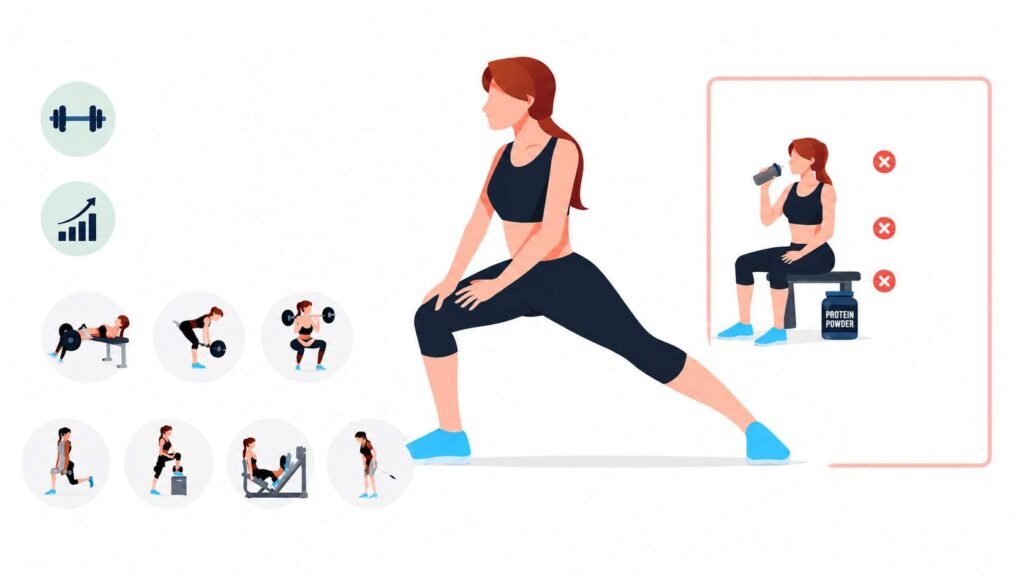
Protein only becomes useful for glute development when the muscles have a reason to adapt. That reason comes from progressive resistance training. Hip thrusts, Romanian deadlifts, squats, lunges, step-ups, leg presses, and cable movements can all help when they are performed with good control and gradually increased over time.
A common mistake is using protein powder while repeating the same light workout for months. For example, someone may drink a shake after every session but keep using the same hip thrust weight and the same number of reps. In that case, the powder is not the limiting factor. The missing piece is progression.
Why the Post-Workout Shake Is Useful but Not Magical
A shake after training can be useful because it gives the body the amino acids needed for muscle repair. The International Society of Sports Nutrition position stand explains that resistance exercise and protein intake work together to support muscle protein synthesis.
The key point is balance. A shake after a glute session can support recovery, especially if the next meal is several hours away. But it cannot fix poor sleep, low calories, weak training effort, or inconsistent meals across the rest of the day.
A Real Example From a Busy Training Week
Imagine a woman training her lower body three evenings per week after work. She leaves the office at 5:30 pm, trains at 6:30 pm, and gets home close to 8:30 pm. Without planning, dinner may be delayed or too small. A protein shake after training helps bridge that gap.
In this situation, the shake is doing a specific job. It is not promising instant body change. It is helping her recover from a hard session and stay consistent across the week.
The Right Protein Powder Solves a Specific Problem
The best protein powder is not always the most expensive one. It is the one that solves the actual gap in the diet. Before buying, the question should be simple: where is protein currently missing?
Some women miss protein at breakfast. Some eat very little at lunch. Some train late and delay dinner. Some follow vegetarian or vegan diets and need a more planned protein structure. Each case needs a different solution.
Protein Per Serving Should Match the Gap
A useful protein powder usually provides around 20 to 30 grams of protein per serving. That amount fits well after training or as part of a higher protein meal. It also keeps the serving realistic.
For example, if lunch only contains 10 grams of protein, adding a 25-gram shake later may help. But if breakfast, lunch, dinner, and snacks already contain enough protein, extra scoops may add calories without improving results.
Label Should Be Easy to Understand
A good product should have a clear nutrition panel. The Food Standards Agency label guidance is useful for understanding calories, sugar, fat, and salt on packaged foods.
When checking a powder, look at protein per serving, calories per serving, sugar content, allergens, sweeteners, and serving size. A product with a long list of unnecessary extras is not automatically better. For glute training, the core purpose is still protein support.
Whey, Casein, and Plant Protein Suit Different Women
There is no single protein type that works best for every woman. The right choice depends on digestion, diet, budget, training time, and personal preference.
Whey Is Practical for Post-Workout Use
Whey protein is popular because it is complete, convenient, and usually mixes easily. It suits many women who tolerate dairy and want a simple post-workout shake.
Whey concentrate is often more affordable. Whey isolate is usually lower in lactose and may feel lighter for women who struggle with dairy digestion. The best choice is the one you can use consistently without discomfort.
Casein Works Better for Long Gaps
Casein digests more slowly than whey. It can be useful in the evening, especially for women who train late or feel hungry before bed. Mixed into yoghurt or made into a thicker shake, it can support protein intake overnight.
The benefit is practical rather than dramatic. Casein does not target the glutes directly. It helps maintain a steady protein intake when the daily eating pattern has a long gap.
Plant Protein Needs Closer Checking
Plant-based protein can work well for vegetarian and vegan diets. Pea, soy, rice, and blended plant proteins are common options. The main thing is to check the protein amount per serving and whether the product provides a strong amino acid profile.
Some plant powders contain more fibre and thickeners, which can reduce protein density per scoop. That does not make them poor products, but it means the buyer should compare servings carefully.
UK Buyers Should Be Careful With Claims
The UK supplement market includes many products with strong marketing language. Words like sculpt, tone, lean, and shape can sound convincing, but they do not prove quality.
The GOV.UK guidance on nutrition and health claims makes clear that food and supplement claims must follow rules, and products cannot claim or imply that they treat, prevent, or cure disease.
Choose Evidence Over Transformation Language
A trustworthy protein powder should not promise guaranteed glute growth, hormonal changes, rapid fat loss, or medical benefits. Muscle development is influenced by training, food intake, genetics, sleep, recovery, and time.
This is also where brand choice matters. A product from MLA Protein can be considered as part of a structured nutrition plan, but the decision should still come down to the label, ingredients, protein amount, digestion, and how it fits the user’s diet.
Testing Matters for Serious Training
Women who compete in sports should be especially careful with supplements. The Informed Sport programme helps athletes identify products that have been tested for banned substances.
Even for non-competing gym users, third-party testing can be a useful trust signal. It shows the brand has taken extra steps beyond packaging and marketing.
Daily Protein Intake Matters More Than Perfect Timing
Protein timing can help with routine, but daily intake matters more. The ISSN position stand suggests that many exercising individuals aiming to build or maintain muscle may benefit from a daily protein intake of around 1.4 to 2.0 grams per kilogram of body weight.
That means a 60 kg woman may aim for around 84 to 120 grams per day. A 70 kg woman may aim for around 98 to 140 grams per day. These figures are not personal medical advice, but they give a useful planning range for active women.
Whole Foods Should Still Carry Most of the Diet
Protein powder should fill gaps, not replace proper meals. The NHS Eatwell Guide recommends a balanced diet that includes protein foods such as beans, pulses, fish, eggs, meat, and other sources.
A strong day of eating might include Greek yoghurt and oats at breakfast, chicken or tofu at lunch, a protein shake after training, and salmon, eggs, lentils, or lean meat at dinner. This provides protein plus other nutrients that powders do not fully replace.
A Before and After Protein Pattern
Before: coffee for breakfast, a small salad at lunch, a shake after training, and pasta for dinner.
This person may believe she is eating for muscle growth, but the day is still uneven.
After: Greek yoghurt with oats at breakfast, tuna or chickpeas at lunch, a shake after training, and pasta with lean mince, tofu, or lentils at dinner.
The shake stays, but the whole diet becomes more supportive.
Carbohydrates and Calories Still Affect Glute Progress
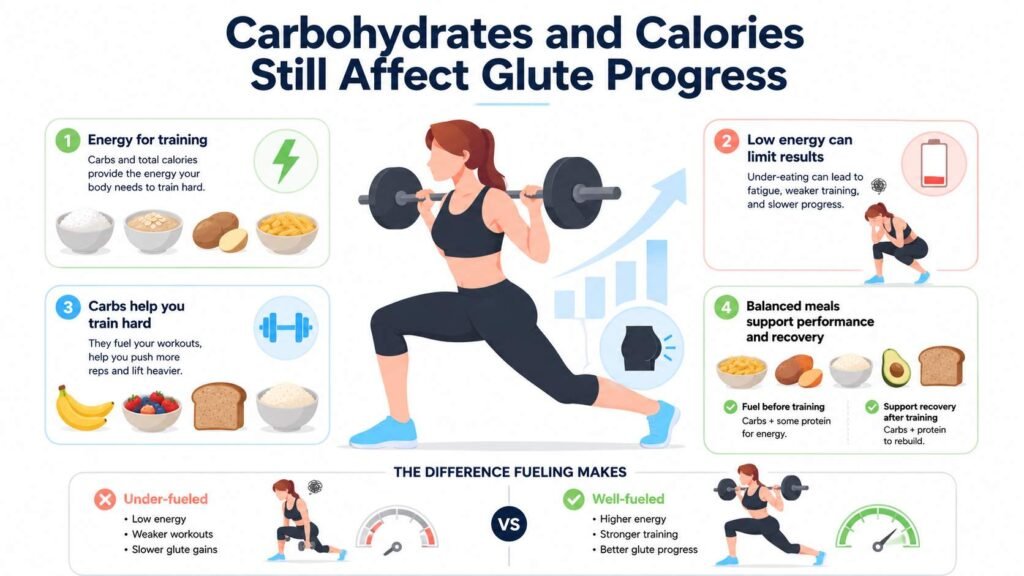
Many women focus heavily on protein but forget that training performance needs energy. If calories are too low, the body may struggle to build muscle. If carbohydrates are too low, lower-body sessions can feel flat.
The British Dietetic Association’s sport and exercise guidance highlights the role of good food choices in supporting training, recovery, and performance.
Low Energy Intake Can Limit Results
If someone trains the glutes hard but eats very little because she wants a fast visual change, progress may slow. Low energy intake can reduce training intensity, recovery quality, and consistency.
A simple sign of repeated poor performance. If hip thrusts, squats, or lunges feel worse each week instead of stronger, the issue may be under-eating rather than the wrong supplement.
Carbs Help You Train Hard Enough
Carbohydrates are not the enemy of glute training. They help fuel demanding sessions. Rice, oats, potatoes, pasta, fruit, and whole-grain bread can all support training energy.
A protein shake after training may help repair. A balanced meal before training helps create the performance that makes repair necessary.
When to Speak to a Professional
Most healthy adults can use protein powder sensibly, but some people should get advice first. This includes anyone under 18, pregnant or breastfeeding women, people with kidney disease, people recovering from an eating disorder, and anyone using regular medication.
For tailored support, UK readers can use the Sport and Exercise Nutrition Register to find qualified professionals with sports nutrition expertise.
Supplements Should Not Replace Medical Advice
If fatigue, poor recovery, digestive problems, missed periods, dizziness, or unusual pain are present, the answer is not simply more protein. These signs deserve proper support from a GP, registered dietitian, or qualified sports nutrition professional.
Protein powder is a food supplement. It should support a healthy plan, not cover up a problem.
Final Buying Decision
The best protein powder for female glute growth is the one that supports the full process: progressive training, enough total food, adequate daily protein, good digestion, and reliable recovery.
Choose whey if you want a simple post-workout option and tolerate dairy. Choose whey isolate if regular whey feels heavy. Choose casein if evening hunger or long gaps between meals are the issue. Choose a plant-based blend if you avoid dairy or follow a vegan diet.
A protein powder cannot grow one body part by itself. But when it helps you meet your daily protein target, recover well, and train consistently, it can become a useful part of a serious glute strength plan.