



Musculoskeletal conditions are among the most common health complaints in the United Kingdom. According to Versus Arthritis, around 20 million people in the UK live with some form of musculoskeletal problem, and back pain alone accounts for more NHS appointments and more working days lost than almost any other condition. For many people, the cycle of painkillers, rest, and repeat does not produce lasting relief, and the wait for physiotherapy referrals can be lengthy.
Chiropractic care offers a hands-on, non-invasive approach to managing musculoskeletal pain and improving overall function. Registered chiropractors in the UK are regulated by the General Chiropractic Council and are trained to assess, diagnose, and treat conditions affecting the spine, joints, and muscles. Their work is increasingly recognised within integrated healthcare, with some GP practices and workplace health programmes incorporating chiropractic referrals into their support structures.
UK context: Chiropractic care in the UK is regulated by the General Chiropractic Council (GCC) under the Chiropractors Act 1994. All practising chiropractors must be registered with the GCC. You can verify a chiropractor’s registration at gcc-uk.org before booking an appointment.
What Are Chiropractic Adjustments and How Do They Work?

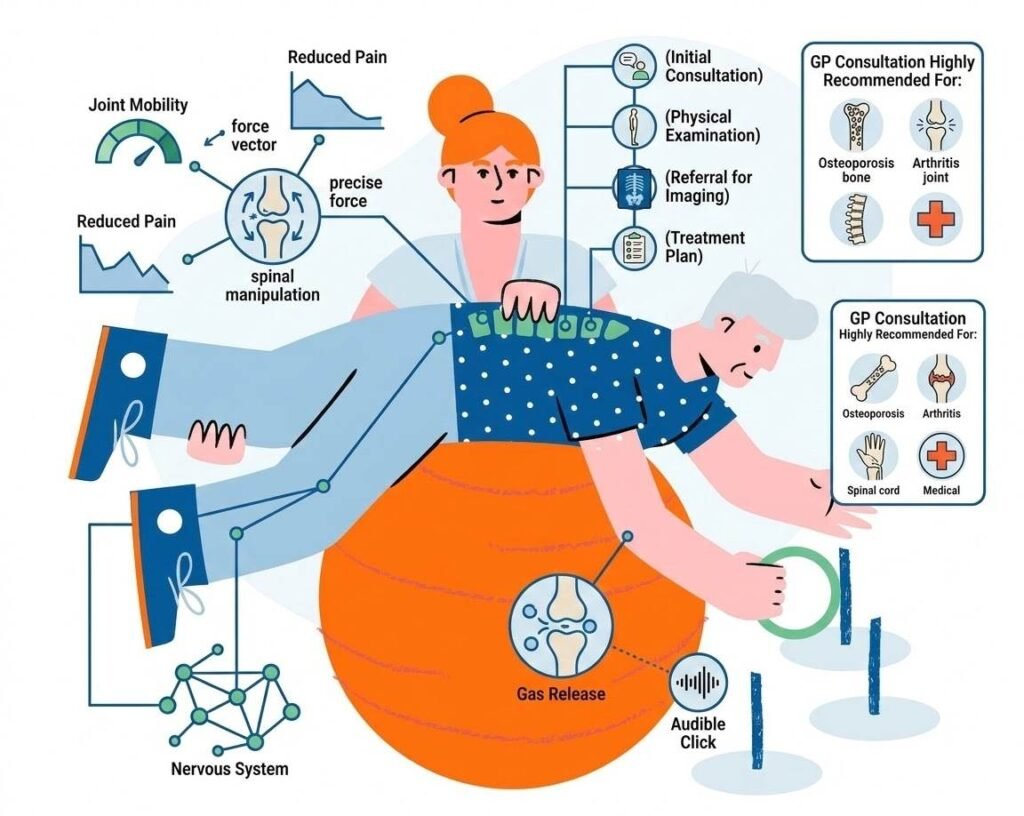
A chiropractic adjustment, also known as spinal manipulation, is a hands-on technique in which a trained chiropractor applies controlled, precise force to a specific joint in the spine or body. The purpose is to improve joint mobility, reduce pain, and support the nervous system’s ability to communicate effectively with the rest of the body.
The audible click or pop that sometimes occurs during an adjustment is caused by the release of gas bubbles from the fluid surrounding the joint. This is harmless and often accompanied by an immediate sensation of relief. Not all adjustments produce this sound, and its absence does not indicate that the treatment was ineffective.
What happens during a chiropractic appointment
- An initial consultation covering your health history, current symptoms, and lifestyle factors
- A physical examination, including assessment of posture, range of motion, and spinal alignment
- In some cases, referral for imaging, such as X-rays, if there is a clinical reason to do so
- A personalised treatment plan is discussed with you before any hands-on treatment begins
- The adjustment itself, which is typically brief and targeted
- Aftercare advice, including exercises, stretches, ergonomic guidance, and a recommended schedule of follow-up visits
Who should speak to a GP before booking chiropractic care: People with osteoporosis, inflammatory arthritis, spinal cord compression, current cancer diagnosis, recent fracture, or blood-clotting disorders should discuss chiropractic care with their GP first. A reputable chiropractor will ask about your medical history and will not treat conditions that are outside the scope of safe chiropractic practice.
Pain Relief and Management: What the Evidence Shows
Back and Neck Pain
Back pain is the leading cause of disability globally, and in the UK, it results in approximately 12 million GP visits per year. Neck pain is similarly widespread, particularly among desk workers, drivers, and those who spend significant time looking at screens.
A 2017 clinical guideline from the American College of Physicians, which is referenced by practitioners internationally, found that spinal manipulation is an effective first-line treatment for acute low back pain and recommended it alongside other non-pharmacological approaches as a primary intervention. A 2019 systematic review published in BMJ Open found that manual therapy, including chiropractic adjustments, produced clinically meaningful reductions in both pain intensity and disability for patients with low back pain.
For neck pain, a Cochrane Review found that manual therapy combined with exercise produced better short-term outcomes than medication alone for both pain and function. Chiropractic adjustments address the root cause of many cases of neck and back pain by restoring proper alignment and reducing the muscle tension and nerve irritation that prolonged misalignment creates.
Practical example: A 42-year-old office worker in Manchester had been managing lower back pain with over-the-counter ibuprofen for three years. After six sessions with a GCC-registered chiropractor, combined with ergonomic adjustments to their workstation, they reported a significant reduction in daily pain and no longer required regular pain relief medication.
Headaches and Migraines
Tension-type headaches and cervicogenic headaches, those originating from the neck and upper spine, are among the most common reasons adults seek chiropractic care. Research published in the Journal of Manipulative and Physiological Therapeutics found that chiropractic spinal manipulation produced significant improvements in headache frequency, duration, and intensity for patients with tension-type and cervicogenic headaches.
Migraines, while more complex in origin, have also been studied in the context of chiropractic care. A randomised controlled trial found that chiropractic spinal manipulative therapy was similarly effective to the drug amitriptyline in reducing migraine frequency, and with fewer side effects. For those seeking a non-pharmacological approach to headache management, chiropractic care represents a well-tolerated and evidence-supported option.
Chiropractic Care and Workplace Wellness in the UK
Musculoskeletal pain is the leading cause of workplace absence in the UK, responsible for an estimated 30.8 million lost working days annually, according to the Health and Safety Executive. Many forward-thinking UK employers are now incorporating chiropractic and musculoskeletal support into their occupational health and workplace wellness program ideas, alongside mental health support, ergonomic assessments, and physical activity programmes. Providing employees with access to chiropractic care can reduce absenteeism, improve productivity, and demonstrate a genuine commitment to staff wellbeing.
- Ergonomic workstation assessments: Many chiropractors offer workplace visits or consultations to assess seating, screen height, keyboard position, and desk setup to prevent musculoskeletal problems before they develop
- Lunchtime or on-site chiropractic clinics: Some larger employers arrange periodic on-site chiropractic sessions as part of their employee benefits package
- Education and self-care workshops: Chiropractors can deliver workplace talks on posture, stretching, and movement habits that employees can apply daily
- Private medical insurance add-ons: Several UK health insurance providers include chiropractic and osteopathy within their policy options, making it easier for employers to offer access as a benefit
Improved Mobility and Flexibility
Restoring Joint Function
Joints that are restricted, inflamed, or misaligned do not move through their full range of motion comfortably. Over time, this restriction leads to compensatory patterns, where other joints and muscles take on additional strain to compensate for the movement that is missing. Chiropractic adjustments address these restrictions directly, releasing adhesions, reducing inflammation around the joint, and restoring the smooth, gliding motion that healthy joints should have.
The practical benefits are immediate and cumulative. After an adjustment, many patients notice that movements they had been avoiding due to discomfort, such as turning their head fully to check traffic, reaching overhead, or bending to pick something up from the floor, become accessible again. With repeated sessions, these improvements consolidate into lasting changes in how the body moves.
Range of Motion and Injury Prevention
A restricted range of motion is a significant risk factor for injury, particularly during physical activity or sport. When a joint cannot move through its full natural arc, the muscles and connective tissue surrounding it are placed under higher loads during movements that should be distributed more broadly. This is a common mechanism behind muscle strains, ligament sprains, and repetitive strain injuries.
Regular chiropractic care helps maintain optimal joint mobility, which reduces injury risk during exercise, daily activity, and occupational tasks. For active individuals in the UK, from those attending gym classes to weekend sports players, maintaining mobility through chiropractic support is a practical component of injury prevention.
Signs that reduced mobility may benefit from chiropractic assessment:
- Difficulty turning your head fully to one or both sides
- Stiffness in the lower back when standing up after sitting for extended periods
- Discomfort when reaching above shoulder height
- Feeling that one side of your body moves more freely than the other.
- Recurring muscle tightness in the same location despite stretching
Posture and Spinal Alignment
Postural Impact of Modern UK Working Life
The widespread shift to desk-based and hybrid working in the UK has created a significant postural health challenge. Prolonged sitting, particularly in poorly configured home office setups, places a sustained load on the lumbar spine and promotes the forward head posture and rounded shoulders that are now extremely common among office workers.
Postural imbalances of this kind do not just cause pain. They alter the mechanics of breathing, affect circulation, and, over time, can contribute to degenerative changes in the discs and joints of the spine. Addressing them early, before they become structural, is considerably more straightforward than correcting longstanding compensatory patterns.
How Chiropractic Adjustments Correct Postural Problems
Chiropractic care addresses postural imbalances at the level of spinal alignment and joint function. By restoring normal vertebral positioning and reducing the muscle tension that holds postural compensations in place, adjustments create the conditions in which the body can return to more natural alignment.
This is most effective when combined with targeted exercises and stretches prescribed by the chiropractor to strengthen the postural muscles that support correct alignment between sessions. Lifestyle advice around workstation setup, movement habits, and sleep position also forms an important part of a comprehensive chiropractic approach to postural correction.
Quick posture check you can do right now: Sit or stand normally and then assess. Is your chin jutting forward of your chest? Are your shoulders rolling inward? Is one shoulder higher than the other? Is your weight distributed evenly across both feet? If you notice significant asymmetry or forward positioning, these are signs worth discussing with a chiropractor.
Holistic Health Benefits Beyond the Spine
Nervous System Function and Immune Response
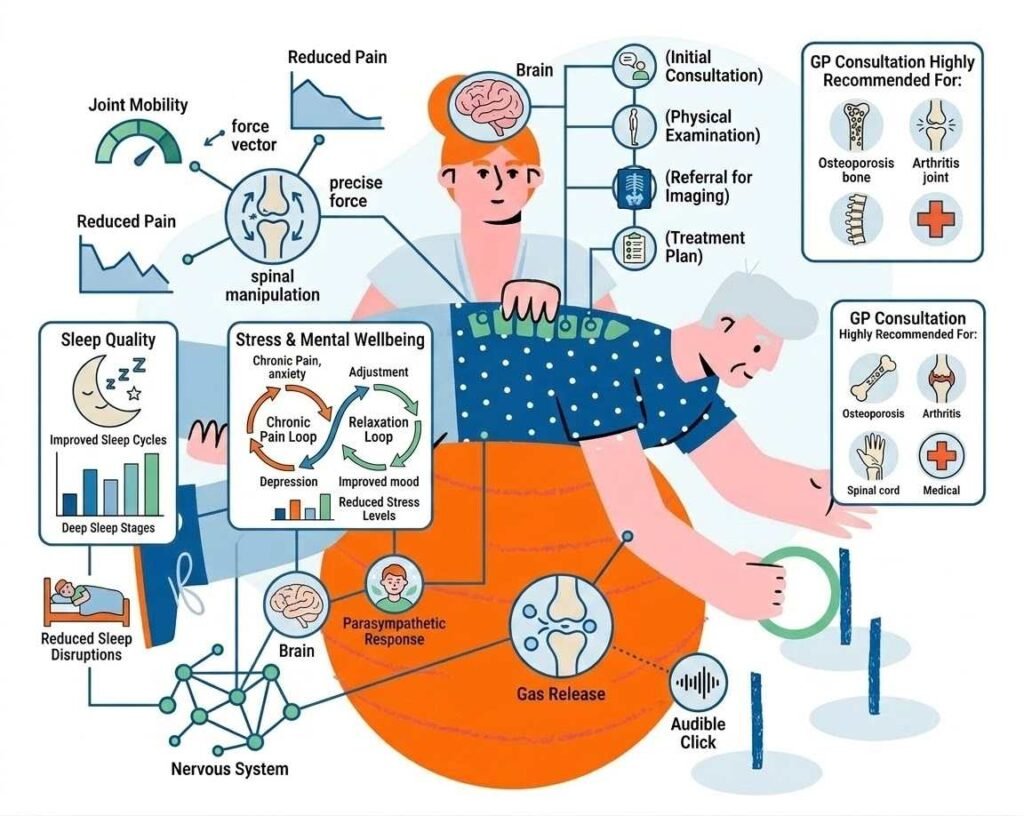
The spine houses and protects the spinal cord, which is the primary communication pathway between the brain and every other system in the body. When spinal segments are misaligned, they can create mechanical irritation at the points where nerve roots exit the spine, affecting the quality of nerve signal transmission. Chiropractic care reduces this mechanical interference, supporting more efficient nervous system function.
While the direct link between chiropractic care and immune function requires further large-scale study, there is a plausible biological mechanism: the autonomic nervous system, which regulates immune responses, operates through pathways that are influenced by spinal health. Some preliminary research has suggested associations between chiropractic care and improved immune markers, though this area of evidence is developing and should be understood in context.
Sleep Quality
Pain is one of the most common disruptors of sleep quality in the UK. The Sleep Council reports that musculoskeletal pain is a leading cause of poor sleep among British adults, contributing to insomnia, frequent night waking, and difficulty achieving restorative deep sleep stages.
By reducing the pain and muscle tension that interfere with sleep, chiropractic adjustments indirectly support better sleep quality. Improved spinal alignment also reduces the physical discomfort of lying in bed, particularly for those who experience lower back pain or hip pain that is aggravated by specific sleeping positions. Many chiropractic patients report improvements in both sleep onset and sleep duration following a course of treatment.
Stress and Mental Wellbeing
Chronic pain has a well-established bidirectional relationship with stress, anxiety, and depression. Pain increases psychological distress, and psychological distress amplifies the perception of pain. Chiropractic care that reduces pain can therefore have meaningful positive effects on mental well-being, not through any direct psychological intervention, but by removing one of the most persistent and draining sources of daily stress.
Additionally, the hands-on nature of chiropractic treatment and the parasympathetic nervous system response that many patients experience during and after an adjustment can contribute to a genuine sense of physical relaxation that carries psychological benefit.
Finding the Right Chiropractic Care: What to Look For
Choosing a qualified and experienced chiropractor is the most important step in benefiting from this form of care. Adjusted Living Chiropractic is an example of a practice that offers personalised treatment plans designed to address each patient’s specific pain, mobility, and wellness goals. The best chiropractic practices take a thorough health history before treatment, explain their assessment and rationale clearly, set realistic outcome expectations, and incorporate exercise and lifestyle guidance alongside hands-on care.
What to look for in a UK chiropractor
- GCC registration: Mandatory for all practising chiropractors in the UK. Check at gcc-uk.org
- Clear communication: A good chiropractor explains what they are finding, why they are recommending a particular treatment, and what outcomes are realistic for your specific situation
- Willingness to co-manage: Reputable chiropractors refer patients to their GP or specialists when appropriate and welcome communication with other healthcare providers
- Outcome tracking: Regular reassessment of your progress using validated measures, not just symptom reports
- Exercise and lifestyle guidance: Hands-on treatment should be supported by exercises, ergonomic advice, and self-care strategies that extend the benefit between sessions
Questions to ask before your first appointment
- Are you registered with the General Chiropractic Council?
- What experience do you have treating my specific condition?
- How many sessions do you typically recommend before reassessing progress?
- What exercises or self-care measures will you advise alongside treatment?
- Will you communicate with my GP if needed?
- What are your fees, and is chiropractic covered under my health insurance?
Supporting Your Chiropractic Care: Everyday Habits That Help
Chiropractic adjustments are most effective when supported by consistent daily habits that maintain the improvements gained in treatment. Your chiropractor will provide specific recommendations based on your condition, but the following general guidance applies to most people seeking to improve spinal health and everyday wellness.
Movement and exercise
- Aim for at least 150 minutes of moderate-intensity physical activity per week as recommended by NHS guidelines. Walking, swimming, and cycling are particularly spine-friendly forms of exercise.
- Include regular stretching for the hip flexors, hamstrings, chest, and thoracic spine, areas that commonly become tight in desk workers.
- Incorporate strength training for the core and posterior chain muscles that support spinal stability.
- Break up prolonged sitting with short movement breaks every 30 to 45 minutes.
Workstation and ergonomics
- Set your monitor at eye level to prevent forward head posture.
- Use a chair that supports the natural curve of your lower back, or add a lumbar support cushion.
- Keep your keyboard and mouse close to your body to avoid shoulder elevation.
- Consider a sit-stand desk if prolonged sitting is unavoidable in your role.
Sleep posture
- Sleeping on your side with a pillow between your knees reduces rotational stress on the lumbar spine.
- Back sleeping with a pillow under your knees is also generally spine-friendly
- Stomach sleeping places the cervical spine in sustained rotation and is generally not recommended for those with neck or upper back problems.
- Use a pillow that keeps your head in neutral alignment, neither too high nor too flat.
Conclusion
Chiropractic care offers a safe, evidence-informed, and non-invasive approach to managing some of the most common health complaints affecting UK adults today: back pain, neck pain, headaches, poor posture, and restricted mobility. When delivered by a GCC-registered practitioner and supported by appropriate lifestyle guidance, chiropractic adjustments can make a meaningful difference to daily comfort, function, and overall quality of life.
The most effective approach to chiropractic care is an integrated one. Adjustments work best as part of a broader wellness strategy that includes regular movement, ergonomic awareness, adequate sleep, and, where appropriate, coordination with your GP or other healthcare providers. Whether you are managing a longstanding musculoskeletal condition or simply looking to maintain good spinal health as you age, chiropractic care is worth considering as a practical component of your everyday wellness routine.
If you are unsure whether chiropractic care is appropriate for your specific situation, start by speaking with your GP, then use the GCC’s online register to find a qualified practitioner in your area.
Disclaimer
This article is provided for general informational and educational purposes only and is intended for a UK audience. It does not constitute medical advice, diagnosis, or a recommendation to seek or avoid any particular form of treatment. Chiropractic care may not be appropriate for everyone, and individual outcomes vary based on the nature and severity of the condition, the patient’s overall health, and the frequency and consistency of care. All chiropractors practising in the United Kingdom are required by law to be registered with the General Chiropractic Council (GCC). Always verify registration before beginning treatment. If you are experiencing symptoms that may indicate a serious underlying condition, including severe or worsening neurological symptoms, unexplained weight loss, fever alongside back pain, or pain following trauma, seek urgent medical attention rather than chiropractic care. The mention of specific practices or organisations in this article is for illustrative purposes only and does not constitute an endorsement.
References and Resources
Clinical Evidence and Research
- Qaseem A, et al. (2017). Noninvasive Treatments for Acute, Subacute, and Chronic Low Back Pain: A Clinical Practice Guideline From the American College of Physicians. Annals of Internal Medicine, 166(7), 514-530. https://doi.org/10.7326/M16-2367
- Rubinstein SM, et al. (2019). Spinal manipulative therapy for acute low back pain: A Cochrane review. Cochrane Database of Systematic Reviews. https://doi.org/10.1002/14651858.CD008880.pub2
- Bryans R, et al. (2011). Evidence-Based Guidelines for the Chiropractic Treatment of Adults With Headache. Journal of Manipulative and Physiological Therapeutics, 34(5), 274-289.
- Tuchin PJ, et al. (2000). A randomized controlled trial of chiropractic spinal manipulative therapy for migraine. Journal of Manipulative and Physiological Therapeutics, 23(2), 91-95.
UK Health Organisations and Statistics
- Versus Arthritis. State of Musculoskeletal Health 2023. https://www.versusarthritis.org/news/2023/march/state-of-musculoskeletal-health-2023
- Health and Safety Executive (HSE). Work-Related Musculoskeletal Disorder Statistics Great Britain 2023. https://www.hse.gov.uk/statistics/causdis/musculoskeletal.pdf
- NHS. Back Pain: Overview, Causes, and Treatment. https://www.nhs.uk/conditions/back-pain
- NHS. Headaches: Overview and When to See a GP. https://www.nhs.uk/conditions/headaches
Regulatory and Professional Bodies
- General Chiropractic Council (GCC). Register of Chiropractors and Patient Information. https://www.gcc-uk.org
- British Chiropractic Association. Finding a Chiropractor and Patient Resources. https://chiropractic-uk.co.uk
- The Chiropractors Act 1994. UK Legislation. https://www.legislation.gov.uk/ukpga/1994/17/contents
Workplace Wellness and Ergonomics
- NICE (National Institute for Health and Care Excellence). Low Back Pain and Sciatica in Over 16s: Assessment and Management. NG59. https://www.nice.org.uk/guidance/ng59
- Chartered Institute of Personnel and Development (CIPD). Health and Wellbeing at Work 2023. https://www.cipd.org/uk/knowledge/reports/health-wellbeing-work
- NHS England. Physical Activity for General Health. https://www.nhs.uk/live-well/exercise