



Dental disease in dogs often goes unnoticed until it becomes serious. Many owners only realise something is wrong when symptoms like bad breath, reduced appetite, or behavioural changes appear. By that stage, underlying issues such as plaque buildup or gum disease may already be advanced.
In the UK, dental problems are one of the most common health issues seen by vets, yet they are largely preventable with consistent care. The good news is that maintaining your dog’s oral health does not need to be complicated. With the right approach, you can build a simple routine that protects your dog’s teeth and overall well-being.
1. Build a Consistent Daily Routine
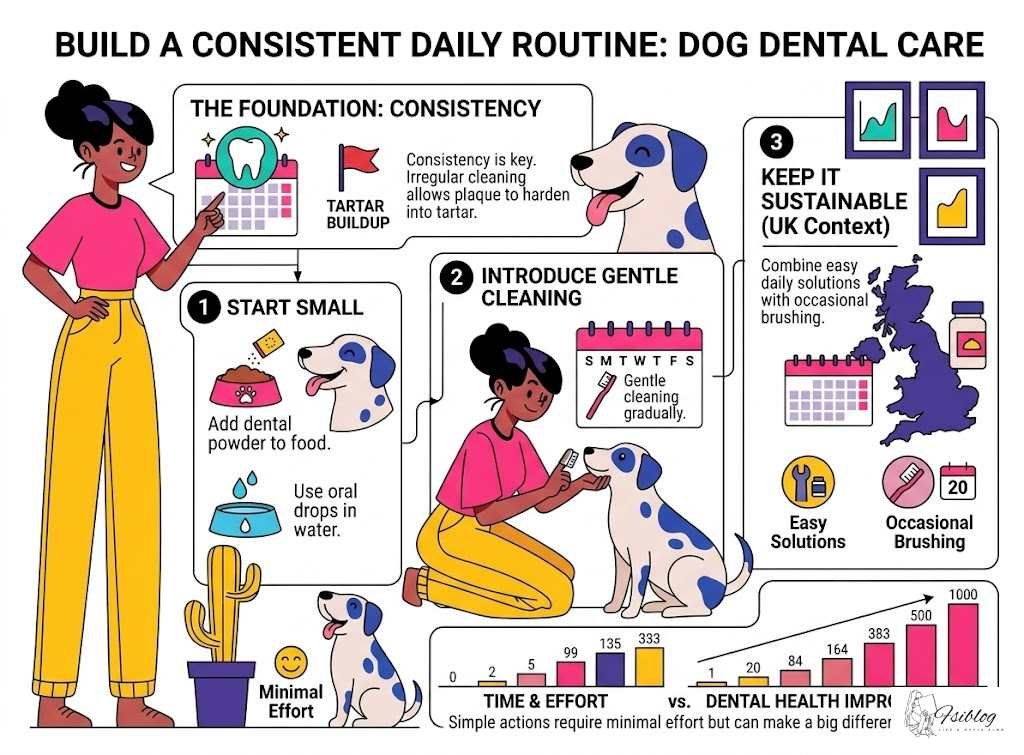
Consistency is the foundation of effective dog dental care. Irregular cleaning allows plaque to harden into tartar, which is much harder to remove and often requires professional treatment.
Start with small, manageable steps:
- Add dental powder to your dog’s food
- Use oral drops in their water
- Introduce gentle cleaning habits gradually
These simple actions require minimal effort but can make a big difference over time. In the UK, many pet owners prefer combining easy daily solutions with occasional brushing to keep routines realistic and sustainable.
The key is to make dental care part of your dog’s everyday life rather than an occasional task.
2. Use Proper Brushing Techniques
Brushing remains one of the most effective ways to control plaque and maintain healthy teeth. However, many dogs resist it at first, so introducing it slowly is important.
Start by letting your dog get used to the taste of pet-safe toothpaste. Once they are comfortable, introduce a soft toothbrush or finger brush.
Helpful tips:
- Use gentle, circular motions
- Focus on outer tooth surfaces where buildup is highest
- Keep sessions short and positive
- Reward your dog afterwards
Over time, brushing becomes easier as your dog gets used to the routine. A calm environment and patience can turn brushing into a stress-free experience.
3. Support Oral Health with supplements
While brushing is important, it does not always reach every area of the mouth. This is where dental supplements can help.
These products work by targeting bacteria that contribute to plaque and bad breath. Many UK-approved options use natural ingredients designed to support oral hygiene safely.
Benefits of supplements include:
- Reducing plaque buildup
- Freshening breath
- Supporting gum health
When combined with brushing, supplements create a more complete and effective dental care routine.
4. Add Water Additives for Easy Maintenance
Water additives are one of the easiest ways to support your dog’s oral health. By simply adding a small amount to their drinking water, you can help reduce bacteria that cause bad breath and plaque buildup.
This method is especially useful for:
- Dogs that resist brushing
- Busy owners who need low-effort solutions
- Maintaining freshness between cleaning sessions
In the UK, water additives are widely available and often recommended as part of a broader dental care plan. While they are not a replacement for brushing, they are a valuable addition to daily care.
5. Use Dental Chews for Natural Cleaning
Chewing plays a natural role in maintaining dental health. Specially designed dental chews help clean teeth through mechanical action while also being enjoyable for your dog.
As your dog chews:
- The texture helps remove plaque
- Gums are gently stimulated
- Oral health improves over time
However, not all chews are equal. Choose products that are:
- Suitable for your dog’s size and breed
- Approved by veterinary organisations where possible
- Free from excessive additives or sugars
Dental chews should complement brushing and other care methods, not replace them.
6. Monitor Oral Health and Act Early
Regular monitoring helps you catch problems before they become serious. Many dental issues start with subtle signs that are easy to miss.
Watch out for:
- Persistent bad breath
- Red or swollen gums
- Difficulty eating or chewing
- Yellow or brown buildup on teeth
If you notice any of these signs, it is best to consult a vet. In the UK, routine dental checks are often included in annual health visits, making it easier to stay on top of your dog’s oral health.
Early action can prevent pain, infection, and costly treatments later on.
Extra Tips for UK Dog Owners
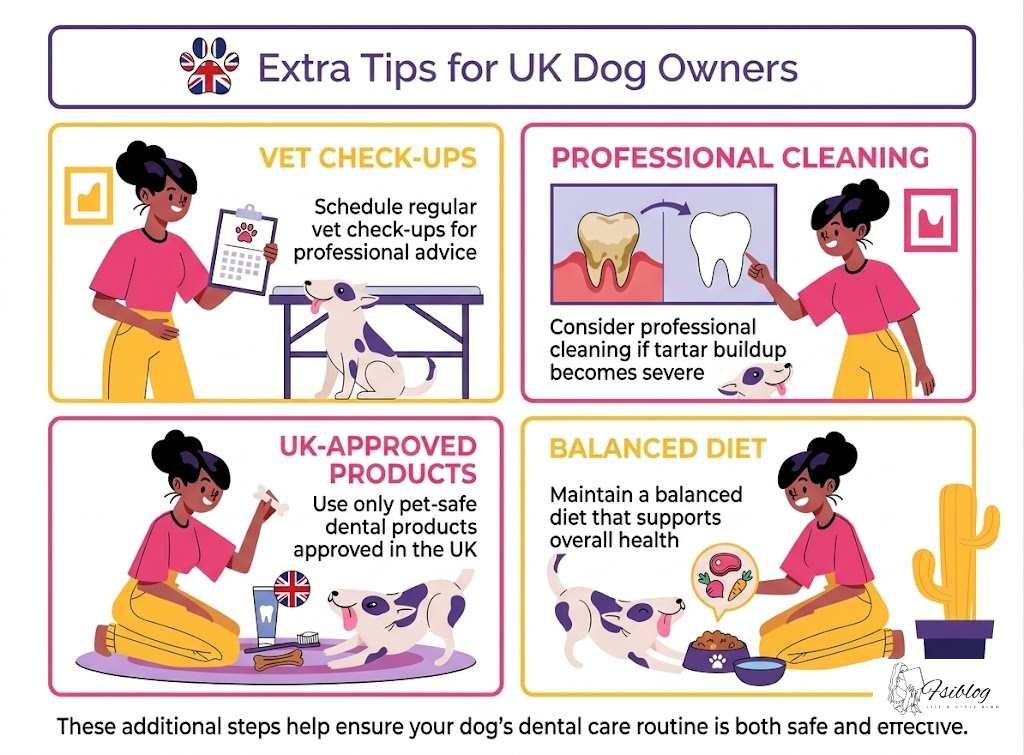
To make your routine even more effective:
- Schedule regular vet check-ups for professional advice
- Consider professional cleaning if tartar buildup becomes severe
- Use only pet-safe dental products approved in the UK
- Maintain a balanced diet that supports overall health
These additional steps help ensure your dog’s dental care routine is both safe and effective.
Final Thoughts
Maintaining your dog’s dental health does not have to feel overwhelming. By combining consistent routines, proper brushing, supplements, and supportive tools like water additives and chews, you create a balanced and practical approach.
At the same time, regular monitoring ensures that small issues are addressed early before they become serious problems.
With steady effort and the right methods, dog dental care becomes a simple part of everyday life. The result is not just healthier teeth, but a happier, more comfortable dog with a better quality of life.